

Celtic warriors from Liebau
| Place: | Liebau (Pöhl, Vogtlandkreis) |
|---|---|
| Type: | Mound grave/mound burial ground |
| Dating: | Middle Pre-Roman Iron Age | Early Latène Period | 500 - 400 BC. |
Description
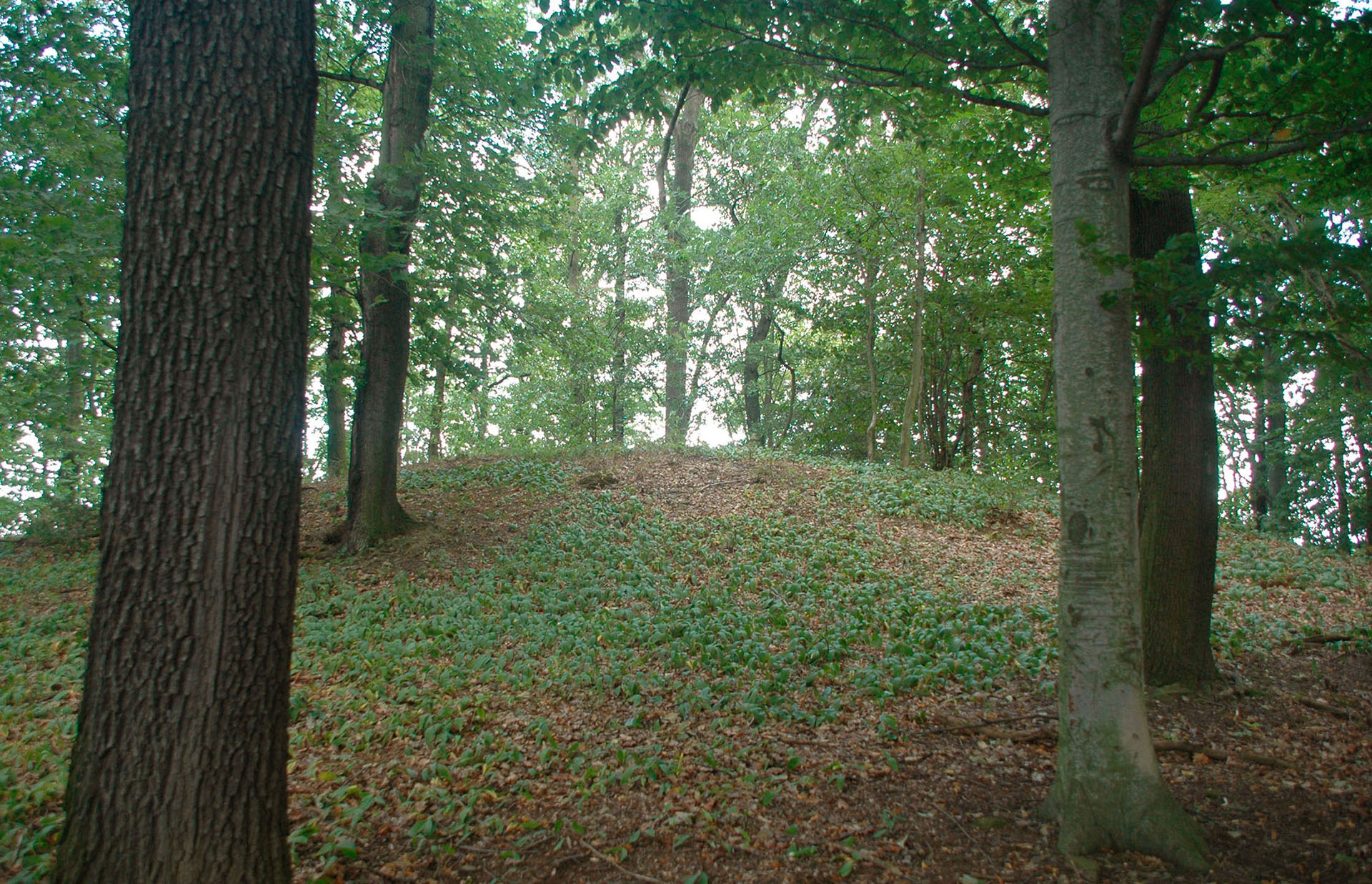
North of the village of Liebau near Plauen there is a burial mound from the Middle Pre-Roman Iron Age. The mound, which is now overgrown with dense bushes, has an oval shape and measures 20 x 30 m, with a height of up to 250 m today. In 1943, excavations were carried out by Amandus Haase, the local liaison officer for the preservation of archaeological monuments in the Vogtland region, following the discovery of a disturbance in the grave. This brought to light an astonishingly rich inventory of finds that is unique for the Middle Pre-Roman Iron Age in Saxony to date. Further excavations took place in 1953.
Annemarie ReckStart of the excavation
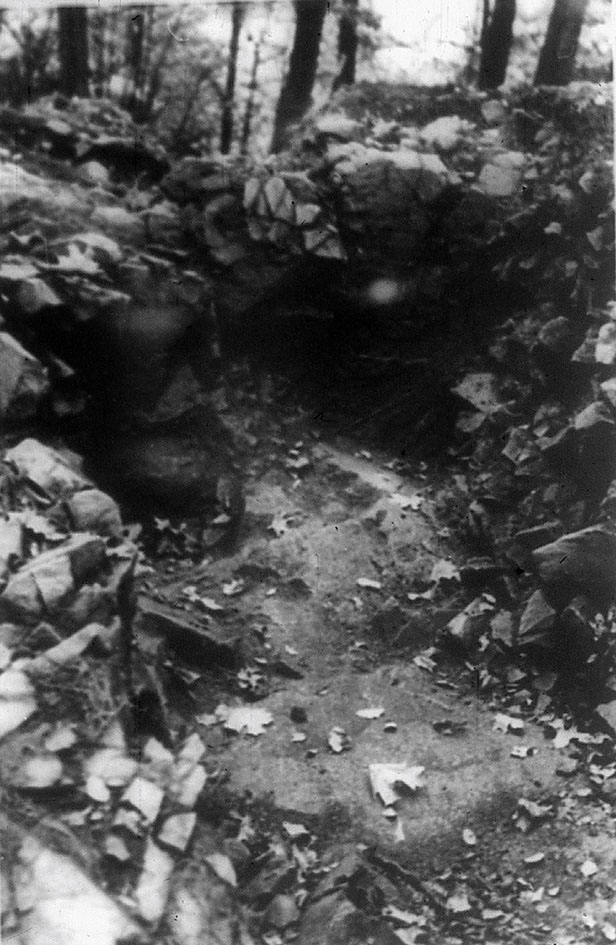
The burial mound is located about 200 m north-east of the center of Liebau on a stony hilltop called Knorrs Pöhl (also Knorrs Hübel) in the area of a tongue of land extending to the south-west. During a site inspection in 1943, the monument conservators noticed two major disturbances, one of them in the middle in the form of a funnel. It therefore became necessary to carry out excavations and clarify the nature of the findings. Haase considered the mound, which consisted of a large accumulation of diabase quarry stones, to be the remains of a tower. His colleague Hellmut Lehninger, who carried out the work, claims to have suspected a grave right from the start. He came across the first bronze ring just 0.3 m below the bottom of the funnel and the greenish discolored earth already indicated the sword.
Annemarie ReckImage Source A. Haase, Foto ©LfA 1943.
The burial chamber
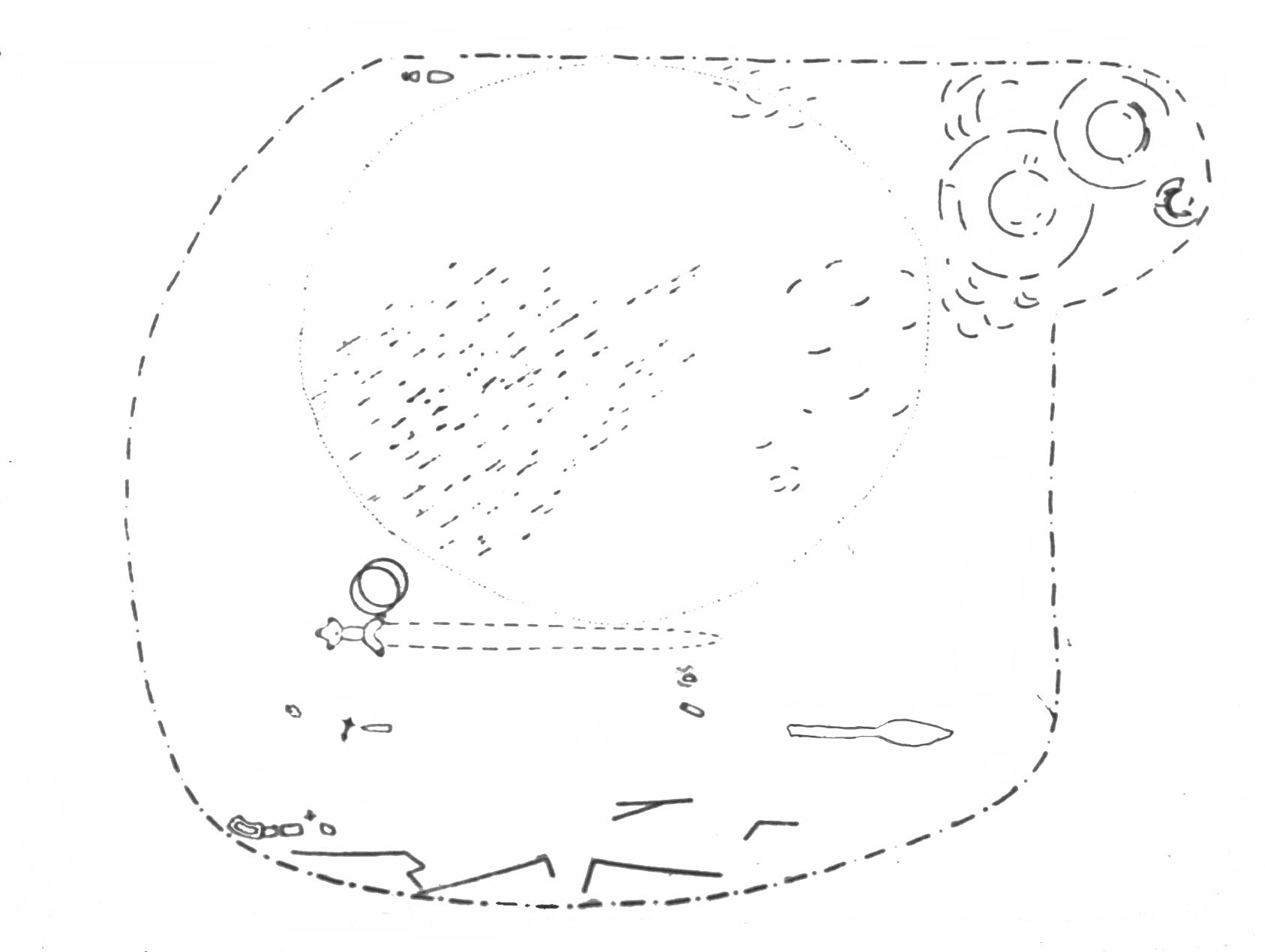
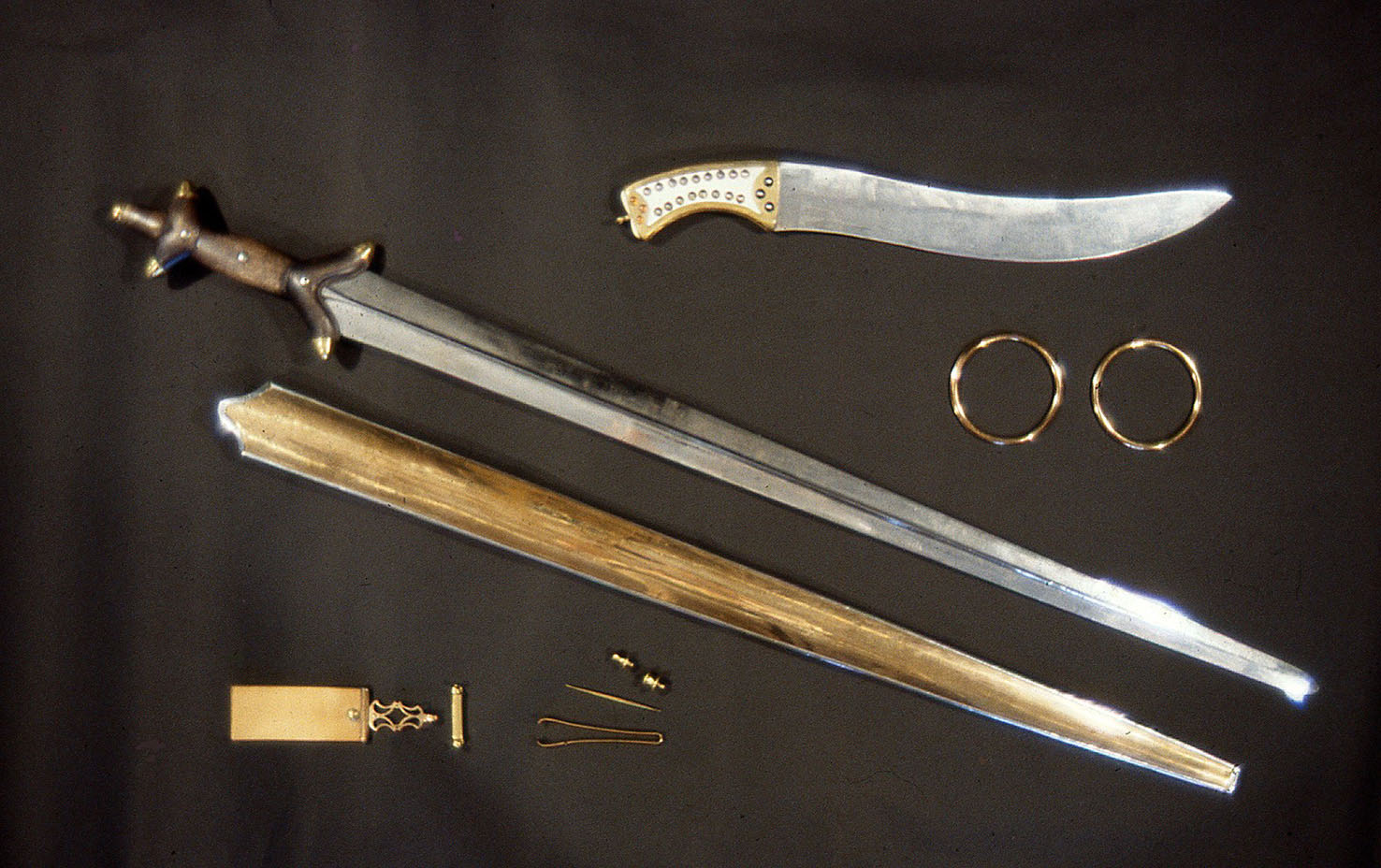
Lehninger had come across the burial chamber, which was originally 1 m deep. Its dimensions were around 3.5 x 2.5 m. It was probably once lined with wood. The remains of a human skeleton that had almost disappeared were found in the chamber. At its side was an iron longsword with a wooden handle still preserved in places and decorated with bronze rivets. The shape of the hilt is reminiscent of anthropomorphic iron handles. The sword was still in a wooden scabbard decorated with engraved bronze and iron sheeting. Parts of the sword hilt, two rings and a bronze belt hook came to light right next to it. The sword and belt stylistically date to the early Latène period.
Annemarie ReckImage Source A. Haase, Umzeichnung ©LfA 1943.
Other grave goods
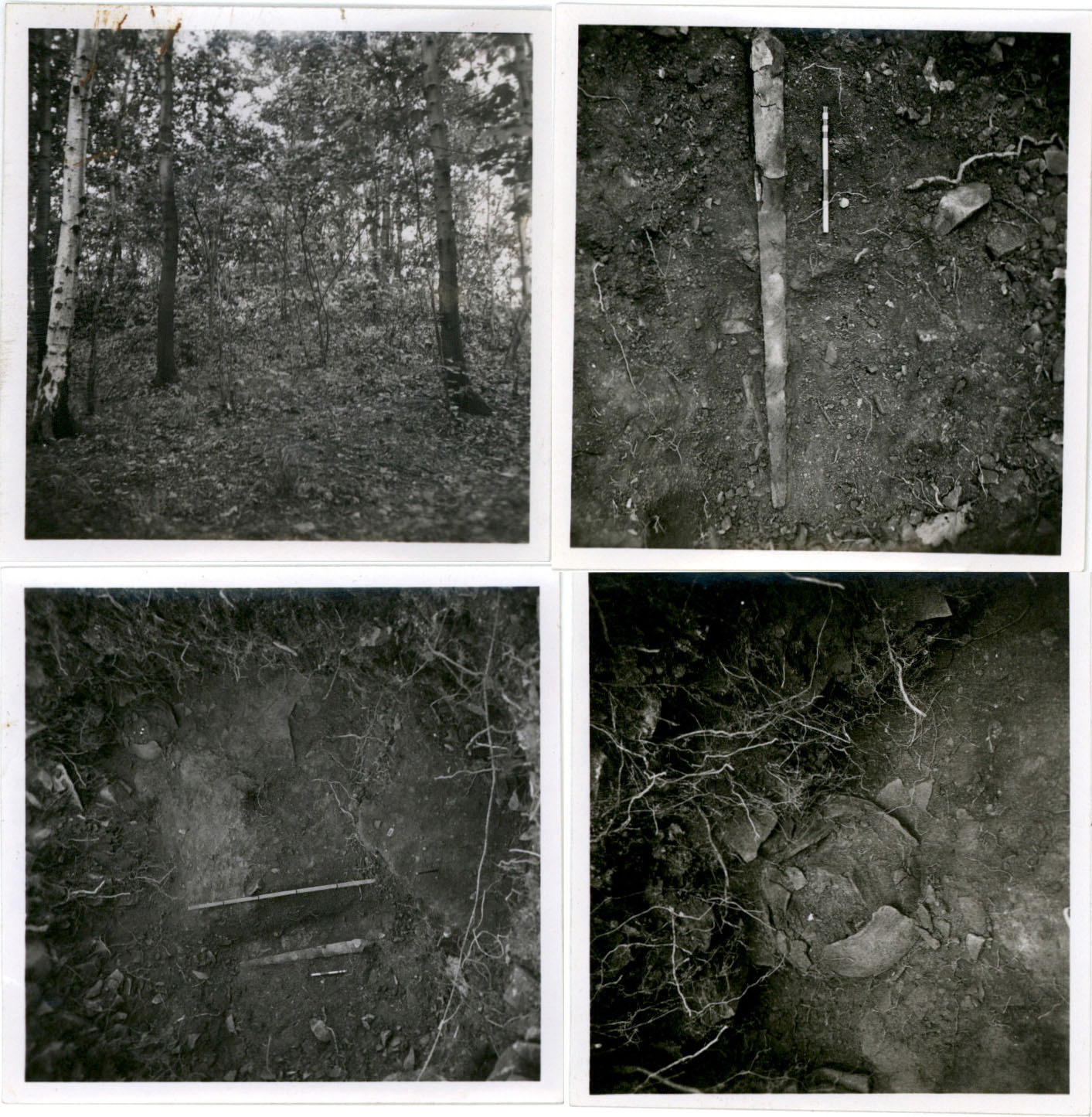
The deceased had also been given a lance. A length of 1.30 m can be reconstructed on the basis of the position of the spearhead and shoe, which is why it must be assumed that the spear was rather short. An iron slashing blade lay next to the head. Its handle was made of an organic material, perhaps wood or bone, and had been set in bronze and riveted. The burial equipment also included toiletries: tweezers, a nail cutter and an ear spoon. They were found in the belt area. A sharpening stone was probably included to ensure that the sword and knife remained sharp.
Annemarie ReckImage Source A. Haase, Fotos ©LfA 1943.
Ceramics of the Latène culture
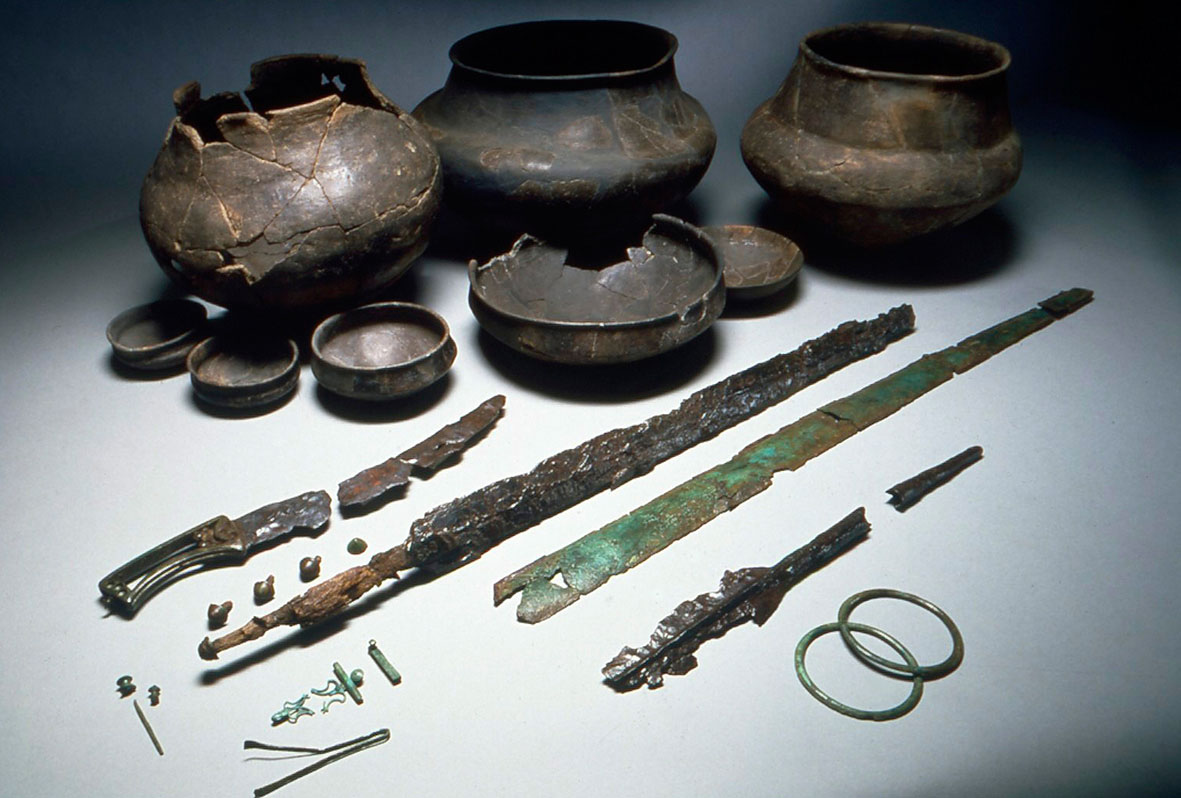
A collection of pottery sherds was found at the foot of the burial, which could be reconstructed into four large tureens and five bowls. The vessels were most likely filled with food and drink. They were shaped by hand, finely tempered and hard-fired. The tureens have a conical neck; the bowls, with the exception of one, are strongly profiled in the upper section. In addition, all the vessels have a slight to moderate dent in the base. Their shape and black-brown coloration assign them stylistically to the Late Hallstatt Culture. With regard to the somewhat younger weapon types, it can be assumed that they date to the 5th century BC. The finds from the Liebauer burial mound show clear stylistic links to north-eastern Bavaria and western Bohemia. However, the site in the Vogtland region of southern Saxony represents the north-easternmost outpost of the early Latène culture.
Annemarie ReckImage Source J. Lipták, Foto ©LfA 2000.
Link smac 360°
Weapons as an accessory
The slashing knife is one of the typical tools found in Early Latène burials of men, which is why it can also be assumed that the burial in Liebau was male. The literature therefore refers to the "Celtic warrior" or the "early Celtic princely grave" at Liebau. The custom of including weapons or tools in the grave is actually unusual north of the low mountain ranges up to the North German Plain. The weaponry, including a longsword, lance and slashing knife, clearly sets the grave at Liebau apart from all contemporary Saxon graves as the grave of a warrior.
Annemarie ReckImage Source J. Lipták, Foto ©LfA 2000.
Warriors without clothes?
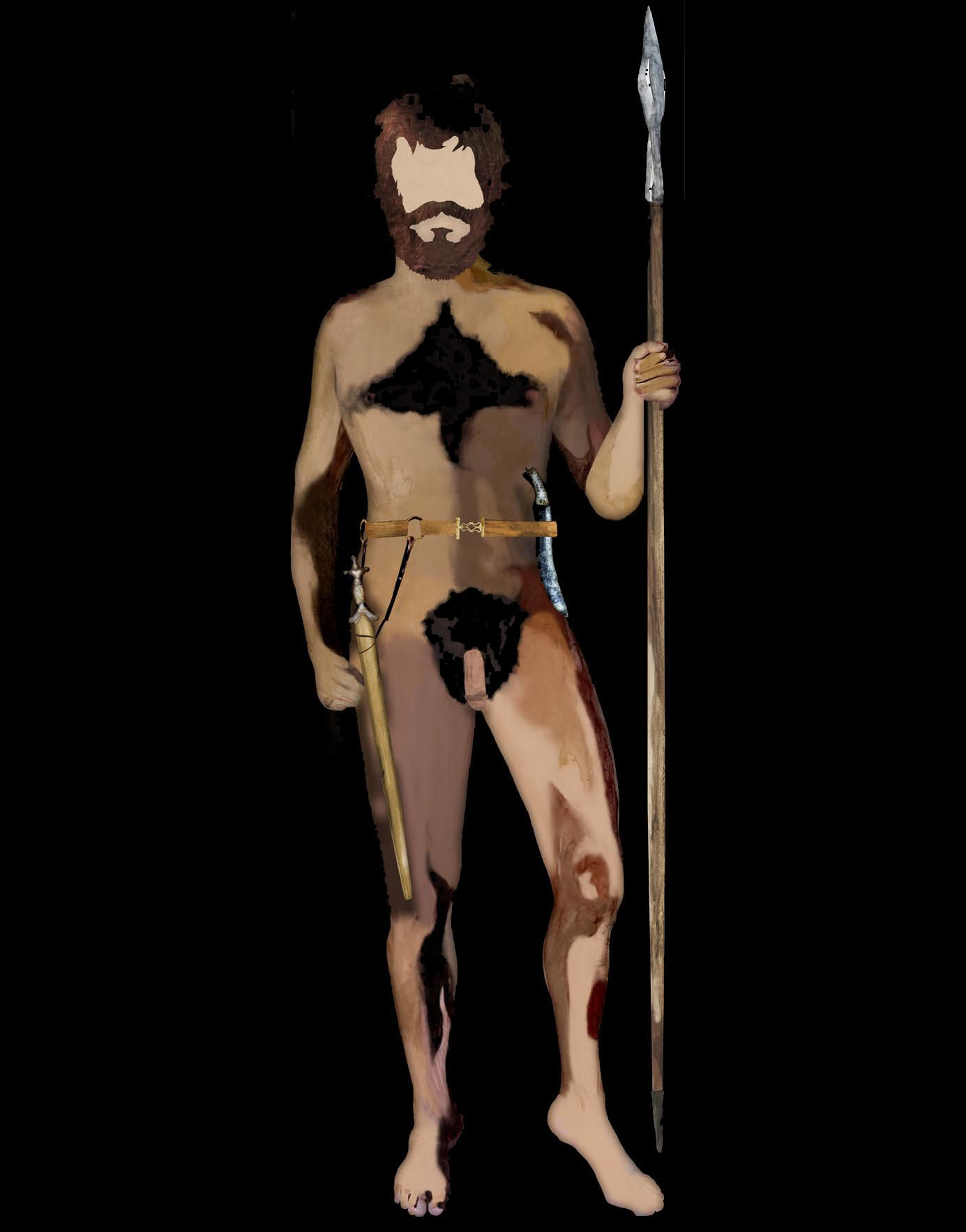
Wolfgang Ender also points to another indication that it could be a Celtic warrior: no evidence of clothing was found in the grave. No garment pins, fibulae or other components of the costume were found on the body. The remains of the belt fitting (see reconstruction) belong to a weapon belt, not a garment belt. This could be related to the custom known from ancient sources that Celtic warriors fought naked. Based on this, it is possible that the deceased was buried without clothes.
Annemarie ReckImage Source ZAZA Uta Röttgers, Illustration ©LfA 2014.
A possible princely tomb
Tumuli with similar burial chambers are known from the late Hallstatt and early Latène periods in southern Germany, eastern France and Bohemia. These are usually referred to as "princely" graves. It was typical for the deceased to be buried on a cot or a wooden wagon. According to Reinhard Spehr, the burial chamber of the "Liebauer Fürsten" could also have contained such a tomb, as it was sufficiently large. If the remains of such a wooden cart had survived, they could have been destroyed during the earlier disturbance of the grave.
Annemarie ReckImage Source E. Mertens, Foto ©LfA 2014.
Reasons for colonization
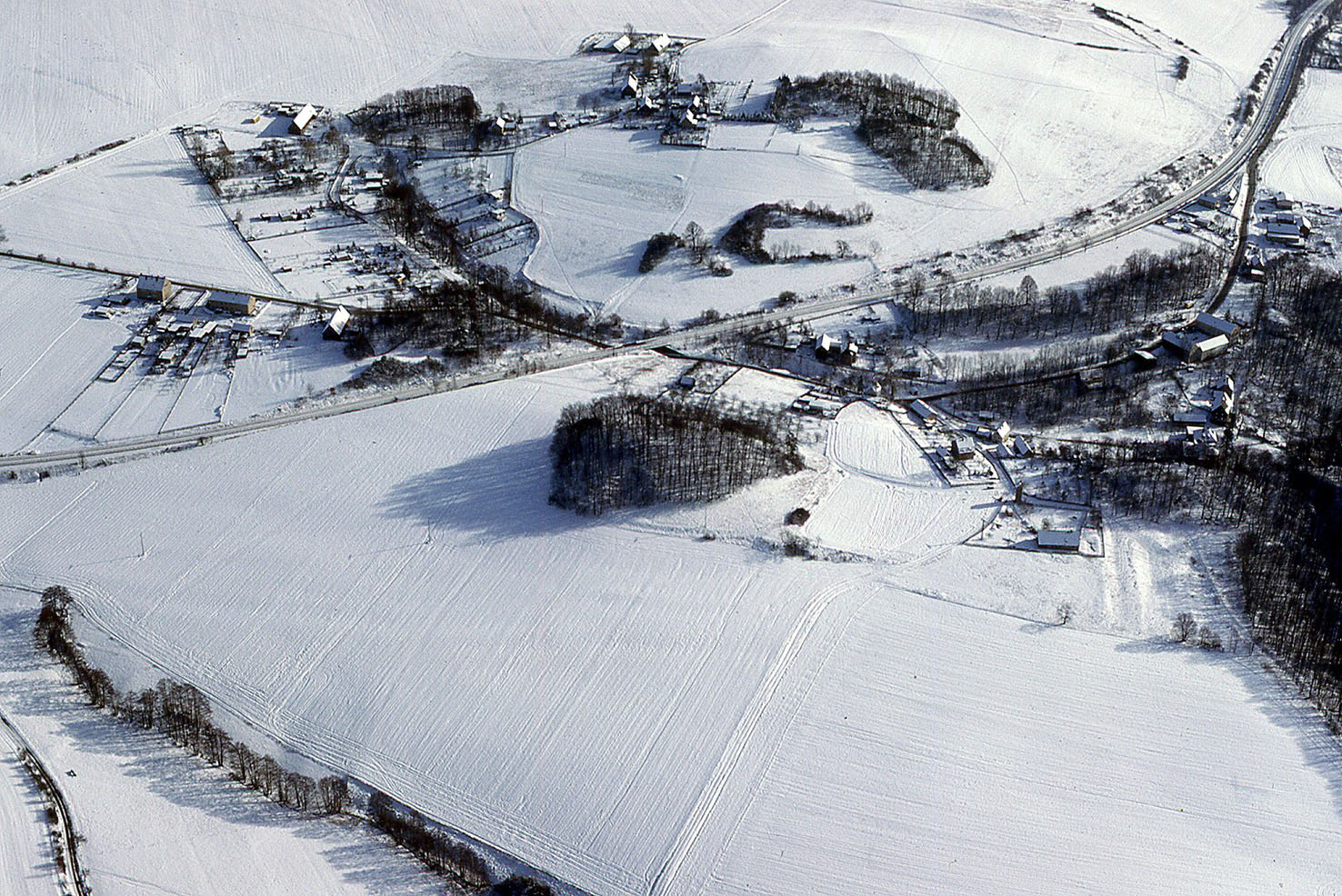
But why did the Celtic man, who apparently came from the early Latène culture or was at least strongly influenced by it, come to the Vogtland with his followers? Several considerations have been put forward in recent decades. For example, he could have come for economic reasons, because of the ore mining industry. For example, there are rich copper deposits in the Vogtland to the north-east of Plauen. The grave could also have played a role in connection with a long-distance route from south to north, into the low mountain range and beyond, which followed the Weiße Elster river to the salt deposits in Halle or amber from the Baltic. According to Spehr, the seat of the "Prince" could have been located on the rocky spur of the "Old Castle" near Liebau or on the "Eisenberg" near Pöhl, just 2 km to the south.
Annemarie ReckImage Source O. Braasch, Foto ©LfA 1993.
Literature
Werner Coblenz, Ein Hügelgrab der frühen Latènezeit von Liebau. Grabbergung und -inhalt. Arbeits- und Forschungsberichte zur sächsischen Bodendenkmalpflege 5, 1956, 297–342.
Wolfgang Ender, Kleider machen Leute. In: Sabine Wolfram (Hrsg.), In die Tiefe der Zeit, 300.000 Jahre Menschheitsgeschichte in Sachsen, Buch zur Dauerausstellung, 2014, 152–153.
Hans Kaufmann, Das keltische Kriegergrab von Liebau, Kr. Plauen. In: Heinz-Joachim Vogt (Hrsg.), Archäologische Feldforschungen in Sachsen. Arbeits- und Forschungsberichte zur sächsischen Bodendenkmalpflege, Beih. 18 (Berlin 1988) 227–231.
Reinhard Spehr, Das frühkeltische Fürstengrab von Liebau im Vogtland. Sächsische Heimat 2019 (2018) 3.
Note on monument protection
Archaeological monuments are protected by the Saxon Monument Protection Act. A permit under monument law is required for ground interventions or construction measures.
Permalink
https://archaeo-sn.de/en/ort/celtic-warriors-from-liebau/
Citation
Annemarie Reck, Celtic warriors from Liebau. In: Landesamt für Archäologie Sachsen, Website archaeo | SN (01.02.2024). https://archaeo-sn.de/en/ort/celtic-warriors-from-liebau/ (Stand: 29.09.2026)
