

Early art from the Kapellenberg near Groitzsch
| Place: | Groitzsch (Jesewitz, North Saxony) |
|---|---|
| Type: | Station/camp/rest area |
| Dating: | Magdalena | 12500 - 12000 BC. |
Description
The oldest reference to art in Saxony comes from the Kapellenberg near Groitzsch, a district ca. 2 km south of Eilenburg. The site, which is now mainly used for agriculture, has been known for over 120 years thanks to finds of Palaeolithic flint tools. Excavations were carried out in the area of the hilltop between 1952 and 1961. They were led by the archaeologist Helmut Hanitzsch. During the excavations, up to 154,000 stone artifacts were recovered, which assign the site to the late Upper Palaeolithic, the so-called Magdalenian period. However, the site became famous for a slate slab on which the figurative depiction of a total of three horses can be seen in carvings. Between 1996 and 2004, further excavations were carried out on the Kapellenberg by the State Office for Archaeology of Saxony. It was not until 2010 that another artifact depicting a horse was discovered among the old finds. Groitzsch is not only the only site of Palaeolithic art found to date, but also the largest and richest find of its period in Saxony.
Annemarie ReckLocation of the site
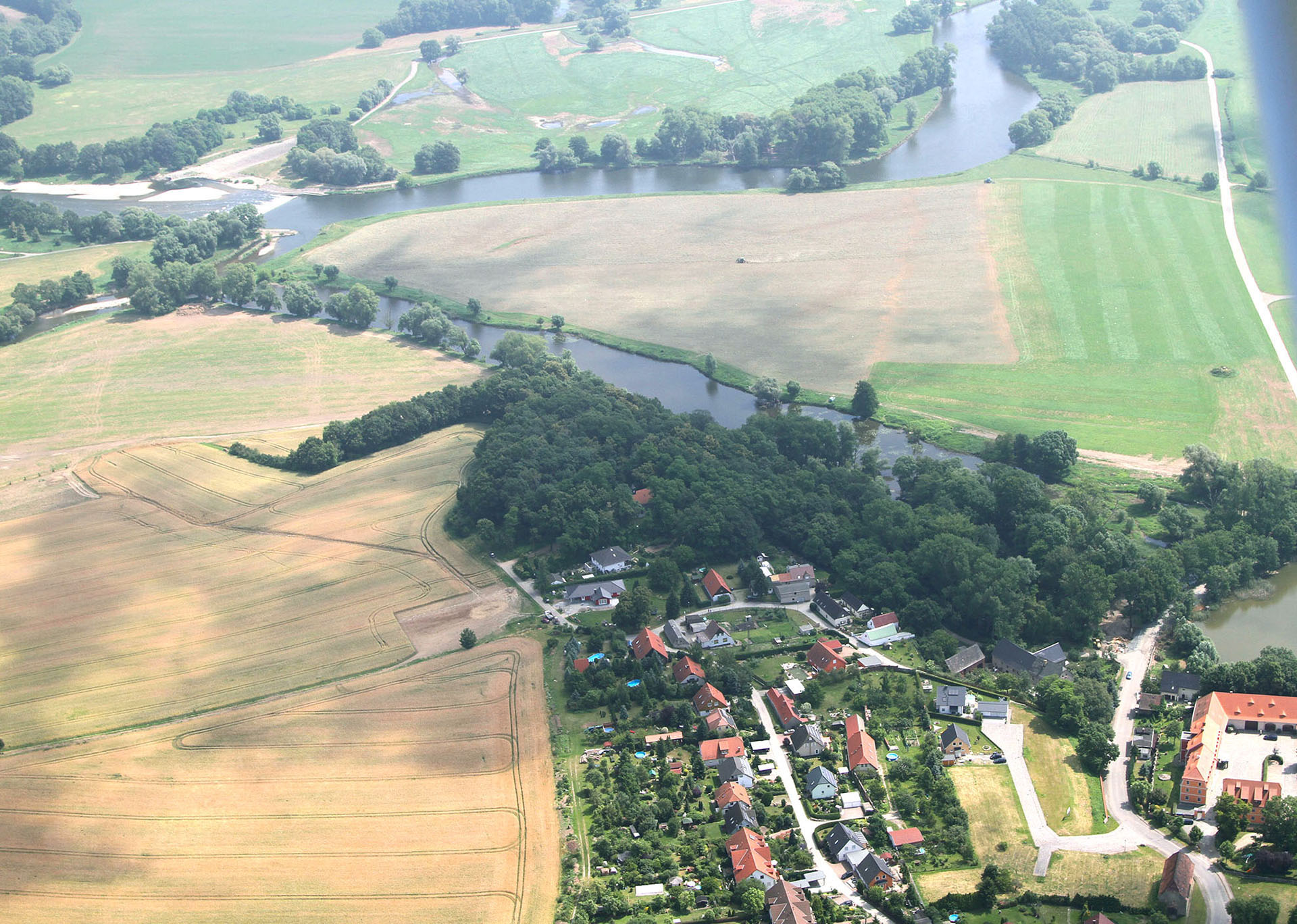
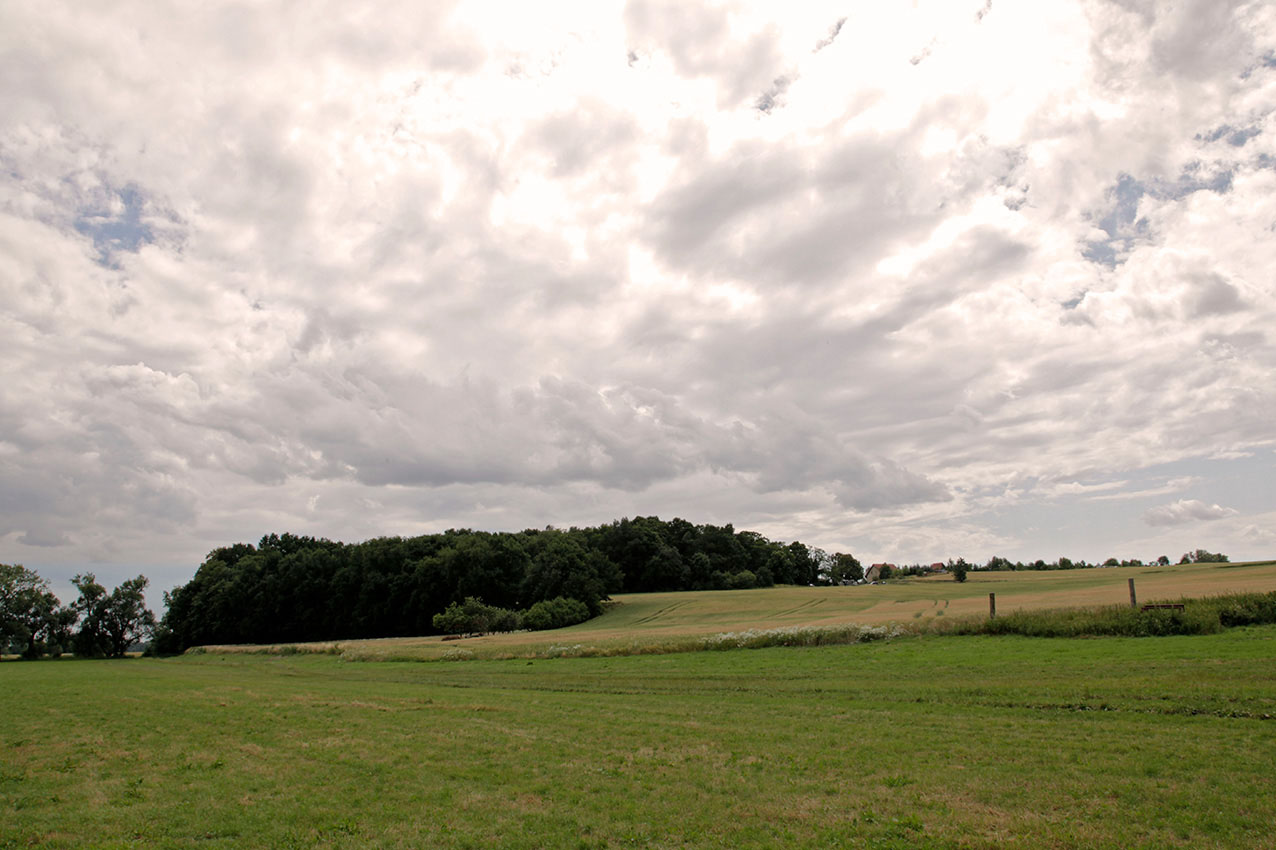
The hilltop is part of a terminal moraine ridge from the Saalian Ice Age. It towers 25 m above the surrounding terrain. An oxbow lake of the Mulde, which today flows past about 1 km away, is located directly to the east of the hill. This was a very favorable location for hunting communities of the late Upper Palaeolithic. The hilltop offered them a far-reaching view of the surrounding area, while the nearby course of the river ensured a supply of drinking water and possibly also attracted passing herds of animals. They also found enough flint in the material of the terminal moraine to make the stone tools they needed.
Annemarie ReckImage Source P. de Vries, Foto ©LfA 2013.
Storage bins
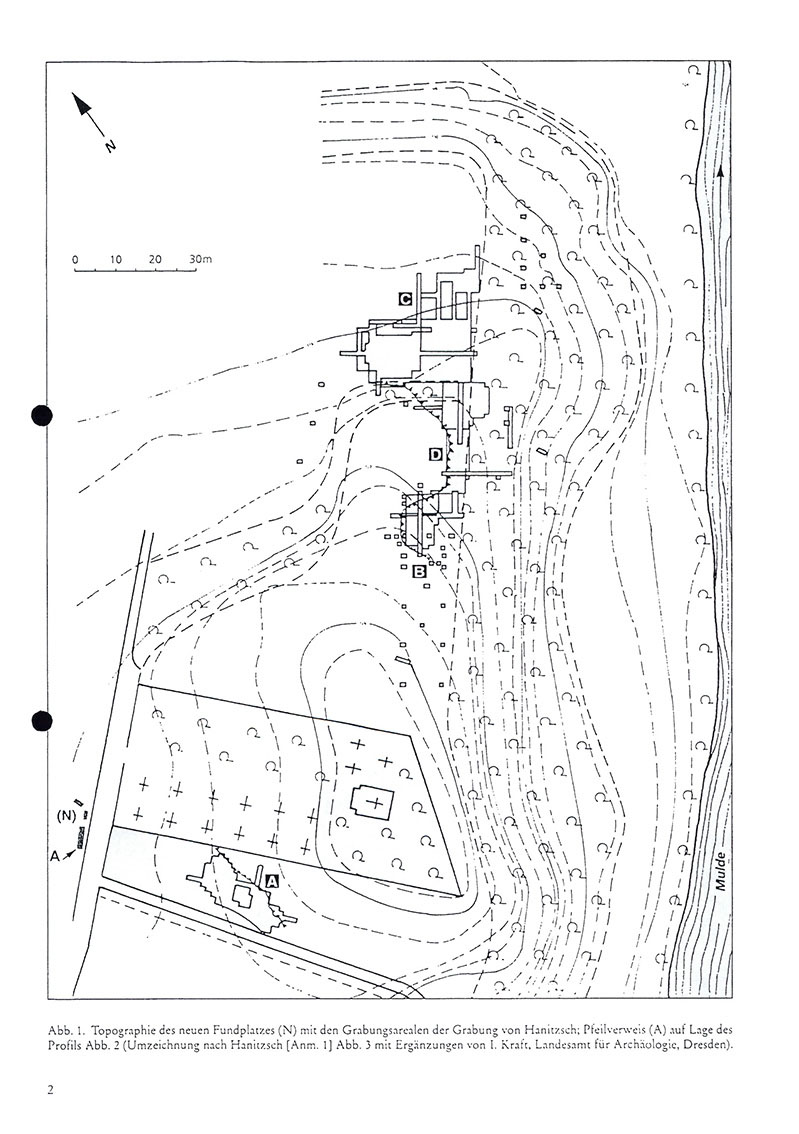
Four activity zones (A-D) could already be distinguished on the basis of the surface finds. These were investigated during the excavations of 1952 and 1961. The excavation was comprehensively published by Hanitzsch in 1972. With an excavation area of 1100 m², Groitzsch can be counted among the larger planned excavations after the Second World War. In the area of the activity zones, a total of seven work sites and two possible campsites were identified more precisely on the basis of concentrations of finds.
Annemarie ReckImage Source H. Hanitzsch 1972, 21.
Workplaces
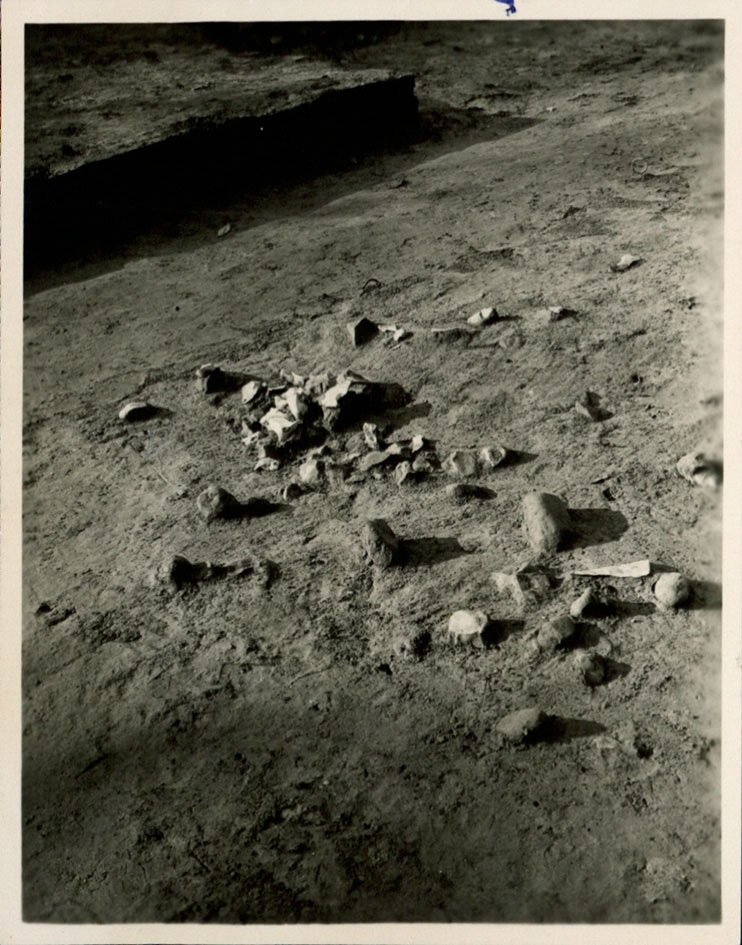
The workplaces each measured between 40 and 250 m². It was possible to distinguish between chipping areas and other workplaces. Core stones, production waste such as chippings or unfinished tools were mainly found at the chipping sites. They gave the excavation team an insight into the various processing steps involved in the production of stone tools and suggest that individuals within the group specialized in their manufacture. Several different tools were often found in the areas referred to as workplaces, often showing signs of use. Oval stone pavements measuring 5.20 x 3.20 m and 4.70 x 2.40 m were found in two places, suggesting huts or tents.
Annemarie ReckImage Source R. Moschkau, Foto ©LfA 1956.
Flint finds
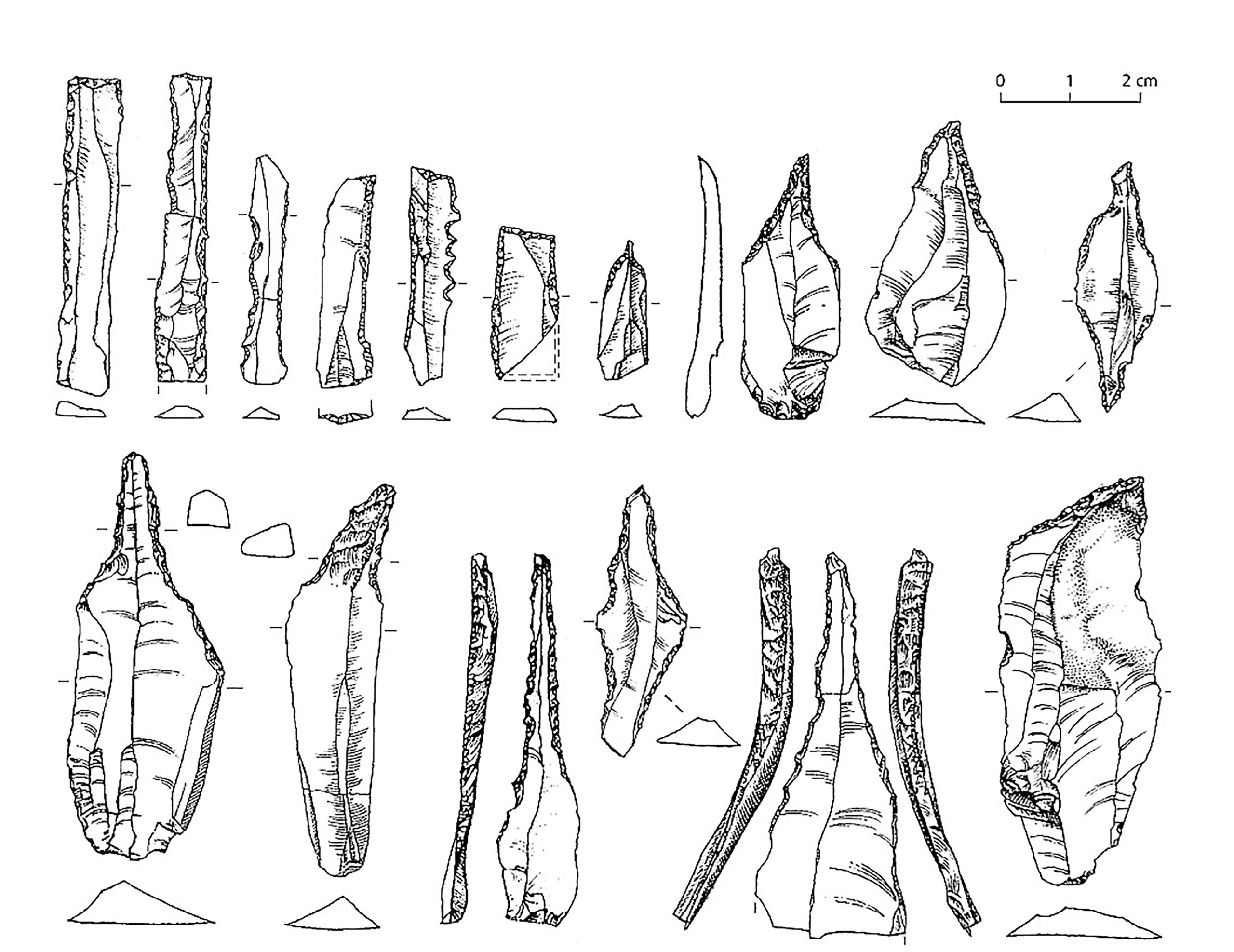
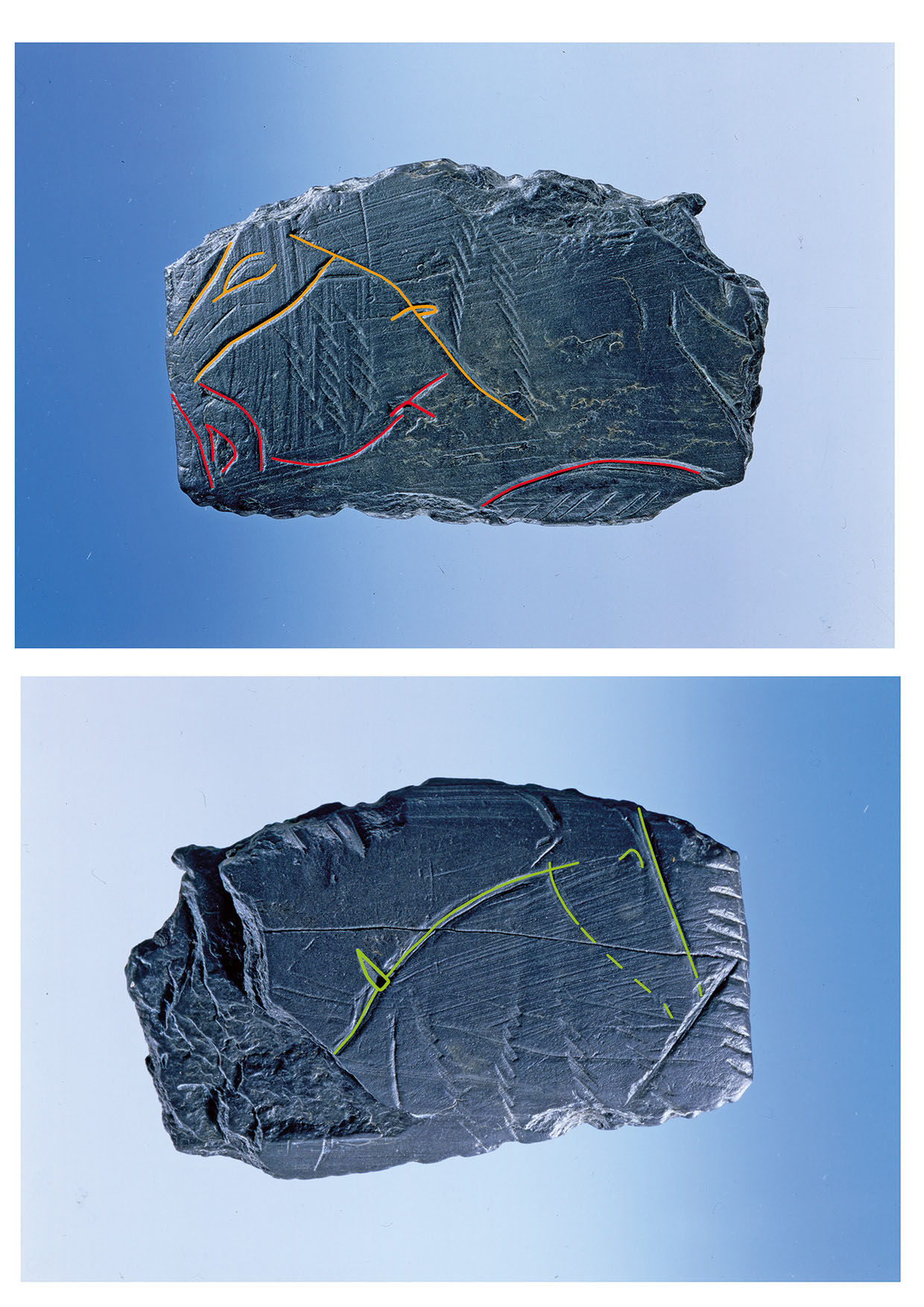
The high number of finds recovered is remarkable: over 154,000 stone artifacts were unearthed during the excavations. Of these, around 2600 were typical tool forms and 280 were special forms. In all the inventories of the Groitzsch sites, the most common forms found in the late Upper Palaeolithic were drills and back knives, as well as burins, scrapers and prongs. Several segment-shaped back points were also found at Site B, while Site C mainly contained core tools. The extremely high quantity of finds made it possible to investigate percussion techniques in more detail and to compare them with other large find inventories. In 1958, the most famous find from Groitzsch came to light in the area of Site D: a small engraved plate made of dark gray clay slate, on which three horses can be seen.
Annemarie ReckImage Source V. Geupel/J. Vollbrecht, 14 ©LfA 2000.
Animal representations
Several animals can be seen on the small slate tile. Two horses can be seen on one side, their muzzles touching on one narrow side. The one underneath seems to have been carved after the first one. It was only later that a third depiction of a horse was discovered on the reverse. In recent years, it has also been noted that the image on the reverse could be a so-called picture puzzle. Turned through 180°, one could recognize the torso and hind legs of a mammoth.
Annemarie ReckImage Source Archæo 7, 2010, 40.
Link smac 360° archaeo | 3D
Finding the slate tile
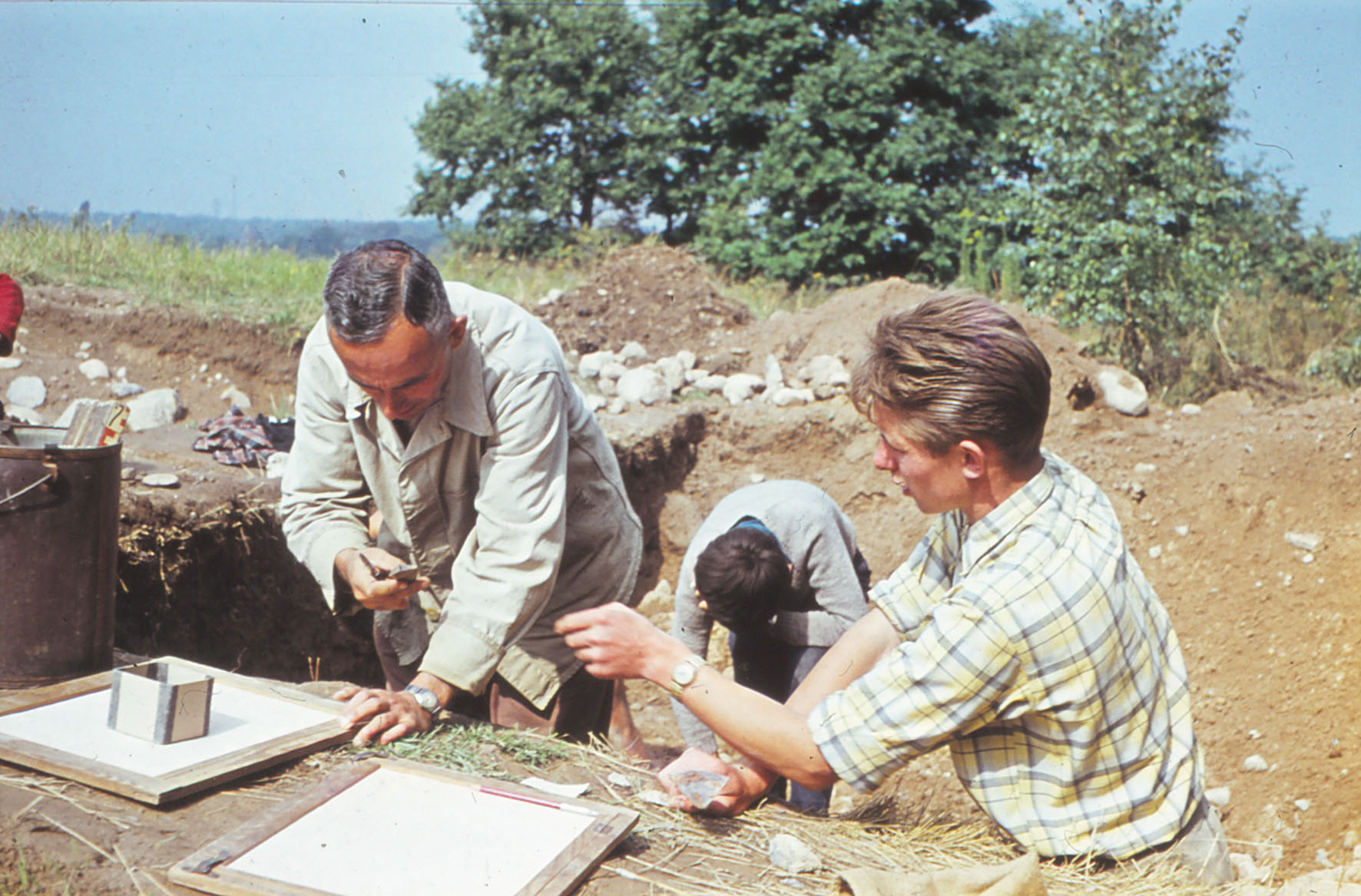
The slate slab was found by Rolf Dunkel in 1958. The excavation worker immediately noticed the carvings in the slate. A clear break can be seen on one narrow side. Some edges are visibly chipped. The former shape and size of the now roughly rectangular plate are therefore unclear. A parallel in Ice Age art can be found at Saaleck, about 70 km from Groitzsch. The working photo shows Helmut Hanitzsch and Dieter Kaufmann evaluating a find during the excavation in August 1961.
Annemarie ReckImage Source G. Wetzel, Foto ©LfA 1961.
Other engraved finds
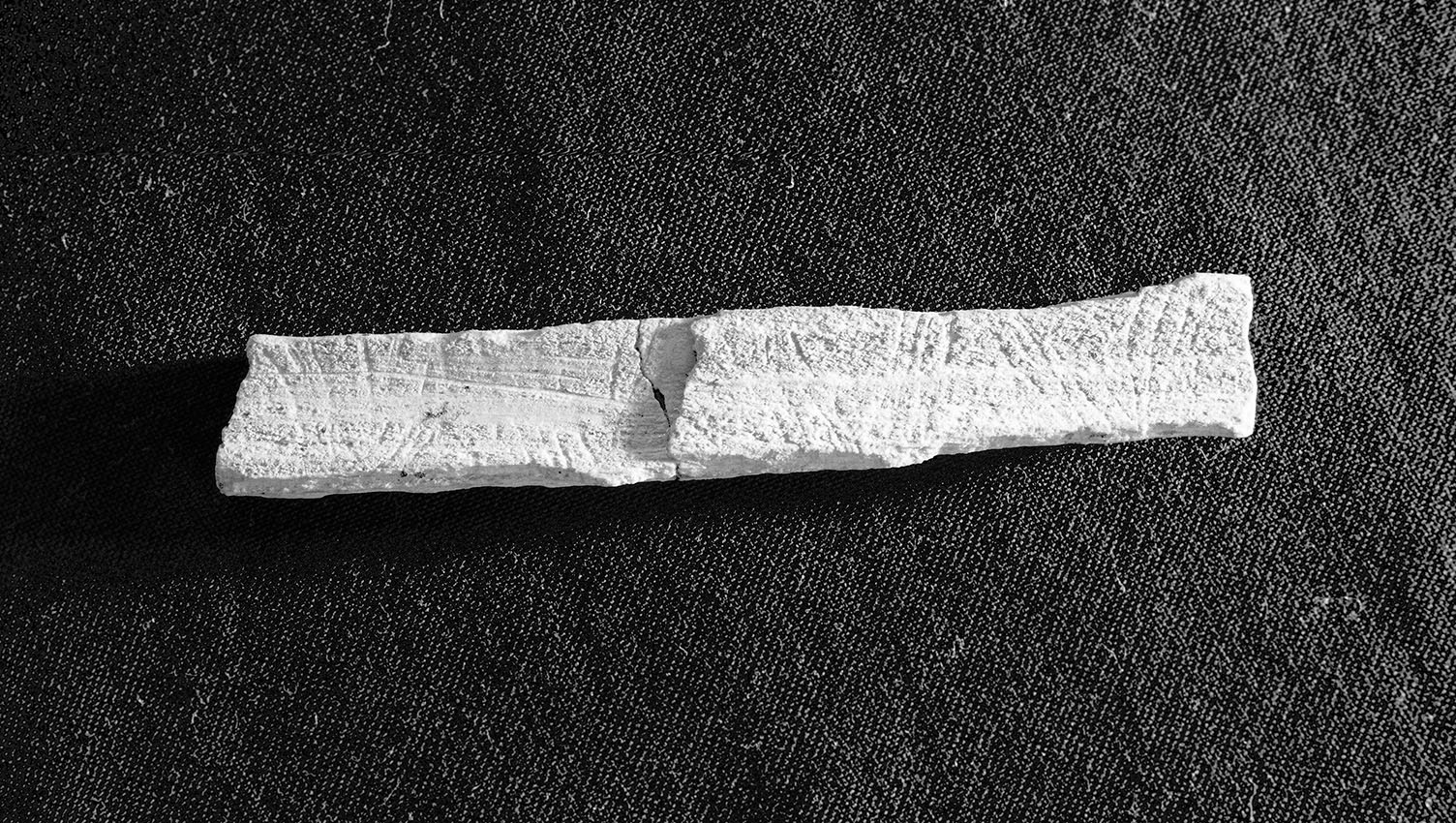
Only recently, another horse engraving was discovered on an old find of tuffite stone. Due to the coarser material, the bundles of lines are less clearly visible, revealing their shape in a 3D scan. Another special piece is a silicified piece of wood with several parallel lines that form a kind of zigzag pattern.
Annemarie ReckImage Source Foto ©LfA 1960.
Dating
As there was no bone or charcoal preservation on site, nor was it possible to geologically date the find layers, the individual sites (A-D) could only be assigned to a date on the basis of typological differences in the flint tools and stratigraphic observations. In this way, the Groitzsch A1 and D sites were assigned to the older Alleröd Interstadial, while A2 and C fall into the younger period. Site B corresponds in its type spectrum to forms of the younger Dryas. According to this, the Kapellenberg of Groitzsch would have been repeatedly visited by Paleolithic groups over a thousand years, between approx. 12500 and 11000 BC.
Annemarie ReckImage Source A. Kinne, Foto ©LfA 2011.
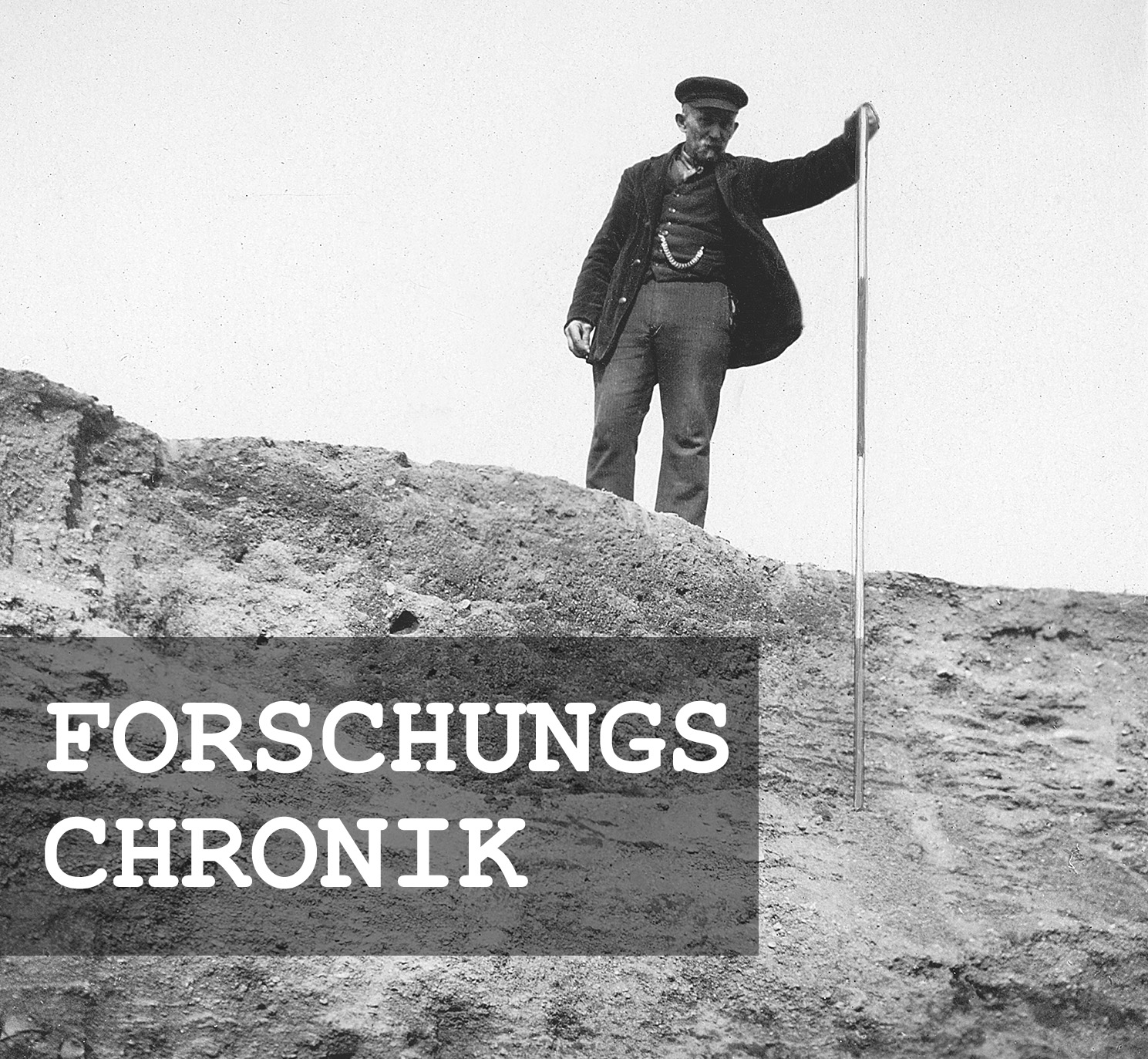
Research chronicle
Image Source Foto ©LfA 1929.
Literature
Helmut Hanitzsch, Groitzsch bei Eilenburg. Schlag- und Siedlungsplätze der späten Altsteinzeit. Veröffentlichungen des Landesmuseums Dresden 12, 1972.
Ingo Kraft, Die Pferdegravierungen von Groitzsch, Neues zu einem altbekannten Stück figürlicher Eiszeitkunst. Archæo 7, 2010, 37–41.
Ingo Kraft, Eine weitere Pferdegravierung von der spätmagdalénienzeitlichen Fundstelle Groitzsch bei Eilenburg, Lkr. Nordsachsen. In: Regina Smolnik (Hrsg.), Ausgrabungen in Sachsen 7. Arbeits- und Forschungsberichte zur sächsischen Bodendenkmalpflege, Beih. 34 (Dresden 2020) 324–328.
Sabine Lienen-Kraft, Imagination. In: Sabine Wolfram (Hrsg.), In die Tiefe der Zeit, 300.000 Jahre Menschheitsgeschichte in Sachsen, Buch zur Dauerausstellung, 2014, 70–73.
Note on monument protection
Archaeological monuments are protected by the Saxon Monument Protection Act. A permit under monument law is required for ground interventions or construction measures.
Permalink
https://archaeo-sn.de/en/ort/early-art-from-the-kapellenberg-near-groitzsch/
Citation
Annemarie Reck, Early art from the Kapellenberg near Groitzsch. In: Landesamt für Archäologie Sachsen, Website archaeo | SN (01.02.2024). https://archaeo-sn.de/en/ort/early-art-from-the-kapellenberg-near-groitzsch/ (Stand: 29.09.2026)
