

Eisenberg near Pöhl
| Place: | Pöhl (Pöhl, Vogtlandkreis) |
|---|---|
| Type: | Castle |
| Dating: | Later Bronze Age | Early Pre-Roman Iron Age | Early Latène Period | 1000 - 400 BC. |
Description
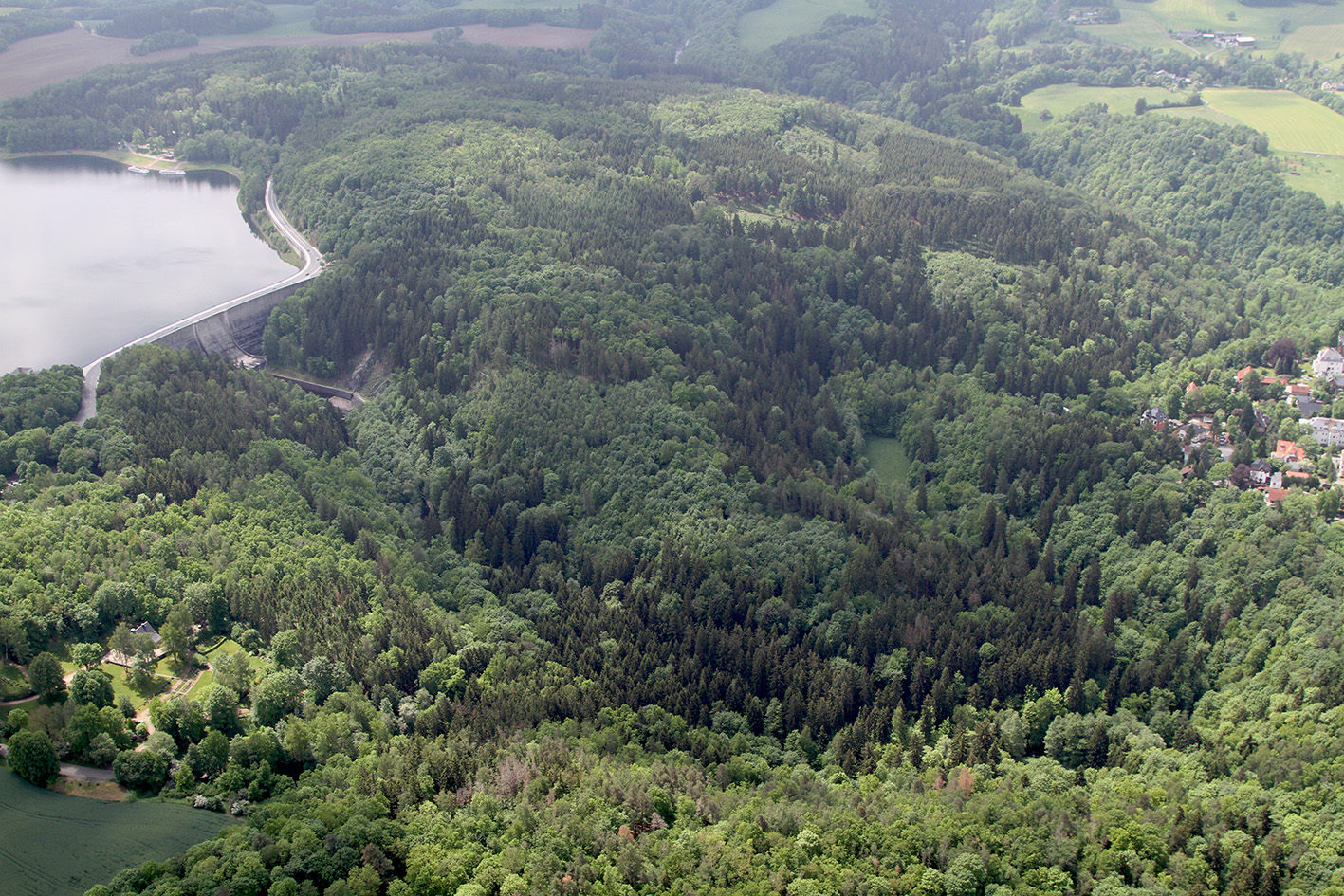
The fortification on the Eisenberg near Pöhl is probably one of the most important prehistoric monuments in the Vogtland region. Situated on a very narrow, north-facing mountain spur, the site is surrounded on three sides by the Trieb river and protected by steep slopes. It is also surrounded by a continuous earth wall. To the south, a slight, natural depression separates the pointed spur from the rest of the mountain, which from then on rises to an altitude of 433 m above sea level. NHN, where in the 19th century. The Moses Tower was built in the 16th century as a lookout point. Today, the monument is located in the middle of the local recreation area around the Pöhl dam, which was built between 1958 and 1964. In prehistoric times, the mountain was visited and inhabited several times from the middle of the Late Bronze Age onwards. A nearby pinnacle also bears witness to the mining use of the mountain from the 15th century. until the late 19th century. Century n. Chr.
Stefanie Bilz/Ronald Heynowski/Annemarie ReckLocation and structure
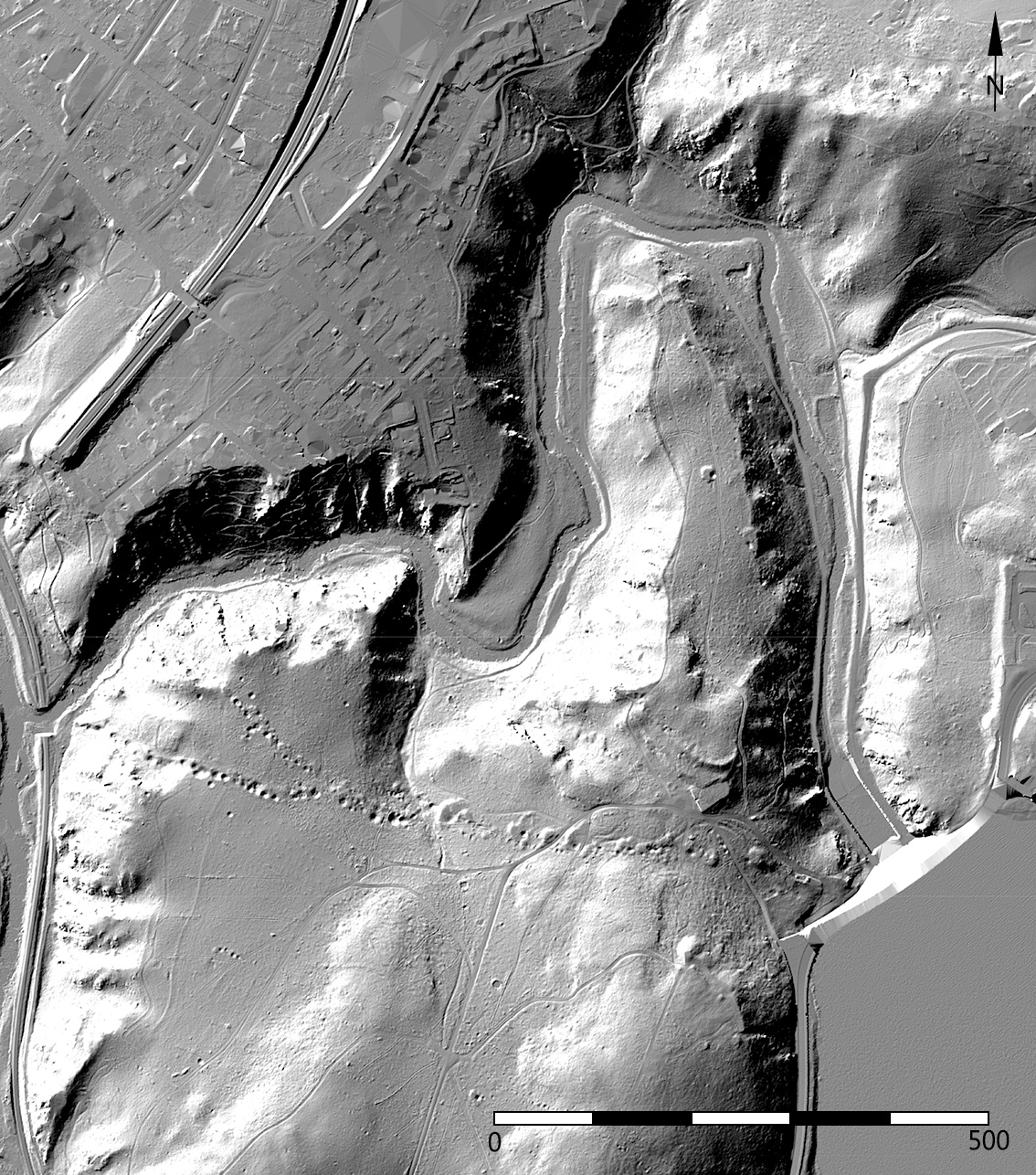
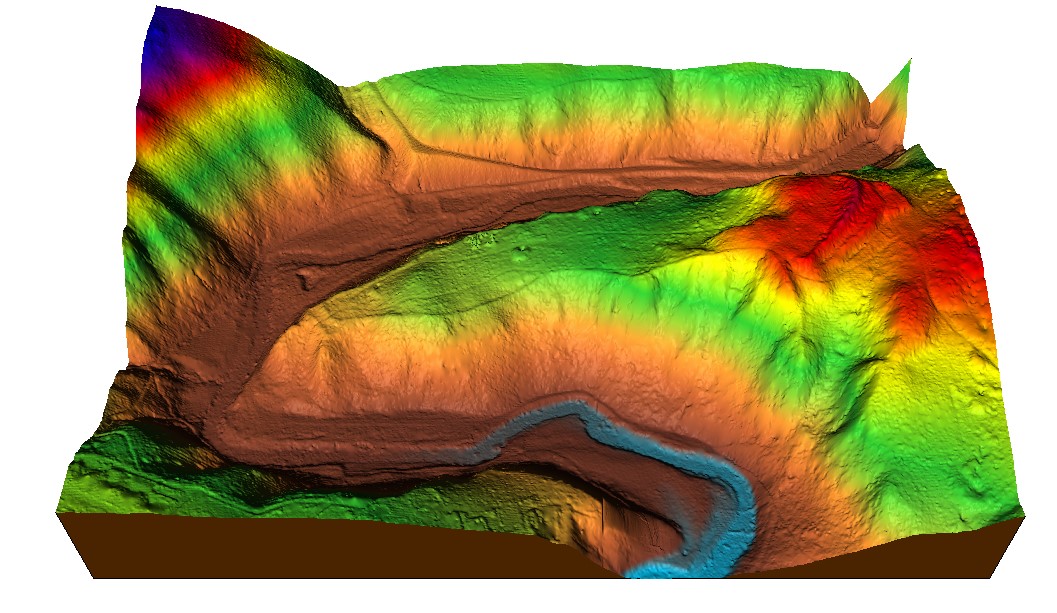
The Eisenberg is located just before the Trieb flows into the Weiße Elster between Jocketa and the Pöhl dam. The longitudinally narrow inner surface of the fortified northern spur of the mountain covers an area of approx. 3 ha. It measures up to 450 m in length with a maximum width of 120 m. The long sides of the plateau were secured by a simple continuous rampart, which today, however, has slipped away over long stretches and is not preserved. At the northern tip above the drive loop, a double rampart is still faintly visible in the terrain. This may have been the entrance to the plateau. The former main gate into the fortification can probably be located in the southwest, following the structures in the terrain.
Stefanie Bilz/Ronald Heynowski/Annemarie ReckImage Source R. Heynowski, Foto ©LfA 2016.
The south wall
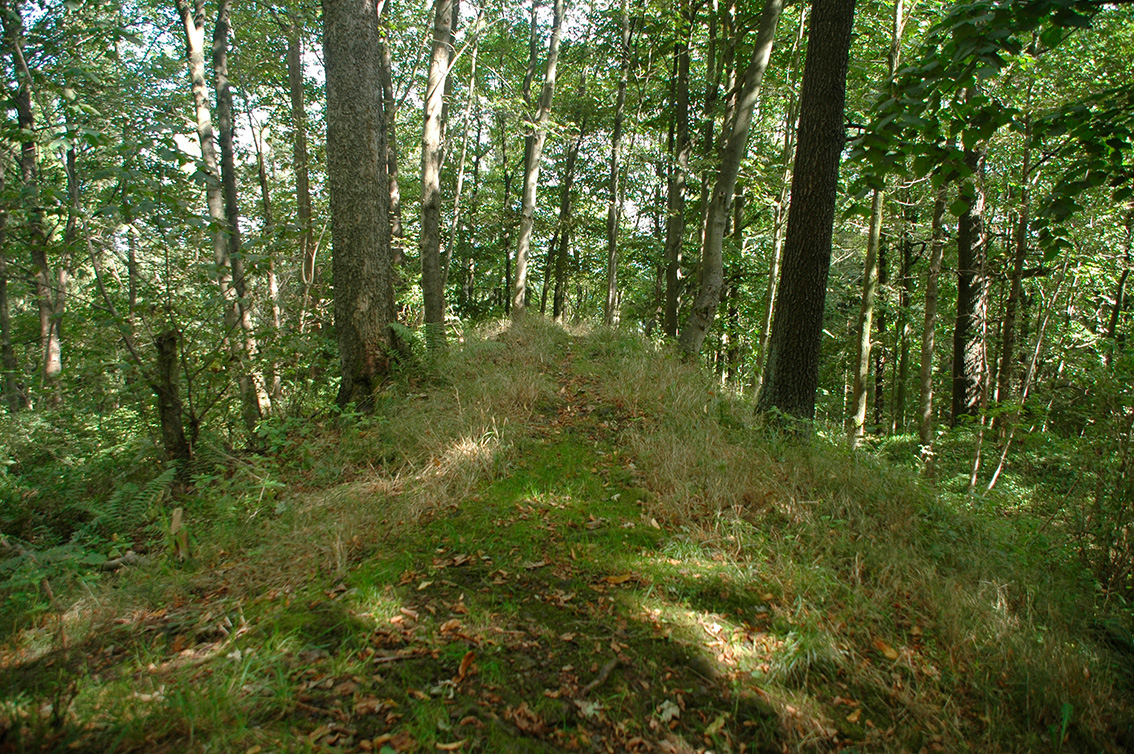
The best preservation can be seen in the south, where another double rampart separates the spur from the rest of the Eisenberg with a barrier. The two slightly arched ramparts are still around 3.5 m high with a preserved width of 10 m to 15 m. Due to a slightly greater curvature of the outer rampart, the distance between the southern bars varies between 5 and 10 meters. A shallow ditch can still be made out in front of the outer southern rampart. However, the different construction of the southern rampart and the finds recovered from it during excavations suggest that it is a later medieval addition to the actual prehistoric rampart.
Stefanie Bilz/Ronald Heynowski/Annemarie ReckImage Source E. Mertens, Foto ©LfA 2014.
Research history
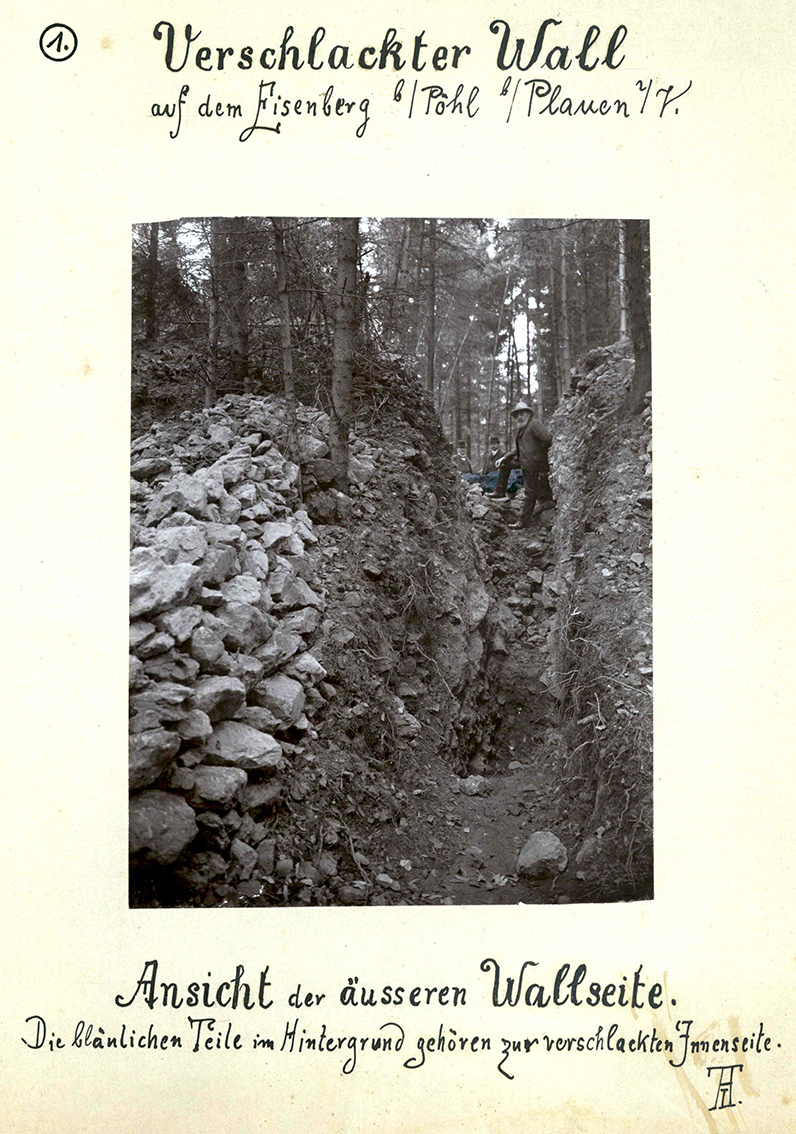
The Eisenberg attracted the interest of researchers at an early stage. The fortified site was first described in 1878. At the beginning of the 20th century, several excavations took place, which were mainly dedicated to the question of the structure of the rampart and its dating. The body of the rampart consisted of wooden frames filled with earth and stone. It was clad on both sides with a screen of logs and dry stonework. A breastwork on top of the rampart probably completed the fortification. Apparently, a severe fire that charred the beam grid led to the slagging of the stone inside the rampart. Early research therefore often referred to a "slag rampart". In 2015, the rampart had to be slightly excavated due to the construction of a path as a result of logging. The structure of the rampart was examined and heavily heated diabase rocks were recovered.
Stefanie Bilz/Ronald Heynowski/Annemarie ReckImage Source A. Tauscher, OA 69140, 48, Grabungsfoto ©LfA 1910.
Indoor and outdoor areas
The inner area remained completely untouched by the excavations, which is why no more detailed statements can be made about the settlement on the Eisenberg. As comparable sites from the Late Bronze Age and Early Iron Age usually have very intensive inner development, it can be assumed that the inner area of the Eisenberg was also densely built-up. Not far to the south of the fortification, a west-east-running pithouse runs across the Eisenberg. In addition, the remains of several working platforms and two hut houses can still be found in the wooded area, which bear witness to the mining and processing of iron ore that was carried out on the Eisenberg from the 15th century until the end of the 19th century.
Stefanie Bilz/Ronald Heynowski/Annemarie ReckImage Source S. Bilz/R. Heynowski 2024, 169.
Excavation finds
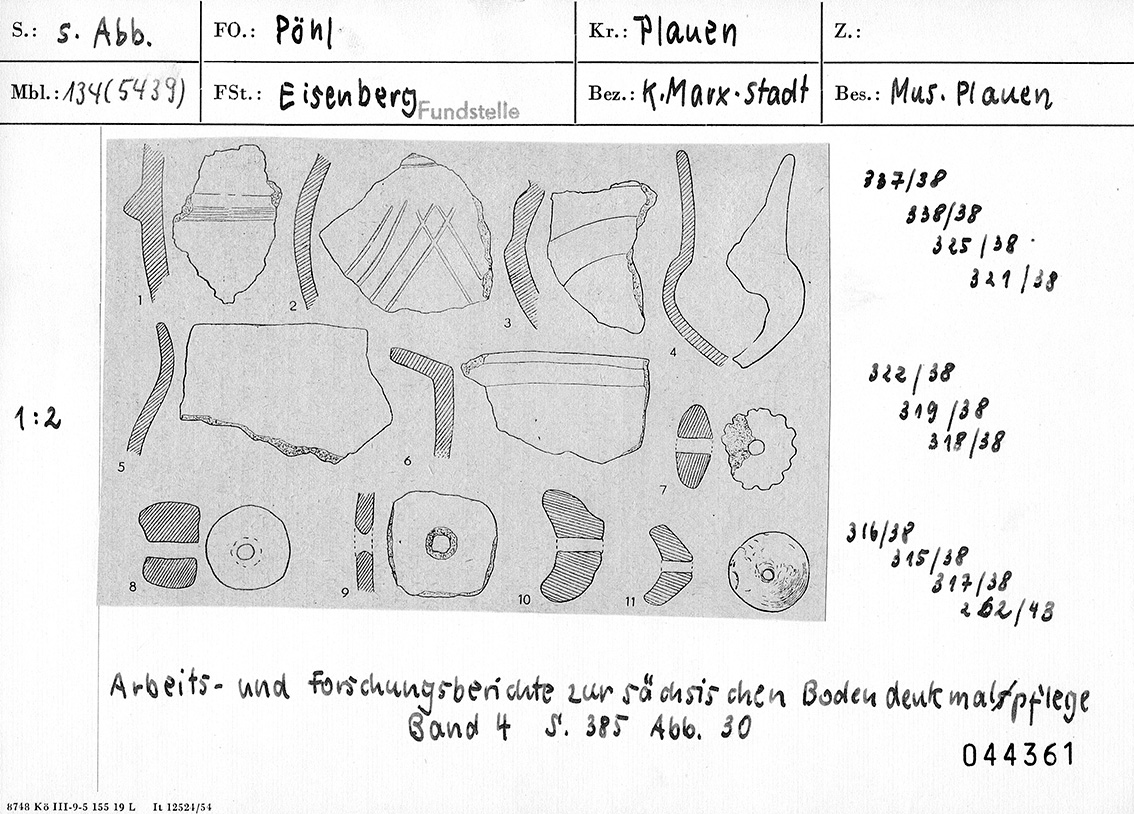
Ceramic remains predominate in the find material, especially vessels from the middle stage of the Late Bronze Age of the Lusatian culture. These include double cones, cylindrical and funnel-necked vessels or amphorae with steeply conical or flared necks, bent-wall bowls and conical bowls as well as cups and jugs. They show ornaments of fluted zone bosses, grooves or groups of grooves as well as oblique or vertical fluting. Another less frequently occurring group consists of Iron Age finds such as sieve remains, spinning whorls, loom weights, lumps of burnt clay, pottery, grinding stones and grain remains.
Stefanie Bilz/Ronald Heynowski/Annemarie ReckImage Source Fundkartei S:044361, 1938/337 ©LfA 1938.
Dating
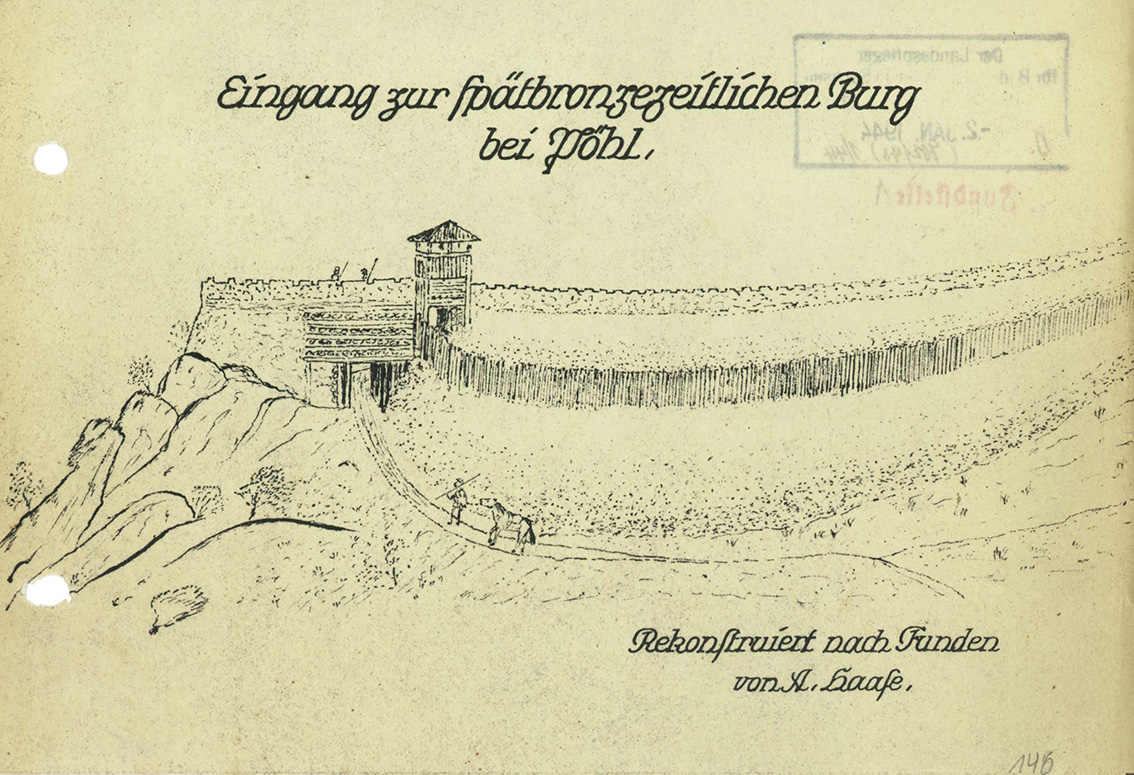
The numerous finds recovered during the three excavation campaigns allow a chronological classification of the fortifications. The oldest finds suggest that the ramparts were built in the 11th century BC. After this, the mountain appears to have been abandoned for several generations before resettlement began in the 8th century BC. After a further gap in settlement, the mountain spur was revisited in the early and middle pre-Roman Iron Age, in the 6th and 5th centuries BC.
Stefanie Bilz/Ronald Heynowski/Annemarie ReckImage Source A. Haase, Zeichnung ©LfA 1944.
Fastening function
Towards the end of the Bronze Age, the number of sites in the area of the upper reaches of the Elster increased noticeably. In addition to the Iron Mountain, the occurrence of unfortified settlements and burial sites in the area, which is rather unfavorable for agriculture, also increases noticeably. The reason for this was probably the tin and copper ore deposits, which can be reached in the area at depths favorable for mining. The convenient location of the mountain near the salt deposits of Altensalz near Plauen, along a trade route to the north in the direction of Halle, may also have played a role.
Stefanie Bilz/Ronald Heynowski/Annemarie ReckImage Source E. Mertens, Modell. Geobasisdaten/Airbornelaserdaten ©GeoSN 2014.
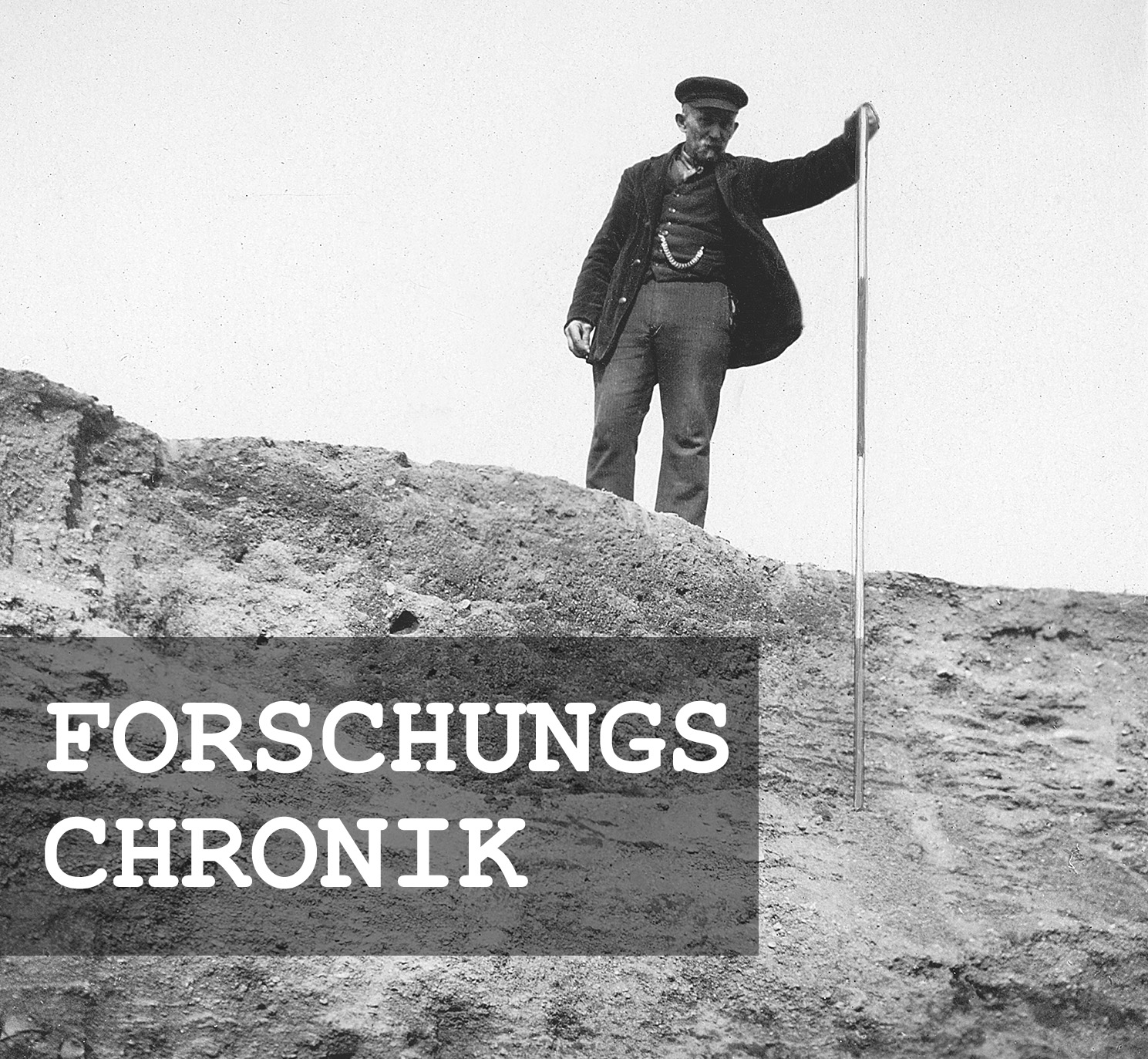
Research chronicle
Image Source Foto ©LfA 1929.
Literature
Stefanie Bilz/Ronald Heynowski, Die Befestigung auf dem Eisenberg. In: Regina Smolnik/Ronny Zienert (Hrsg.), Höhenflüge. Luftbilder und Archäologie in Sachsen (Dresden 2024) 124–125.
Susen Döbel, Spätmittelalterlicher bis neuzeitlicher Bergbau am Eisenberg bei Pöhl im Vogtland. In: Regina Smolnik (Hrsg.), Ausgrabungen in Sachsen 6. Arbeits- und Forschungsberichte zur sächsischen Bodendenkmalpflege, Beih. 33 (Dresden 2018) 410–419.
Hans Kaufmann, Die Wehranlage auf dem Eisenberg bei Jocketa, Kr. Plauen. In: Heinz-Joachim Vogt (Hrsg.), Archäologische Feldforschungen in Sachsen. Arbeits- und Forschungsberichte zur sächsischen Bodendenkmalpflege, Beih. 18 (Berlin 1988) 149–151.
Note on monument protection
Archaeological monuments are protected by the Saxon Monument Protection Act. A permit under monument law is required for ground interventions or construction measures.
Permalink
https://archaeo-sn.de/en/ort/eisenberg-near-pohl/
Citation
Stefanie Bilz/Ronald Heynowski/Annemarie Reck, Eisenberg near Pöhl. In: Landesamt für Archäologie Sachsen, Website archaeo | SN (28.02.2024). https://archaeo-sn.de/en/ort/eisenberg-near-pohl/ (Stand: 24.08.2026)
