

Elsterhorst (Stalag IV A/Oflag IV D)
| Place: | Nardt (Elsterheide, Bautzen) |
|---|---|
| Type: | Sites of National Socialism |
| Dating: | Modern times | Modernity | 20th century | 1939 - 1948 AD. |
Description
As part of the National Socialist German Workers' Party's preparations for war, the construction of a prisoner-of-war camp northwest of Hoyerswerda was ordered in 1939. It was one of a total of ten planned camps in what was then the Dresden military district. Between 1939 and 1945, it first served as a camp for men and later as an officers' camp. Most of them were French soldiers, but prisoners of war of other nationalities were also housed here. After the occupation by the Red Army on 20. The camp was evacuated in April 1945 and used to house German prisoners of war. From here, they made the long journey into Russian captivity or were released with a discharge certificate. From the fall of 1945, it served as a quarantine camp for German soldiers returning from captivity and civilian internees returning to Saxony from other occupation zones. From the fall of 1946 until its final closure in 1948, the camp was again used as a camp for resettlers who had been expelled from Poland, Czechoslovakia and other Eastern European countries and were to be resettled in Saxony. The camp was still partially demolished in 1948.
Annemarie ReckConstruction and use as a stalag
The camp was built from 1938, initially with the help of local Hoyerswerda companies. Later, Czech soldiers who had been interned in the fall of 1938 as part of the occupation of the Sudeten region and, from 1939, Polish prisoners of war were also used to build the barracks. The camp essentially consisted of three separate areas: the military hospital, the commandant's office with the crew quarters of the 2nd Landwehr Rifle Battalion and the Stalag IV A and Oflag IV D prisoner-of-war camp. From 1942, the military hospital also served as a reserve hospital for tuberculosis patients. In addition to the economic and administrative barracks, there were 40 residential barracks in the camp, which were equipped with two to three-storey beds and were initially intended to accommodate up to 800 to 1000 men each. The prisoners were taken from here to the surrounding villages in squads of around 50 men to work bringing in the harvest, in workshops, quarries or lignite mines. They were paid up to 60% of their usual wages for this work, which they had to give up almost entirely for their accommodation and food in the camp.
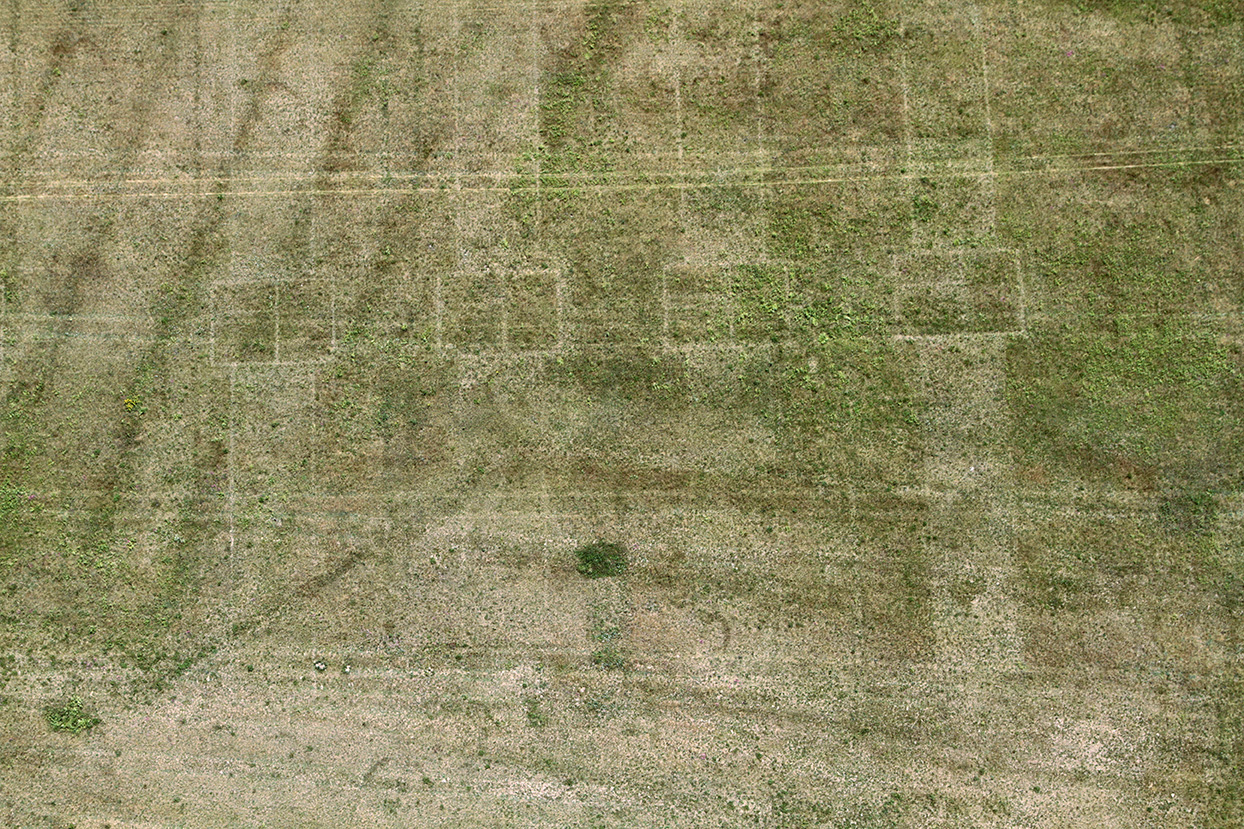
Annemarie ReckImage Source R. Heynowski, Foto ©LfA 2020.
The Oflag
Stalag IV A was relocated to Hohnstein in February 1941. Instead, Oflag IV D, one of the largest camps for French prisoners of war in Germany, was set up in June 1940. Between 1940 and 1945, it housed around 5,000 to 6,000 officers and a further 1,500 orderlies. Most of them were French, but there were also some Belgians, British, Canadians and Yugoslavs among them. At times, Russian prisoners were also housed in the camp. Perhaps the biggest difference to the Stalag was that the officers could not be obliged to do forced labor and therefore had to stay in the camp permanently. The first French arrived in Elsterhorst at the end of May 1940. Before the first shipments of Red Cross parcels or parcels from the occupied zone of France arrived, the prisoners suffered mainly from hunger due to insufficient rations. This was compounded by depression due to the imminent defeat of France. From September 1940, each prisoner was allowed to receive two pacts, which eased the precarious situation of the French officers somewhat.
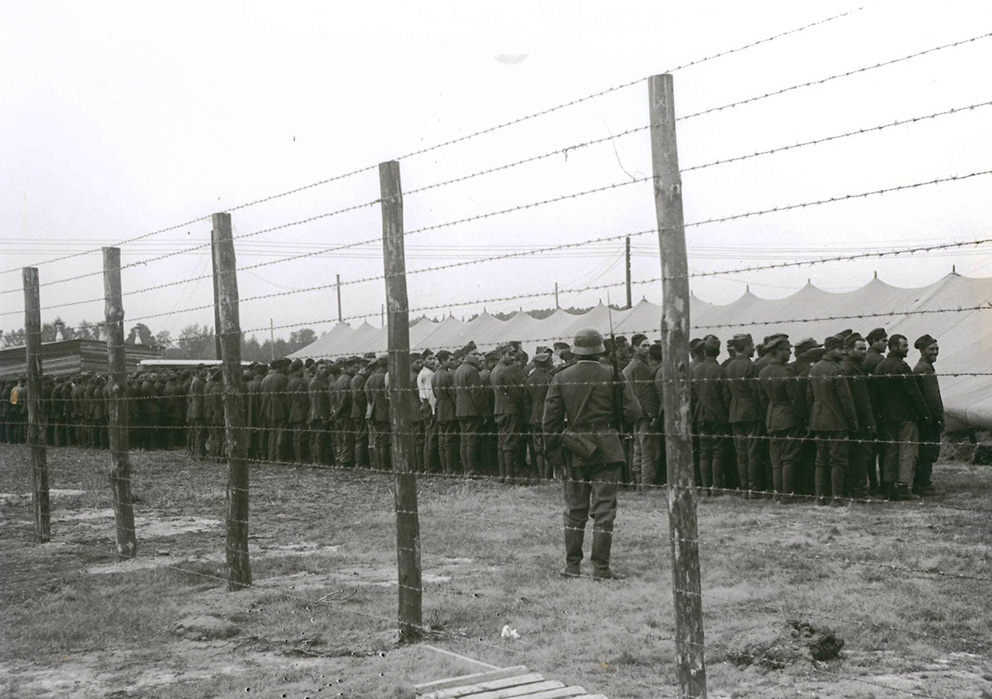
Annemarie ReckImage Source Titz, Foto polnischer Gefangener im September 1939 ©Schloss Museum Hoyerswerda 2024.
Everyday life in the Oflag camp
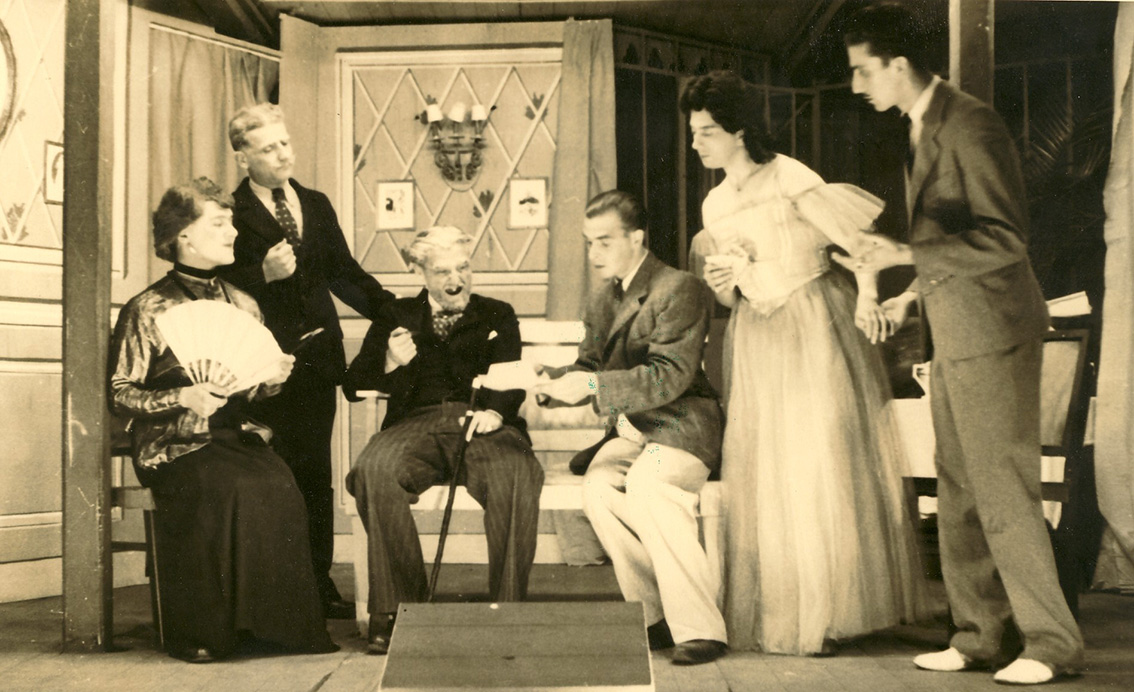
Many of the French prisoners sought support in their faith and founded church communities. Others attempted to escape, but were rarely successful due to a lack of language skills and local knowledge. In most cases, the escapees were apprehended in the immediate vicinity. In March and September 1941, two mass escapes took place with the help of escape tunnels, in which first 27 and then 30 French officers escaped. However, the chances of successfully escaping to unoccupied France or Switzerland remained slim, which is why escape attempts declined sharply from 1942 onwards. Instead, the camp inmates turned to other activities in order to escape the monotony of camp life. For example, a soccer pitch was laid out in the camp area. The fire pond was used for swimming in summer and ice skating in winter. Others turned to artistic activities, such as painting. What they needed for this was gradually sent to them in parcels from France. The camp management also made it possible to borrow instruments. With their help, scores were written and even concerts were organized. The camp inmates also founded several theater groups, whose performances were a popular diversion for their fellow prisoners.
Annemarie ReckImage Source L. Bois, Foto Theaterinszenierung französischer Gefangener ©Schloss Museum Hoyerswerda 2024.
The University of Hoyerswerda
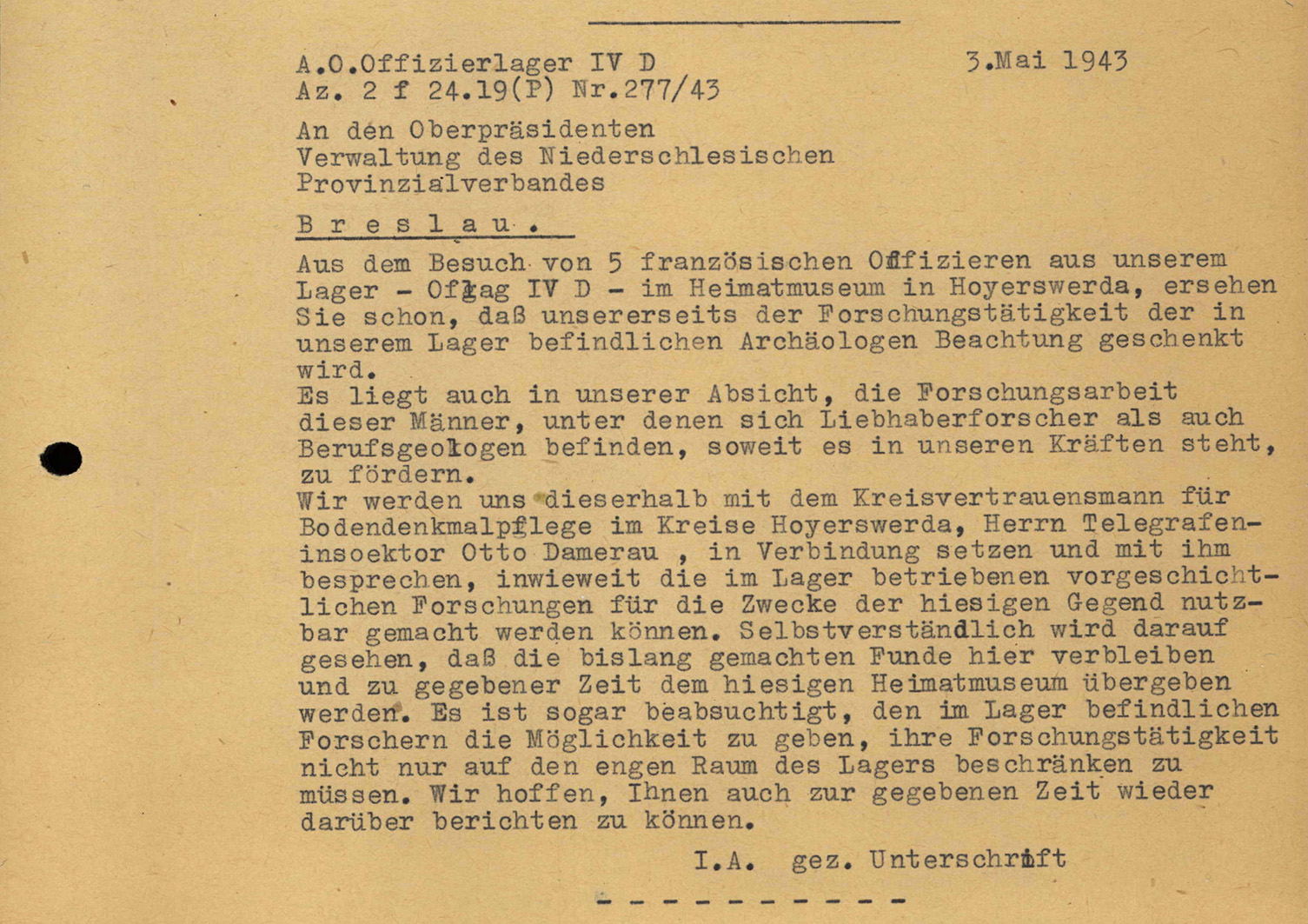
The books sent to the camp were used to set up an impressive library, where many of the young soldiers studied with zeal. Soon the "University of Hoyerswerda" was founded in the camp under the direction of Professor Manzet, consisting of two faculties, one for law and one for the humanities. Manzet was supported by 150 trained teachers and university lecturers, graduates and educated autodidacts, who expanded the range of courses on offer. 3000 of the captured officers took up this offer and enrolled. A group of French archaeologists even carried out excavations in the camp and published their findings in French specialist journals.
Annemarie ReckImage Source Ortsakte 51610, 49 ©LfA 1943.
End of the war in the camp
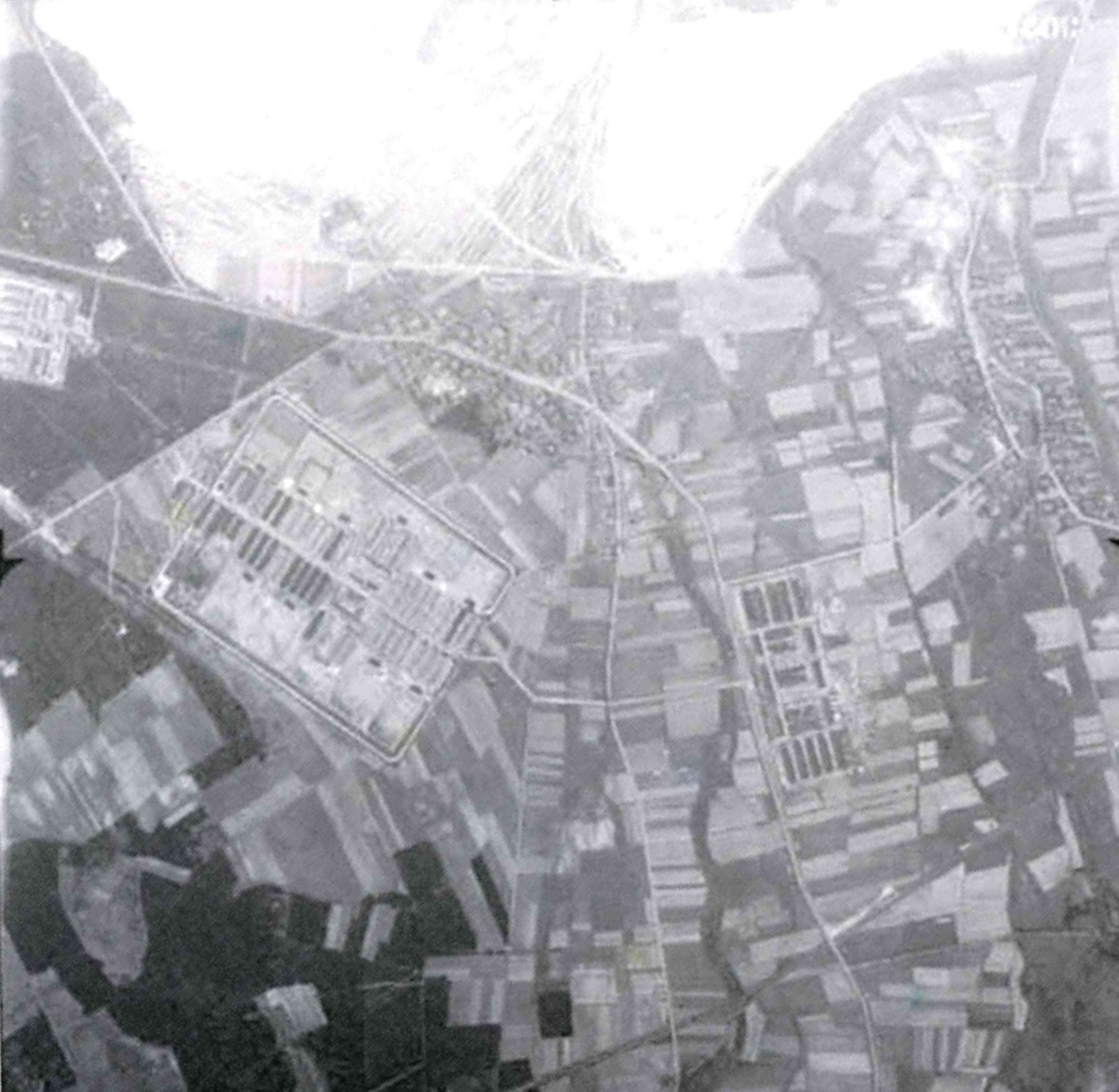
After the Allied landings in Normandy in June 1944, parcels were no longer sent to the prisoners. Despite emergency reserves, hunger slowly spread again. Studies were hardly possible due to the increasing appeals. From August onwards, more and more Russian prisoners arrived at the camp, who were much worse off. In the course of the Red Army's advance in January 1945, preparations were made to evacuate the camp. From February 17, 1945, the officers were transferred to the camps in Königsstein and Großenhain. Instead, Belgians and Frenchmen from prison camps further east were sent to Elsterhorst.
Annemarie ReckImage Source Alliiertes Luftbild ©LfA 1945.
The Russian prisoner-of-war camp
Hoyerswerda was occupied on April 20, 1945. At that time, 2886 Russians and 534 Frenchmen remained in the prisoner-of-war camp. Nothing is known about their individual fates. The camp was quickly evacuated and two Russian prisoner of war camps were set up in the Elsterhorst camp area, SPW No. 3 and FPPL No. 30. Wehrmacht soldiers who had been captured during the Battle of Berlin, Dresden and Northern Bohemia were sent in columns to the camps near Elsterhorst. The camp was soon overcrowded with 60,000 captured soldiers, 2,000 officers and 28 generals. The barracks were insufficient; the prisoners of war had to sleep in makeshift tents or in the open air. As a result, diseases spread quickly. Due to the destruction in the surrounding area, there was also not enough food to adequately feed the prisoners. From here, some of the German soldiers had to make their way into Russian captivity. However, some were lucky and were released with a discharge certificate. The deportations to the USSR began in mid-July 1945. Camp SPW No. 3 was dissolved on September 8, 1945 and camp FPPL No. 30 on October 20, 1945.
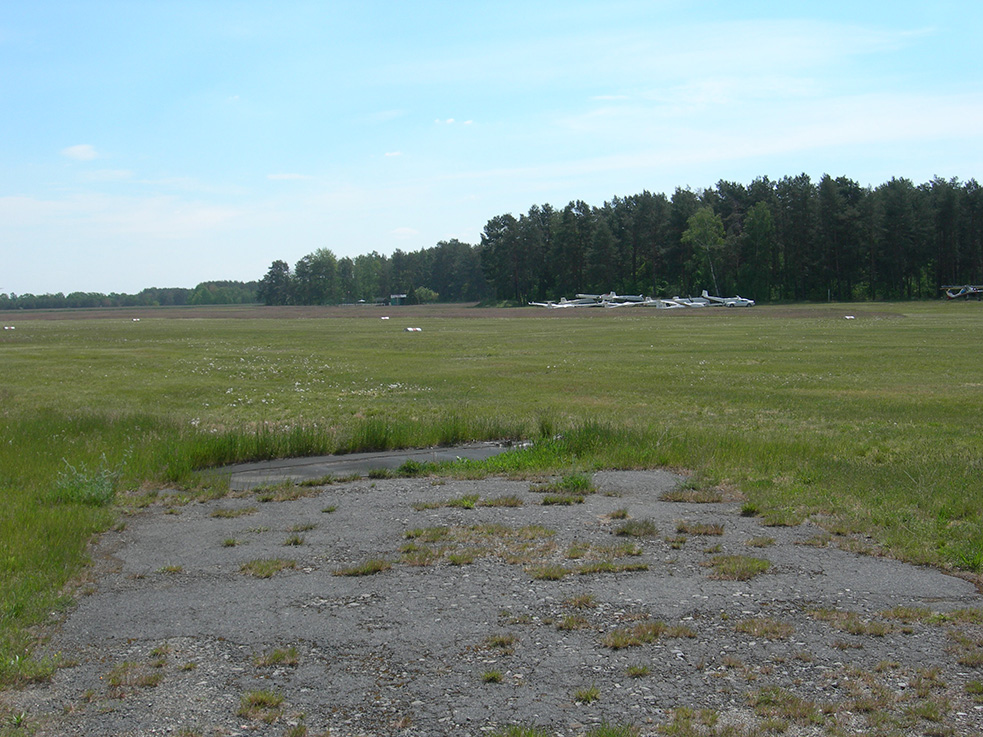
Annemarie ReckImage Source M. Strobel, Foto ehemaliges Lagergelände ©LfA 2020.
The quarantine camp
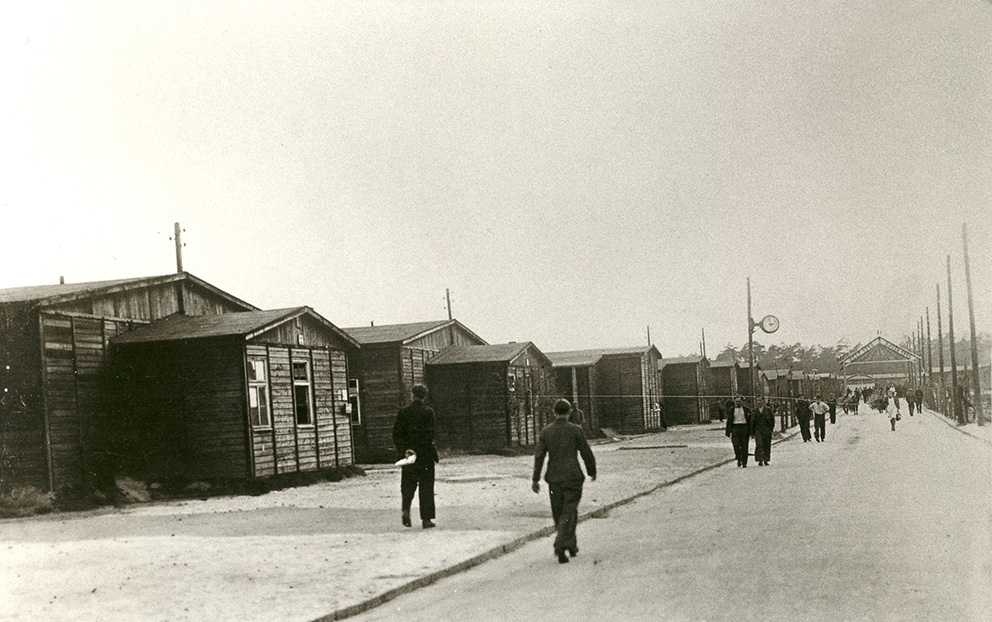
It was then used as a quarantine camp for German soldiers returning from Soviet captivity, civilian internees and prisoners of war from other occupation zones who wanted to return to their homes in the Russian zone. The returnees were supposed to stay here for two weeks, but in some cases it could last almost half a year, which led to multiple complaints and even escape attempts. The quarantine camp was under the German administration of the town of Hoyerswerda with a Russian commandant. He ordered the returnees and civilian internees to work on repairing the barracks, while cultural and political work in the spirit of the newly founded SED was to be postponed until the evening. The events met with great interest among the returnees and offered them the opportunity to reflect on the war for the first time. Diseases such as tuberculosis and typhus were not uncommon among the returnees.
Annemarie ReckImage Source Foto Lagerstraße 1946 ©Schloss Museum Hoyerswerda 2024.
The resettlement camp
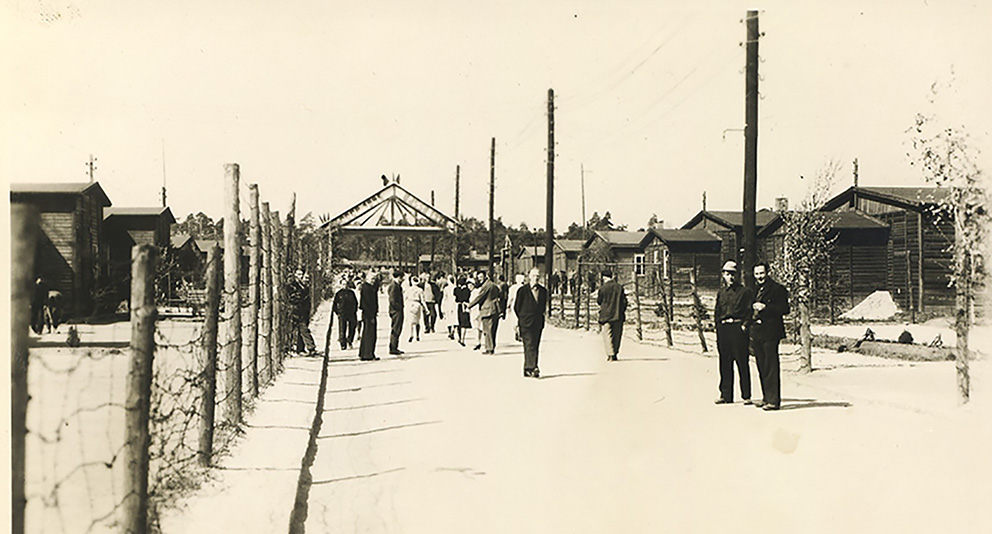
The function of the camp changed once again in August 1946 with the arrival of the first displaced persons from Poland. The quarantine camp was officially renamed the resettlement camp and was designed for 15,000 to 20,000 people. In addition, the Neuwiese camp, the former commandant's office, was to accommodate more people. Women were already among the civilian internees for the first time. The resettlers now included entire families with children and the elderly, which presented the camp management with new challenges. There was a lack of straw sacks, kitchen utensils, stoves and, above all, the hygienic conditions in the camp were still inadequate. However, as the average stay of the displaced persons was only fourteen days, the conditions were considered reasonable. The transports from Poland stopped in mid-November 1947. The camp was dissolved at the beginning of 1948.
Annemarie ReckImage Source Foto Umsiedlerlager 1946 ©Schloss Museum Hoyerswerda 2024.
War cemetery
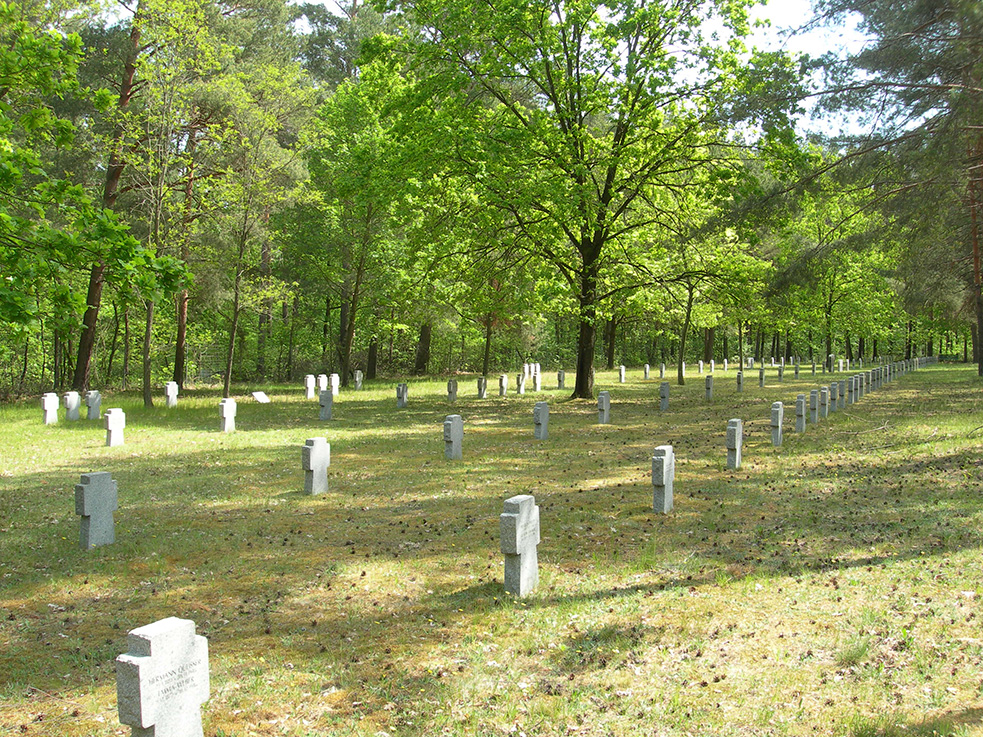
The Nardt war cemetery was created in 1992 and 1993. It contains the graves of the 621 German soldiers who died in camp custody and the 606 displaced persons who died in the camp. The officers of French, Belgian, British and Canadian origin who died in the POW camp between 1940 and 1945 were buried with military honors next to the cemetery in Nardt. From 1952, the dead were exhumed and repatriated. The deceased Russian prisoners of war were buried at the back of the Nardt cemetery. They were exhumed from 1974 and reburied in the "Am Ehrenhain" memorial in Hoyerswerda.
Annemarie ReckImage Source M. Strobel, Foto ©LfA 2020.
Literature
Karl-Heinz Hempel, Das Lager Elsterhort. Erinnern – Gedenken – Mahnen. In: Neue Hoyerswerdaer Geschichtshefte Nr. 10 (2007). Michael Strobel, Das kriegsgefangenenlager "Elsterhorst". In: Regina Smolnik/Ronny Zienert (Hrsg.), Höhenflüge. Luftbilder und Archäologie in Sachsen (Dresden 2024) 104–105.
Note on monument protection
Archaeological monuments are protected by the Saxon Monument Protection Act. A permit under monument law is required for ground interventions or construction measures.
Permalink
https://archaeo-sn.de/en/ort/elsterhorst/
Citation
Annemarie Reck, Elsterhorst (Stalag IV A/Oflag IV D). In: Landesamt für Archäologie Sachsen, Website archaeo | SN (08.02.2024). https://archaeo-sn.de/en/ort/elsterhorst/ (Stand: 29.09.2026)
