

Green Belt near Posseck
| Place: | Posseck (Triebel, Vogtlandkreis) |
|---|---|
| Type: | Border installations |
| Dating: | Modern times | Modernity | 1952-1991 |
Description
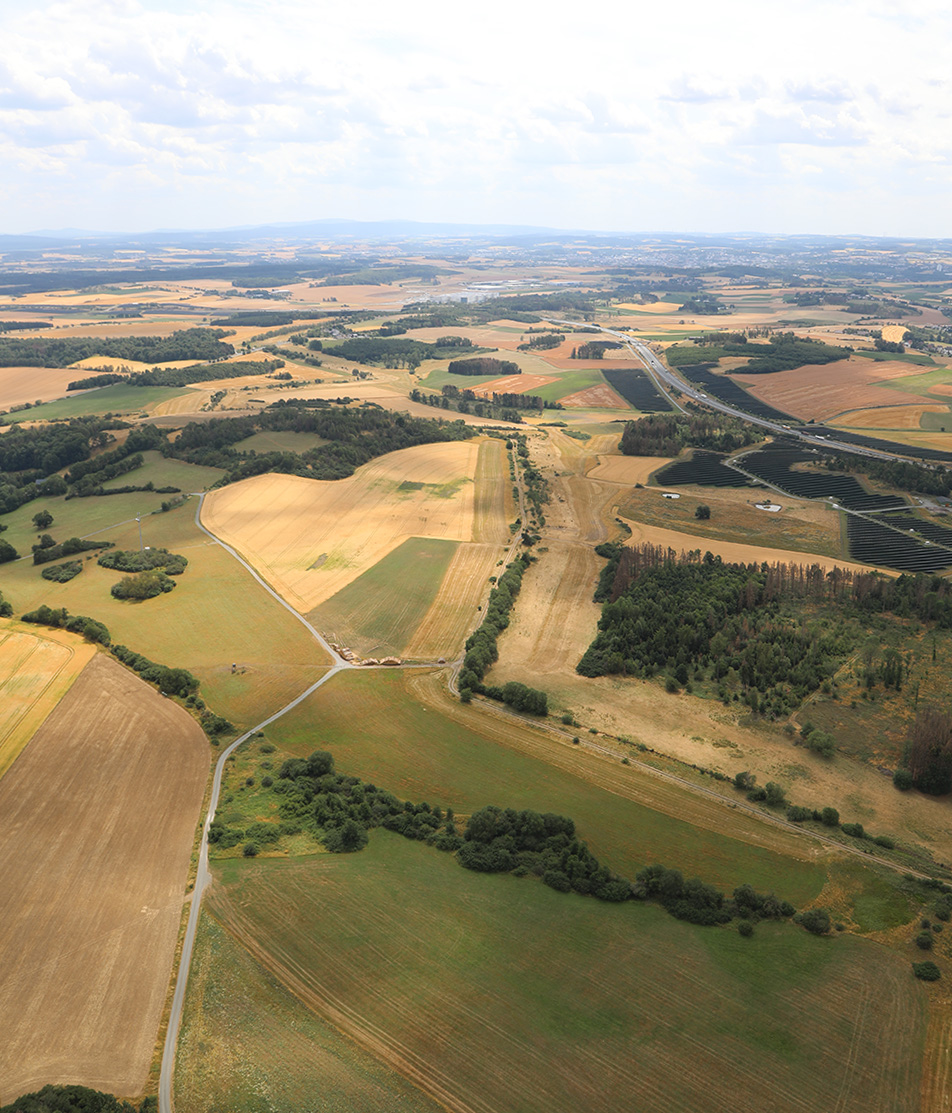
The so-called "Green Belt“ stretches a total of 1393 km from the Baltic Sea coast across Germany to the historic border triangle of Bavaria/Bohemia/Saxony near Prex in Upper Franconia. In the Free State of Saxony, the former inner-German border measures a comparatively short 45 km. The former death strip, which marked the state border between the GDR and the former FRG, was already a valuable habitat for rare animal and plant species during its time of use. At present, the Green Belt consists of a series of 13 different protected areas of different categories, which are to be replaced in the near future by the Green Belt National Natural Monument. From an archaeological point of view, it is perhaps the youngest archaeological monument in Saxony.
Stefanie Bilz/Annemarie ReckLocation
Today, the Green Belt touches a total of twelve municipalities in the Vogtland district: Pabstleithen and Tiefenbrunn (Eichigt municipality), Posseck, Gassenreuth, Sachsgrün, Troschenreuth, Weidersberg and Blosenberg (Triebel/Vogtl. municipality), Heinersgrün, Krebes, Gutenfürst and Grobau (Weischlitz municipality). Even today, many sections of the former border strip with their monuments, some of which can still be seen on the ground, are important places of remembrance of supra-regional significance. Both in the immediate border area and in the 5 km wide restricted zone in front of it, the fortification in 1952 and 1961 resulted in the complete or partial evacuation of entire settlements, as a result of which the residents were forcibly relocated and their houses demolished.
Stefanie Bilz/Annemarie ReckImage Source S. Bilz, Foto ©LfA 2023.
Construction and demolition
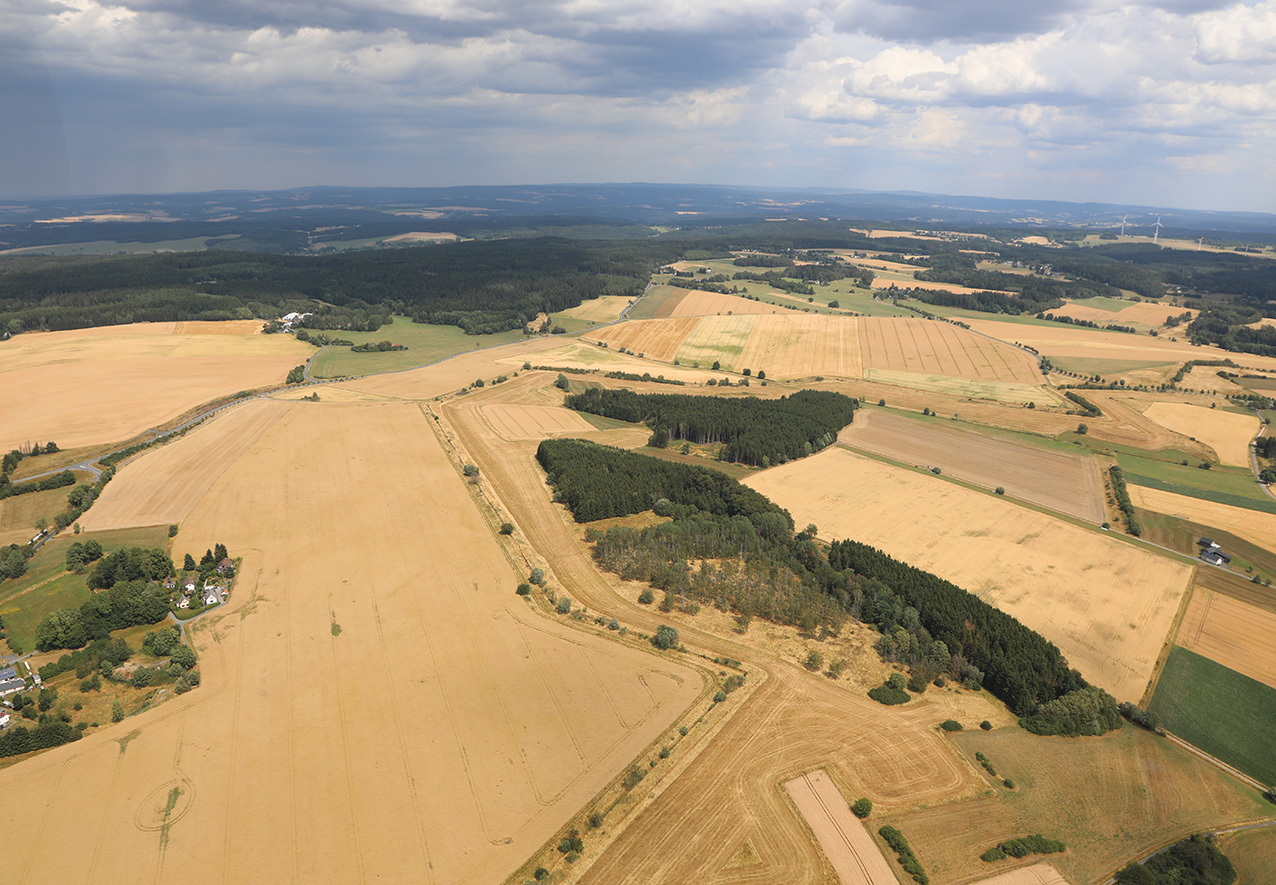
The construction of the inner protective strip began with the Kolonnenweg, which was followed by the 6 m wide lane security strip, the vehicle barrier trench, the mine strip cleared between 1978 and 1985, the plug-in metal fence and the upstream territory. Two border towers are also still preserved today, one north of the A 72 and another between the villages of Tiefenbrunn and Mittelhammer. In the course of reunification, the clearing of the border strip was begun in 1991 by the specially founded Gesellschaft zum Abbau und zur Verwertung von Altanlagen und Altlasten mbh.
Stefanie Bilz/Annemarie ReckImage Source S. Bilz, Foto ©LfA 2023.
Literature
Stefanie Bilz, Das Grüne Band. In: Regina Smolnik/Ronny Zienert (Hrsg.), Höhenflüge. Luftbilder und Archäologie in Sachsen (Dresden 2024) 156–157.
Landratsamt Vogtlandkreis (Hrsg.), 30 Jahre Grenzöffnung. Das Grüne Band im Vogtlandkreis (Plauen 2019).
Note on monument protection
Archaeological monuments are protected by the Saxon Monument Protection Act. A permit under monument law is required for ground interventions or construction measures.
Permalink
https://archaeo-sn.de/en/ort/green-belt-near-posseck/
Citation
Stefanie Bilz/Annemarie Reck, Green Belt near Posseck. In: Landesamt für Archäologie Sachsen, Website archaeo | SN (26.07.2024). https://archaeo-sn.de/en/ort/green-belt-near-posseck/ (Stand: 29.09.2026)
