

Kaucklitz barrow cemetery
| Place: | Kaucklitz (Arzberg, North Saxony) |
|---|---|
| Type: | Mound grave/mound burial ground |
| Dating: | Lusatian culture | 1350 - 780 BC. |
Description
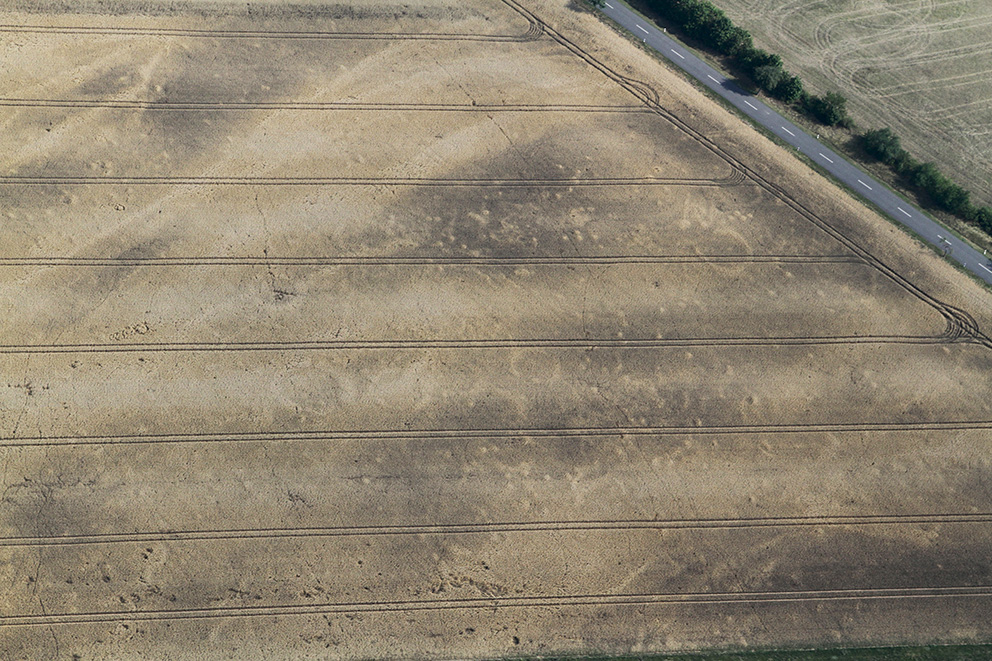
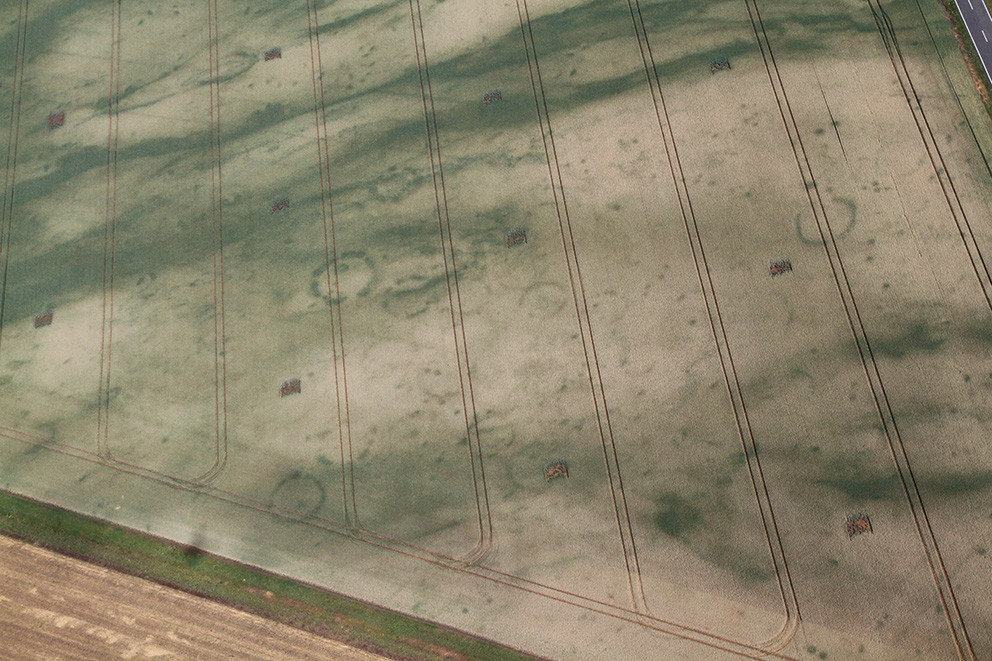
South of the village of Kaucklitz there is a burial mound field from the Late Bronze Age in the lowlands of the River Elbe. Above ground, the former hills are no longer visible at all. They were probably completely leveled by the intensive arable farming in this region over the past centuries. However, due to the severe drought in summer 2019, the structures surrounded by small ditches were clearly visible in the aerial image. At least 19 burial mounds were identified. Their construction method distinguishes them as tombs of the Late Bronze Age Lusatian culture. However, no such finds are known to date.
Ronald Heynowski/Annemarie ReckVisibility of the ground monuments
The changes in the course of the Elbe over the past millennia have had a significant impact on the subsoil. The lowlands of the Elbe are characterized by the alternation of sandbanks and oxbow lakes, which are still increasingly fed with moisture. From a bird's eye view, they are still clearly visible and offer a striped picture of already ripe and still green cereal plants in summer. However, the extreme heat in summer 2019 caused the groundwater level to drop considerably in soil layers up to 1.8 m deep. As a result, many plants were cut off from the groundwater and were dependent on surface water. However, where the soil structure had been deeply intervened in the past, such as in the circular ditches around the mounds or the burial pits, the moisture was stored for much longer.
Ronald Heynowski/Annemarie ReckImage Source R. Heynowski, Foto ©LfA 2015.
Discovery of the burial mounds
Four of the mounds, which lie on sandbanks and gravelly subsoil, were already discovered in the summer of 2005. Due to the drought in summer 2019 and the lowering of the groundwater level, vegetation features became visible for the first time in areas that are usually well-watered and evenly green. Instead of the previously known four burial mounds, a densely occupied burial mound field of at least 19 burial structures was now visible. The mounds have a diameter of 8-13 m, with a large number of shallow graves in between. The type and structure of the burial site suggest that these are urn graves from the Late Bronze Age. So far, the site is only known from aerial photographs. No finds or excavations have yet been carried out that could confirm the age of the burial mound.
Ronald Heynowski/Annemarie ReckImage Source Ronald Heynowski, Foto ©LfA 2019.
Literature
Ronald Heynowski, Luftbilder unter extremer Dürre. In: Regina Smolnik/Ronny Zienert (Hrsg.), Höhenflüge. Luftbilder und Archäologie in Sachsen (Dresden 2024) 222–223.
Note on monument protection
Archaeological monuments are protected by the Saxon Monument Protection Act. A permit under monument law is required for ground interventions or construction measures.
Permalink
https://archaeo-sn.de/en/ort/kaucklitz-barrow-cemetery/
Citation
Ronald Heynowski/Annemarie Reck, Kaucklitz barrow cemetery. In: Landesamt für Archäologie Sachsen, Website archaeo | SN (04.09.2024). https://archaeo-sn.de/en/ort/kaucklitz-barrow-cemetery/ (Stand: 21.09.2026)
