

Linear Pottery settlement near Frohburg
| Place: | Frohburg (Frohburg, Leipzig) |
|---|---|
| Type: | Settlement |
| Dating: | Middle to Late Linear Pottery | around 4900 BC |
Description
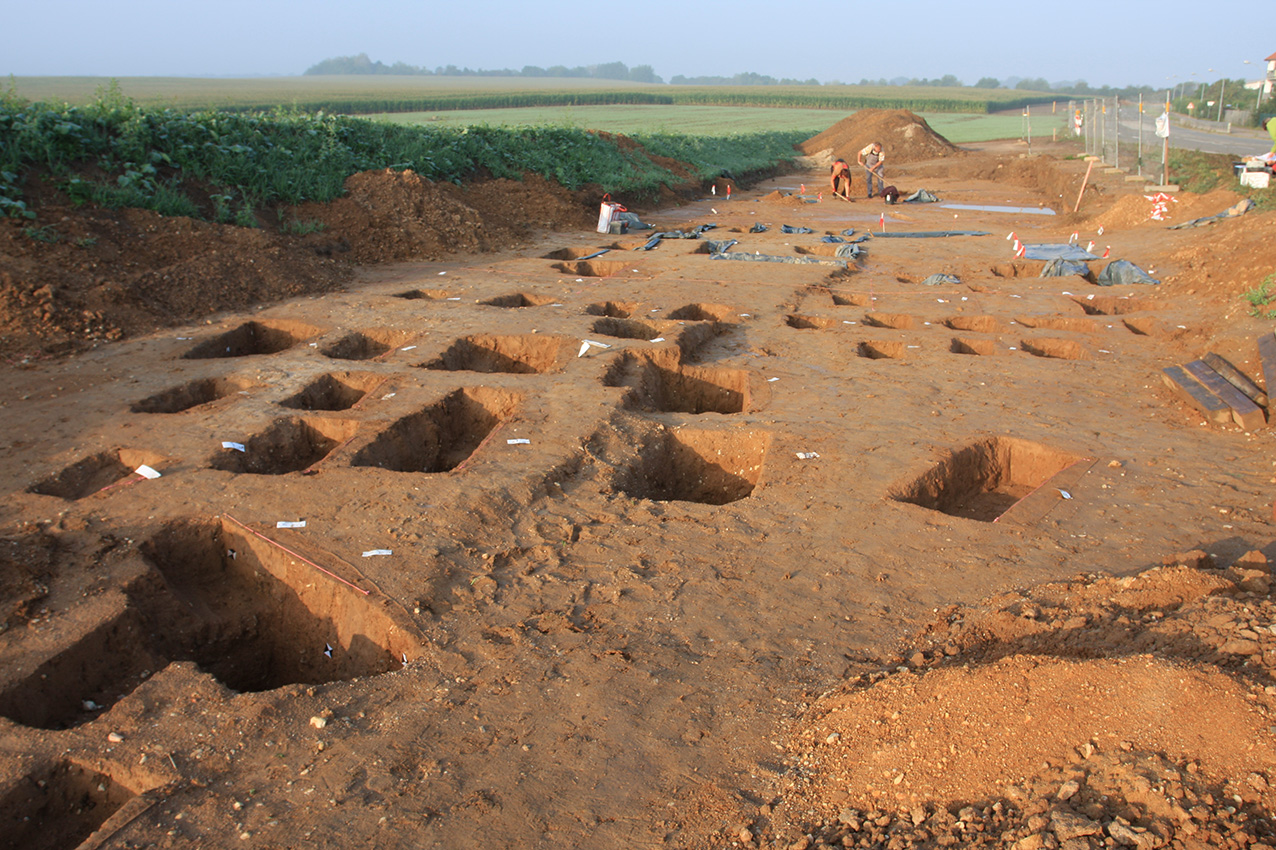
During the archaeological supervision of the construction of a gas ring main, Linear Pottery features were uncovered in the south of the small Saxon town of Frohburg. Frohburg is located around 35 km south of Leipzig on the River Wyhra. The town marks the geographical transition from the Leipzig lowland bay to the Zeitz-Altenburger-Löss hill country. The excavation area of around 1202 square meters, which was defined by the construction site of the gas pipeline, was approx. 600 m west of the river at the highest point in the terrain. The excavation area offers a good view of the river valley with the Streitwald forest to the south-east and the historic Wyhra ford towards Kohren-Salis. At present, the Linear Pottery house structures in Frohburg indicate the most south-westerly located Linear Pottery (LBK) settlement in the whole of Saxony.
Robert-Alexander AnsorgNatural location
The natural location of the site was characterized by glacial deformation. An up to 1.20 m high backfill (the result of road construction measures in the meantime) covered the clearly recognizable features in the underlying soil. Anthropogenic soil interventions during gas pipeline construction as well as agricultural deep plowing methods common in the past left behind damage.
Robert-Alexander AnsorgImage Source R. Ansorg, Foto ©LfA 2015.
Findings
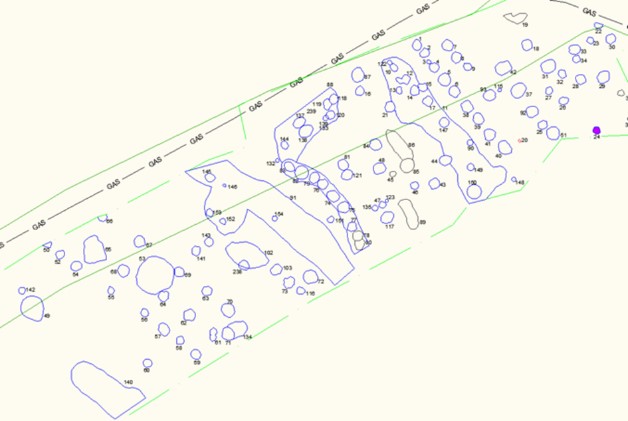
Of 240 features, 190, including 6 double post pits, 150 post pits and 22 pits, were archaeologically relevant. The rows of post pits typical of Linear Pottery house layouts remained incomplete due to the limited excavation area and were difficult to classify due to overlaps. A total of five house floor plans could be defined. It is possible that there is a multi-phase structure in the central excavation area. Features extending below the excavation limits indicate their continuation from the south-east to the north-west. House 1 in the far west of the excavation area is the most clearly recognizable. The longitudinal pits are difficult to identify. The post pits in them are not only parts of House 1, but also of House 2, a finding situation that is repeated towards the east.
Robert-Alexander AnsorgImage Source R. Ansorg, Umzeichnung der Befunde ©LfA 2015.
Medium site area
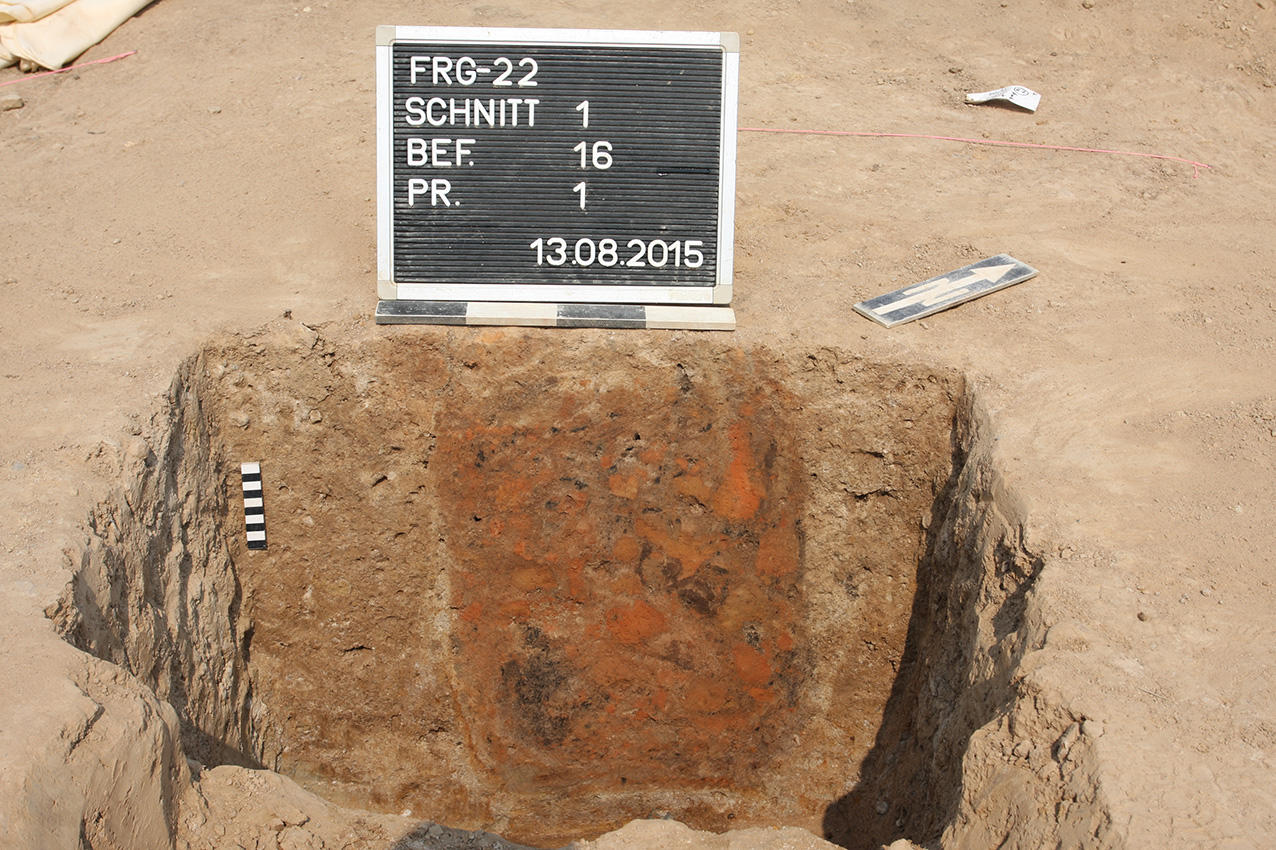
In the central part of the site, especially in the area of the longitudinal pits, the features reached a depth of up to 1.00 m. Furthermore, strong concentrations of red clay and charcoal were found outside and inside the features in this central section of the site.
Robert-Alexander AnsorgImage Source R. Ansorg, Foto ©LfA 2015.
Distribution of finds
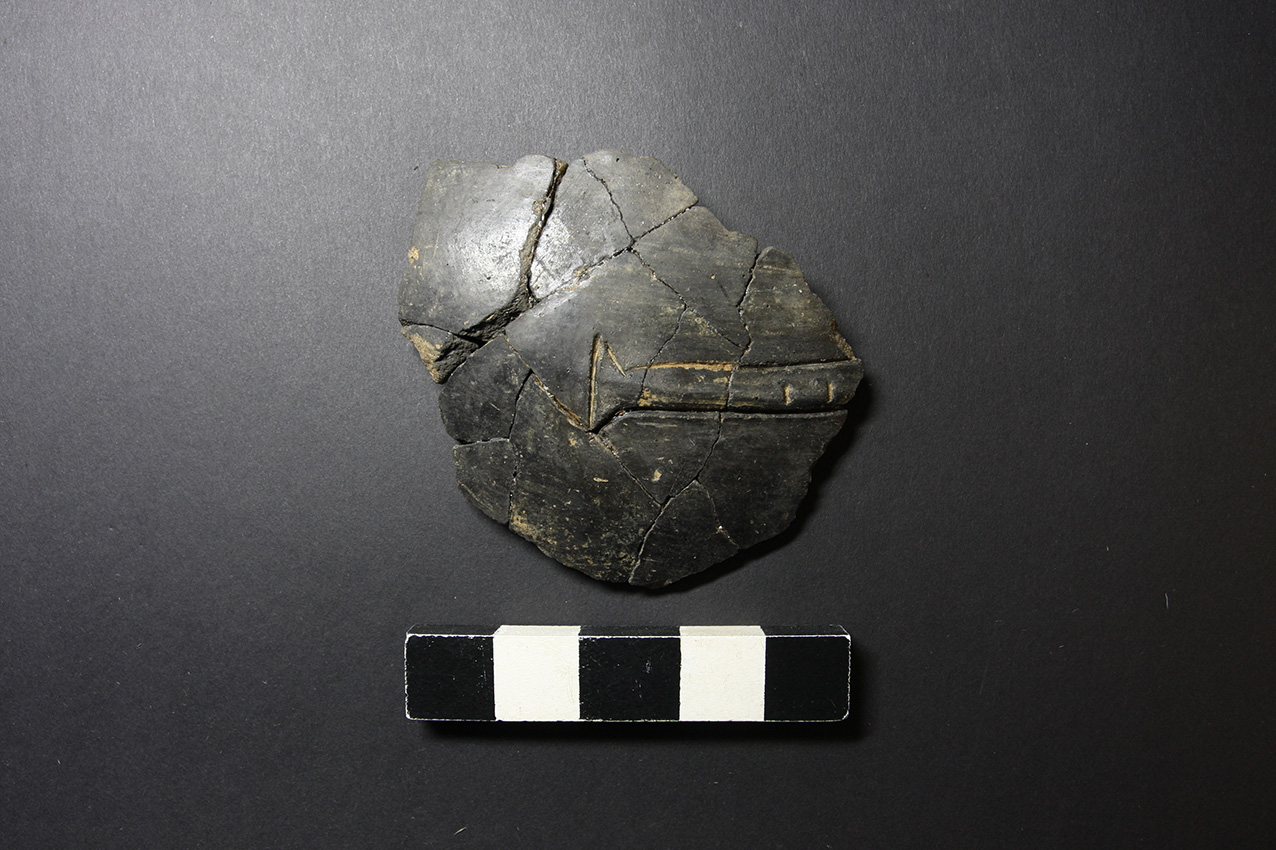
The uneven distribution of the finds is striking. The western and central parts of the excavation area were poor in finds, while the majority of finds from two pits in the eastern part were disturbed by the old pipeline trench. Some pottery fragments were exceptionally well preserved. One vessel unit in particular stood out, with a sculptural ledge instead of the incised band decoration that is otherwise common for the culture level.
Robert-Alexander AnsorgImage Source R. Ansorg, Foto ©LfA 2015.
Ceramics and silices
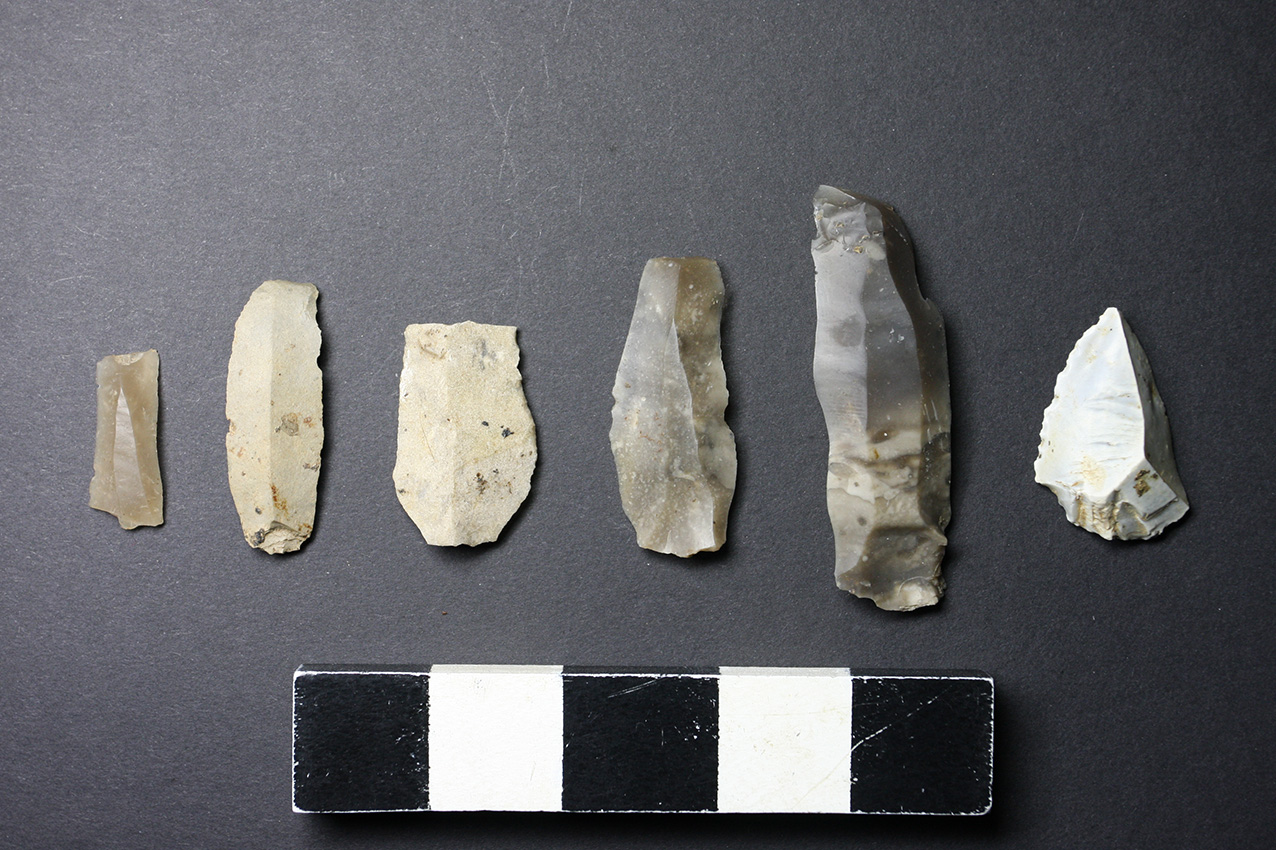
Another vessel unit recovered from the same find had a hole in it, a visible sign that it had been repaired at the time. Flint fragments, blades and scrapers were recovered from the entire excavation area. One flint blade and one scraper showed signs of sickle sheen, which can be attributed to the harvesting of ears of grain.
Robert-Alexander AnsorgImage Source R. Ansorg, Foto ©LfA 2015.
Stone appliances
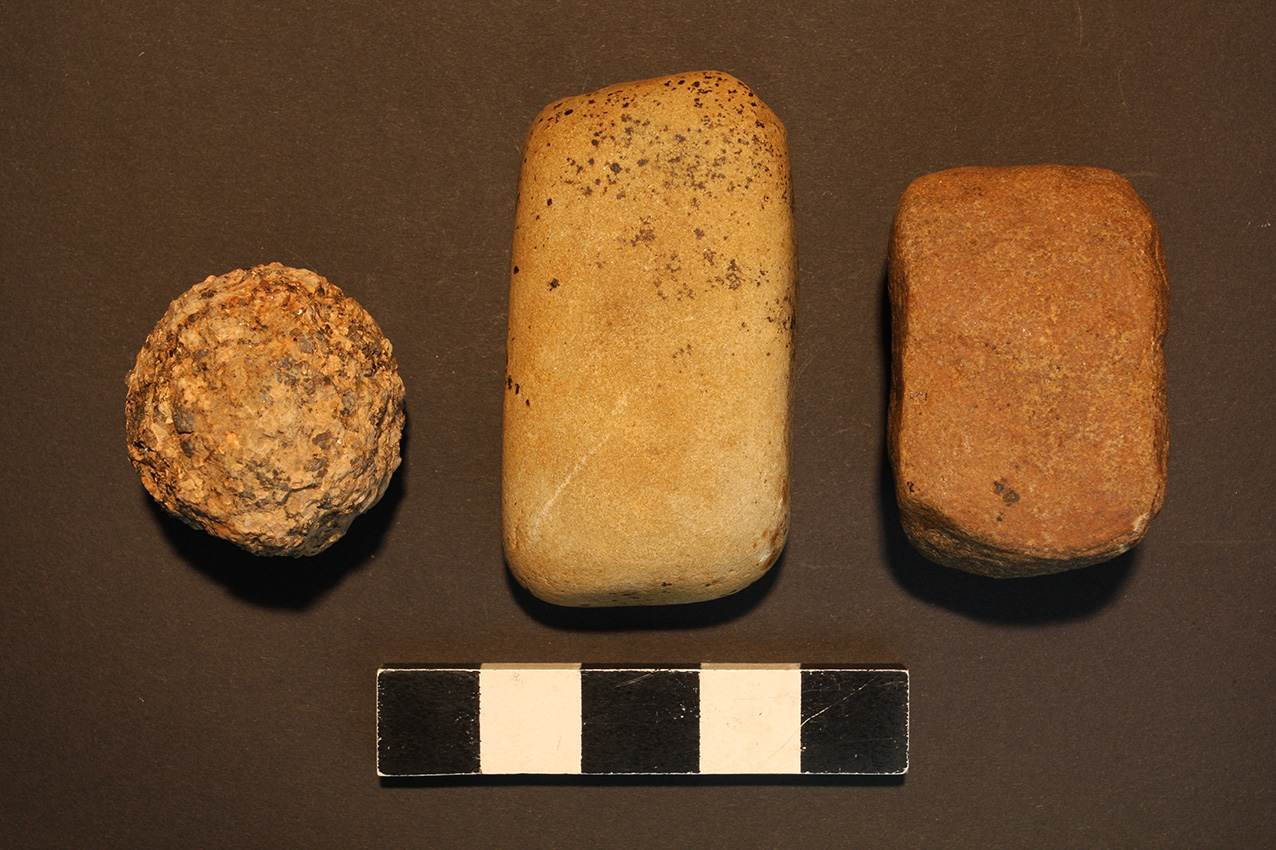
The white and red porphyry that was also found is common in the area around Frohburg (the town is located in the so-called Red Porphyry Land) and is still quarried today. One stone artifact made of granite was used as a tapping stone, another as a retouching stone, another first as a runner and then also as a retouching stone. Only one stone axe fragment was found in the entire excavation area, which was used secondarily as a grinding stone. One reason for the exposed location of the settlement could be its proximity to an outcrop of Geithain banded jasper. However, fragments of this semi-precious stone were only recovered from the excavation site as finds.
Robert-Alexander AnsorgImage Source R. Ansorg, Foto ©LfA 2015.
Literature
Robert Ansorg, Älter als erwartet – Frohburg. Archäologie in Deutschland 2016, H. 2, 49–50.
Note on monument protection
Archaeological monuments are protected by the Saxon Monument Protection Act. A permit under monument law is required for ground interventions or construction measures.
Permalink
https://archaeo-sn.de/en/ort/linear-pottery-settlement-near-frohburg/
Citation
Robert-Alexander Ansorg, Linear Pottery settlement near Frohburg. In: Landesamt für Archäologie Sachsen, Website archaeo | SN (11.11.2024). https://archaeo-sn.de/en/ort/linear-pottery-settlement-near-frohburg/ (Stand: 29.09.2026)
