

Oybin Monastery
| Place: | Oybin (Oybin, Görlitz) |
|---|---|
| Type: | Monastery complex |
| Dating: | Late Middle Ages | Modern times | 1250 - 1577 AD. |
Description
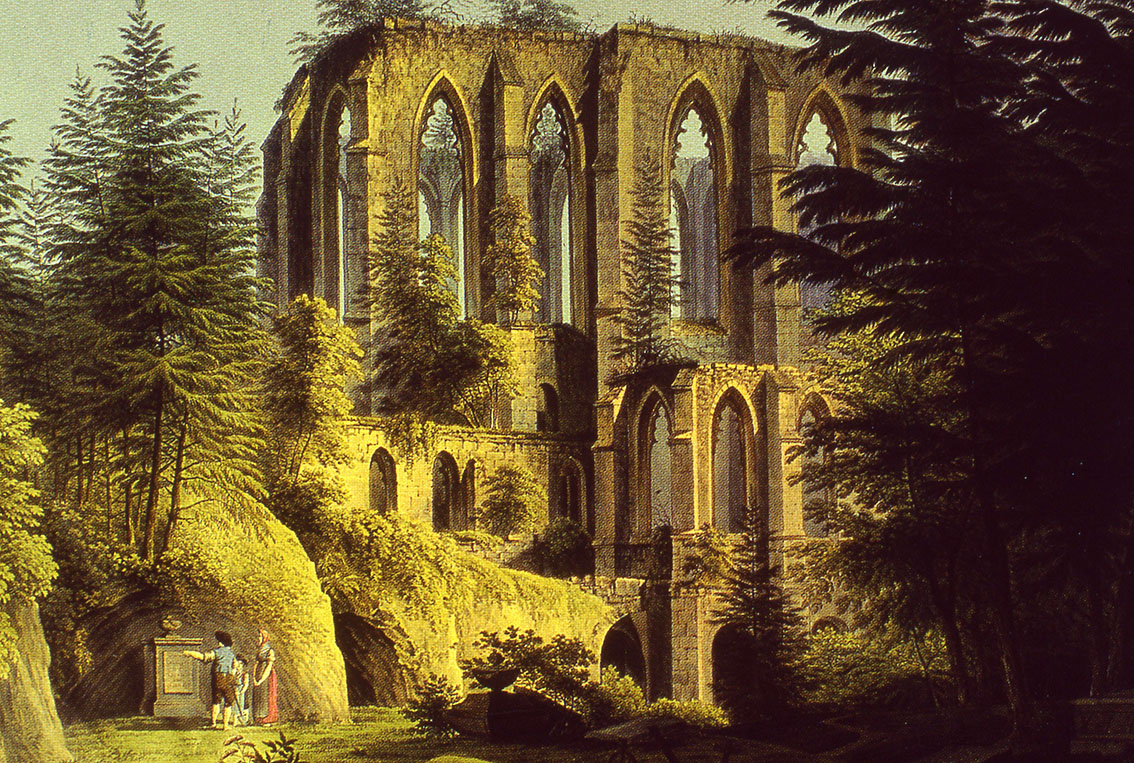
The ruins of a medieval castle and monastery are still enthroned on an imposing sandstone rock north of the spa town of Oybin. Its impressive appearance inspired numerous artists of the Romantic movement, such as Caspar David Friedrich (1774-1840) and Carl Gustav Carus (1789-1869), to create famous works of art. Behind the still impressive backdrop, however, lie several hundred years of history. Oybin experienced its heyday from the middle of the 14th century. In the mid-eighteenth century, when Emperor Charles IV. (1316-1378) had the castle there converted into an imperial residence and founded a Cölestine monastery. During the Reformation, the monastery was dissolved in 1556 and subsequently destroyed by fire and a rockslide.
Annemarie ReckBefore the foundation
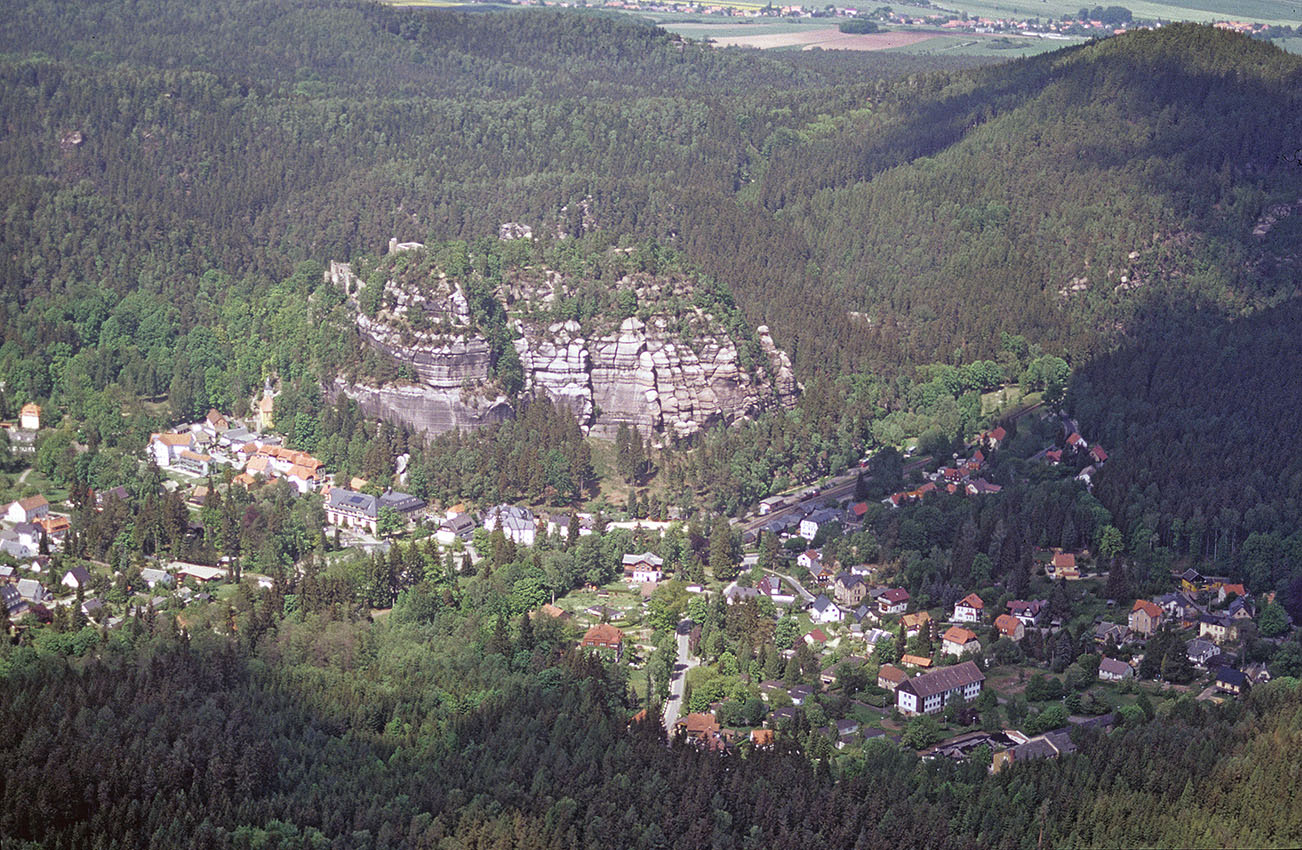
In the 13th century, the lords of Zittau from the Bohemian noble family of Hronowice took possession of the Zittau region and thus also of Oybin. In 1290, a Ztenko von Moibin is mentioned for the first time in medieval written sources. The first fortifications were probably built at the beginning of the 13th century, half a century later the complex was initially extended and later expanded into a castle under Henry of Leipa. The "Leipaburg", situated on the south-western mountain spur, reverted to the Bohemian crown in 1346. Under Emperor Charles IV, the former "robber castle" of Oybin was finally transformed into a representative complex.
Annemarie ReckImage Source R. Heynowski, Foto ©LfA 2009.
Foundation of the monastery
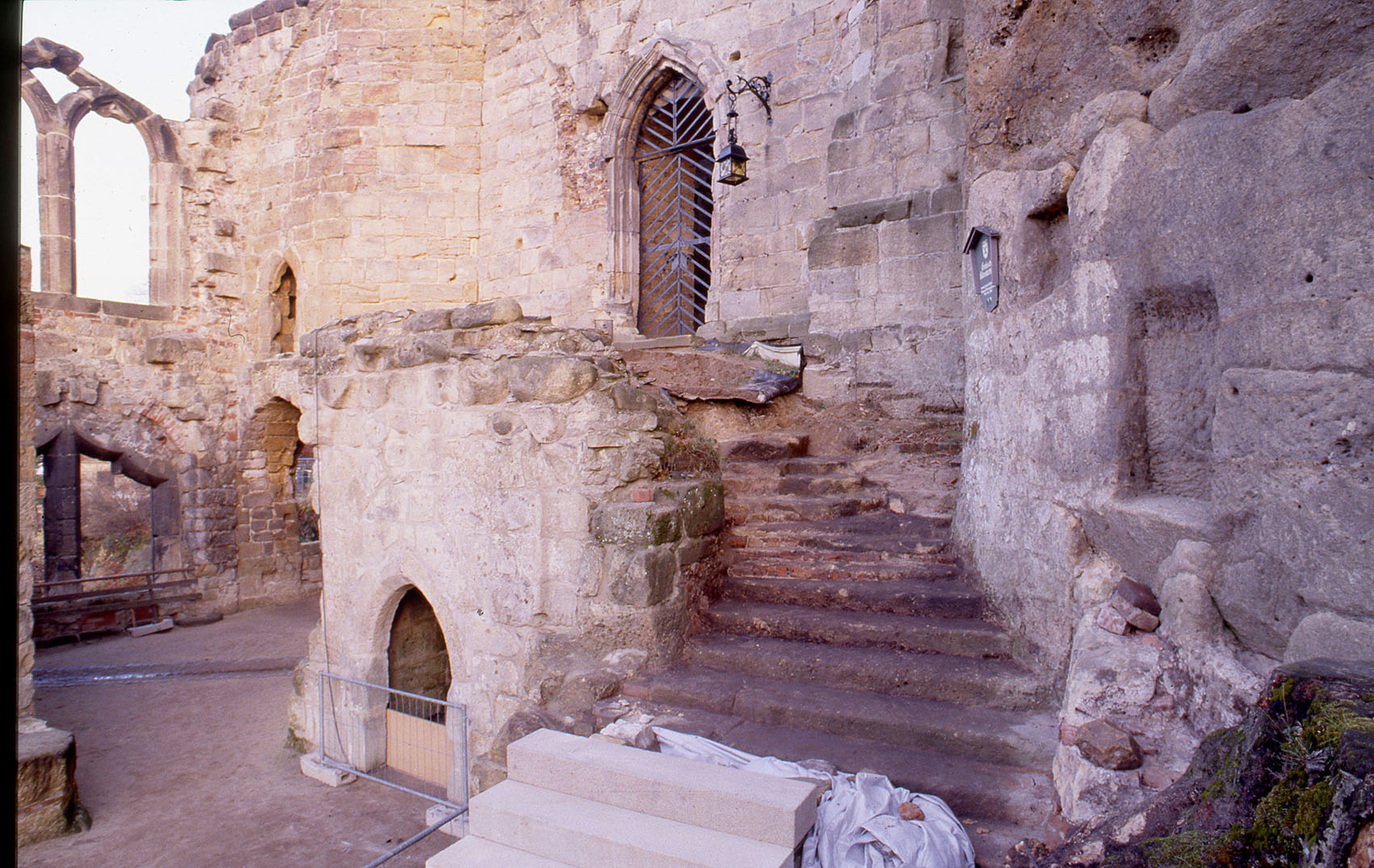
Charles IV was the son of John of Bohemia from the House of Luxembourg. On July 11, 1346, he was elected by the electors of the empire as counter-king to Louis the Bavarian. The following year, he became King of Bohemia and soon after Louis' death, he also became Holy Roman Emperor. In 1364, he commissioned the construction of the imperial house on the Oybin, which was probably intended to serve as his retirement residence. It was also the wish of the ruler, who was known for his piety, to found a monastery. In Oybin, he found a suitable location where clergymen could devote themselves to prayer in the seclusion of the Zittau Mountains. To this end, he had Cölestine monks from Avignon settled on the mountain in 1366. The order was founded in 1244 by Pietro da Morrone (ca. 1210-1296), who later became Pope Celestine V, and was placed under the Benedictines as a sub-order. Humility, strict poverty and penance were to be at the heart of their monastic life.
Annemarie ReckImage Source J. Lipták, Foto ©LfA 2001.
The Cölestine Monastery
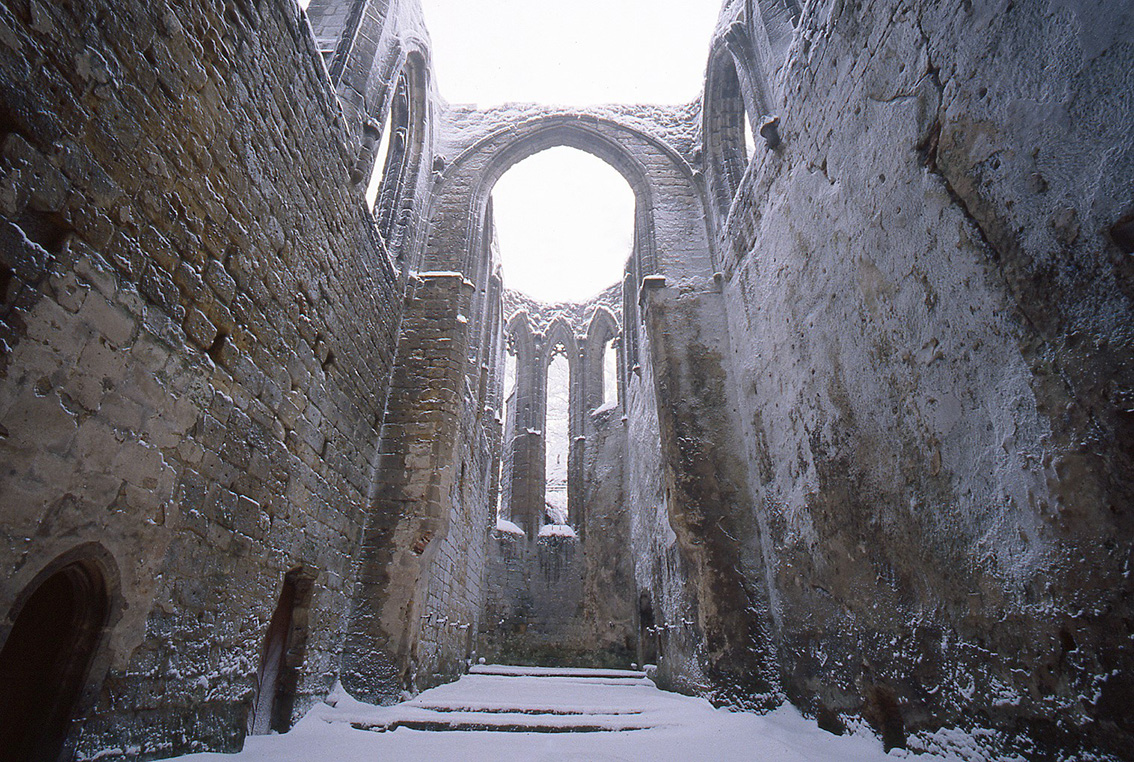
Following the arrival of the monks, the emperor founded the Cölestine monastery in 1369 in honor of St. Mary, St. Wenceslas and St. Peter Confessor. It was subordinate to the Sulmona Monastery in Italy, the original place of activity of the order's founder and later Pope Celestine V. The monastery church was consecrated after its completion in 1384 by the Archbishop of Prague, John of Jenstein. The areas not used by the monks, such as the office building and the residential tower, remained under the control of the Bohemian crown. Oybin therefore had to meet both religious and military requirements, which was soon to pay off. During the Hussite Wars, the castle and monastery successfully withstood an assault in 1429. It is assumed that the Prague Cathedral treasury may have been hidden on Oybin at this time for fear of looting. The legendary treasury of Charles IV was allegedly located in a vault under the sacristy.
Annemarie ReckImage Source J. Liptàk, Foto ©LfA 2000.
The 16th century
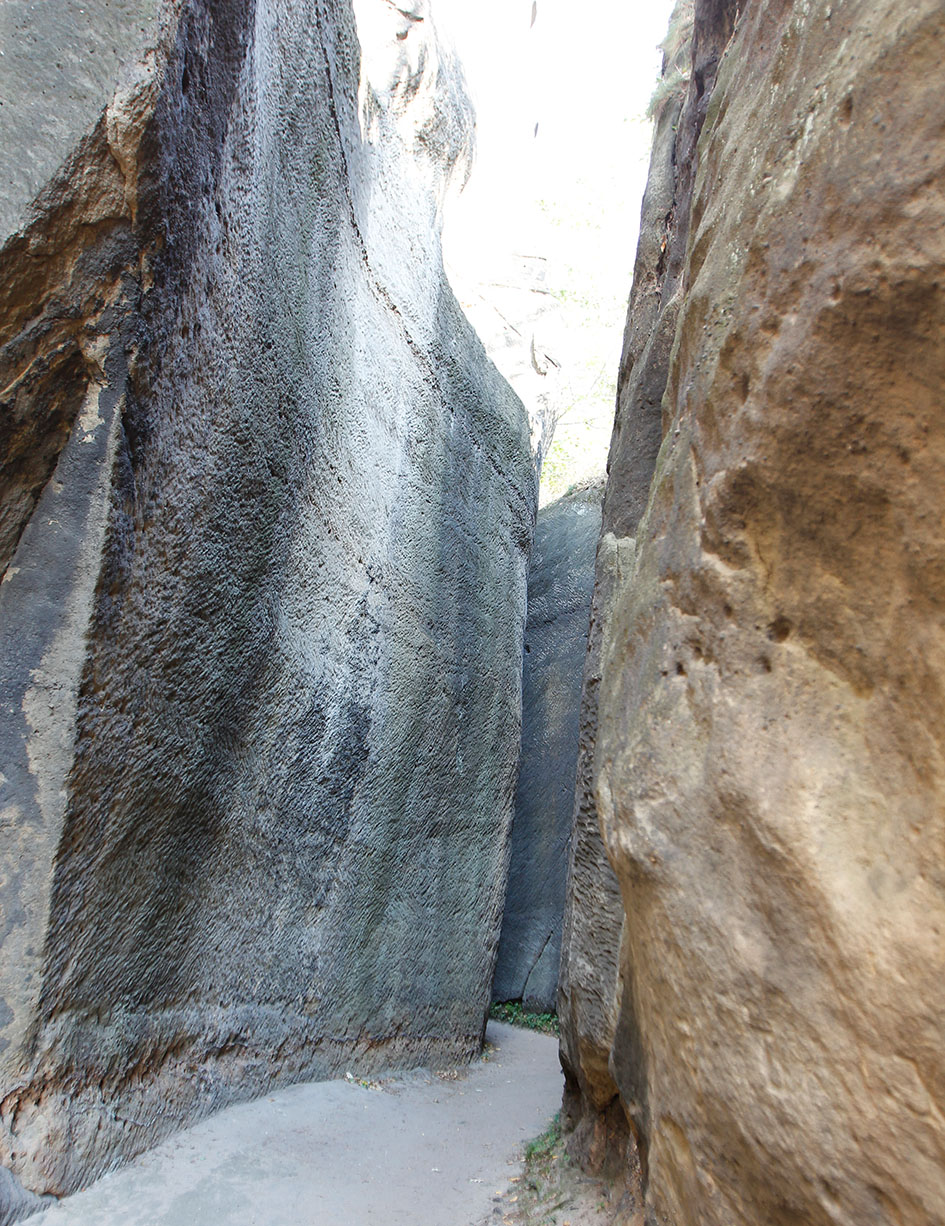
In the 16th century, the monks commissioned several renovation measures: a tiled stove was built in the imperial house and new window jambs were ordered, which were installed between the barn and the cloister. Furthermore, the chiselling out of the surround around the rock in the south of the monastery church was ordered. It is not known what motivated the monks to undertake this enormous undertaking. Today, the narrow shaft leads to a place known as "Jungfernsprung". Legend has it that the young Marie Scholz threw herself into the depths there in the 16th century when a love-struck monk pursued her. Thanks to her hoop skirt, however, she was slowed down and sailed into the cistern of the bathhouse and remained unharmed, after which she is said to have entered a convent herself.
Annemarie ReckImage Source S. Krabath, Foto ©LfA 2015.
The decline of the monastery
Not long after the reconstruction work was completed, the monastery on Oybin was also affected by the Reformation. After the death of the convent's last prior in 1555, the Jesuits dissolved the monastery the following year. The library and valuable inventory were taken to Prague. In 1974, the monastery, castle and associated land were acquired by the town of Zittau. Just three years later, the monastery was devastated by fire. A rockslide in 1681 did the rest to destroy the monastery. The complex on the Oybin fell into oblivion until it was rediscovered in the Romantic period. The male branch of the Cölestine Order was dissolved at the beginning of the 19th century in the course of secularization. The mountain cemetery in the northern part is still used for burials today.
Annemarie ReckImage Source Postkarte 19. Jahrhundert ©LfA 2003.
Monastery church and Wenceslas Chapel
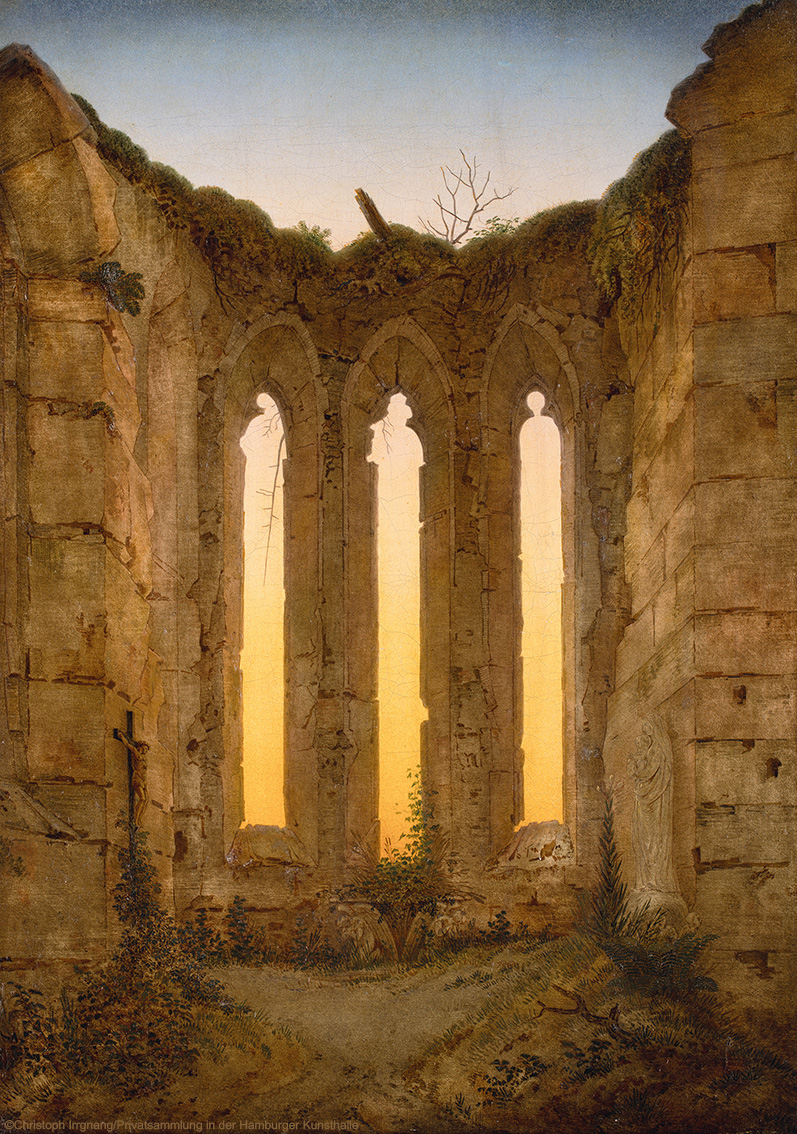
Perhaps the most impressive sight is the enormous ruins of the monastery church, the cloister and the Wenceslas Chapel. The monastery church has a single nave and was built in the Gothic style. It took 15 years to build. The pointed triumphal arch, which is reminiscent of Prague Cathedral, has been preserved in the center of the church. In fact, the construction was carried out with the participation of the Prague Bauhütte and Peter Parler, who was one of the leading sculptors and architects in the Holy Roman Empire at the time. The southern wall of the church was carved directly out of the rock with great effort. There is still a decorative frieze on the outside, which resembles the frieze of the Wenceslas Chapel in St. Vitus Cathedral in Prague. On the north side of the monastery church, the cloister nestles between the church wall and the steep precipice. Its impressive walls are still an imposing sight, especially when viewed from the hillside cemetery. The choir section of the monastery church stands out with its three high pointed arched windows, which served as a motif for numerous renowned Romantic artists. This includes Caspar David Friedrich (1774-1840), who painted the picture "Oybin Monastery Ruins" around 1812, which can be seen today in the Hamburger Kunsthalle.
Annemarie ReckImage Source C. Irrgang, Foto ©Privatsammlung in der Hamburger Kunsthalle 2024.
Literature
Stefanie Bilz, Burg und Kloster auf dem Oybin. In: Regina Smolnik/Ronny Zienert (Hrsg.), Höhenflüge. Luftbilder und Archäologie in Sachsen (Dresden 2024) 134–135.
Jana E. Fries, Ausgrabungen in der mittelalterlichen Burg und Klosterruine Oybin. Arbeits- und Forschungsberichte zur sächsischen Bodendenkmalpflege 44, 2002, 179–190.
Richard Němec, Architektur — Herrschaft — Land. Die Residenzen Karls IV. in Prag und den Ländern der Böhmischen Krone. Studien zur internationalen Architektur- u. Kunstgeschichte 125 (Petersberg 2015).
Gunter Oettel, Der Oybin — Burg, Kloster, Ruine (Teil 1). Zittauer Geschichtsblätter 3/4, 1996, 1–10.
Joanna Wojnicz, Burg- und Klosteranlage Oybin. Archaeonaut 1 (Dresden 2002).
Note on monument protection
Archaeological monuments are protected by the Saxon Monument Protection Act. A permit under monument law is required for ground interventions or construction measures.
Permalink
https://archaeo-sn.de/en/ort/oybin-monastery/
Citation
Annemarie Reck, Oybin Monastery. In: Landesamt für Archäologie Sachsen, Website archaeo | SN (06.03.2024). https://archaeo-sn.de/en/ort/oybin-monastery/ (Stand: 28.09.2026)
