

Tar pit pile in Frohburg
| Place: | Frohburg (Frohburg, Leipzig) |
|---|---|
| Type: | Production facilities |
| Dating: | Late Migration Period | Early Middle Ages | 450 - 625 AD. |
Description
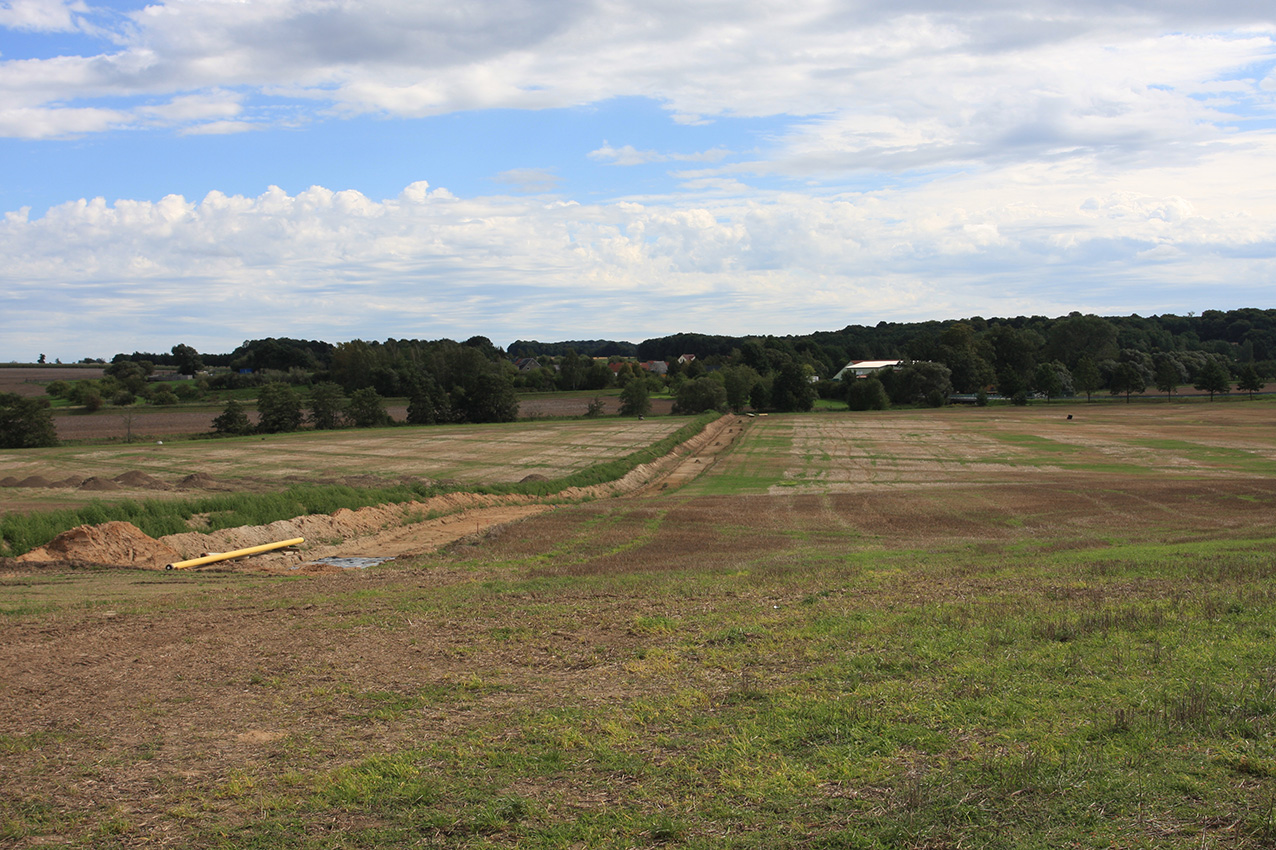
The archaeological monitoring of the construction of a gas ring main led to the discovery of two early medieval tar pits in the south of the small Saxon town of Frohburg. Frohburg is located around 35 km south of Leipzig at the geographical transition from the Leipzig lowland bay to the Zeitz-Altenburger-Löss hill country. The approximately 1660 square meter excavation area defined by the gas pipeline construction site was located west of the river Wyhra, the two features approx. 330 m from the riverbank, within sight of the historic ford towards Kohren-Salis in the floodplain.
Robert-Alexander AnsorgLocation of the site
The site with the two tar pit pits is located on a valley slope sloping eastwards towards the river. The terrain stratigraphy was characterized by glacial deformation and the colluvial and alluvial layers in the upper part of the slope contained numerous undetermined features as well as finds. A little further towards Wyhra, features 4 and 5, the tar pit piles, were uncovered.
Robert-Alexander AnsorgImage Source M. Heßling, Foto ©LfA 2015.
Findings 4 and 5
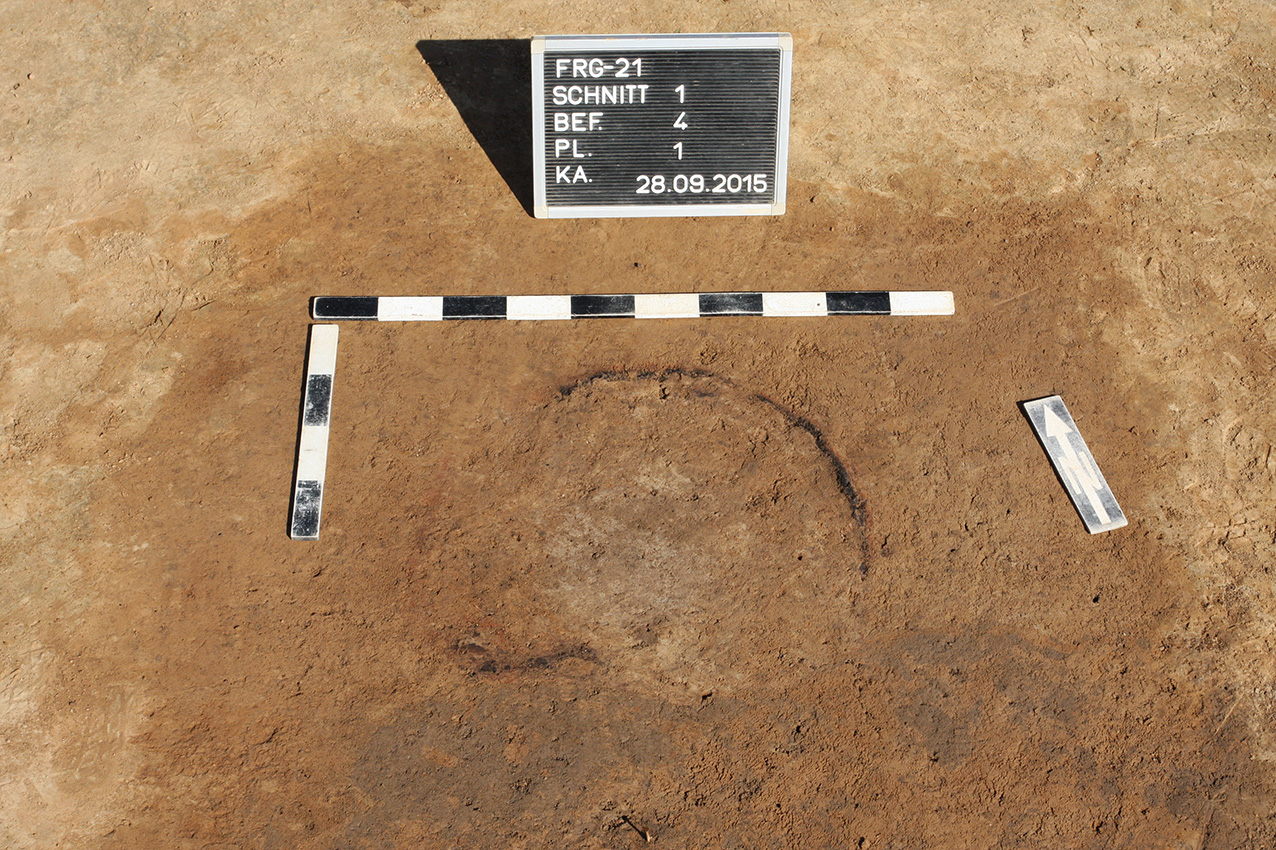
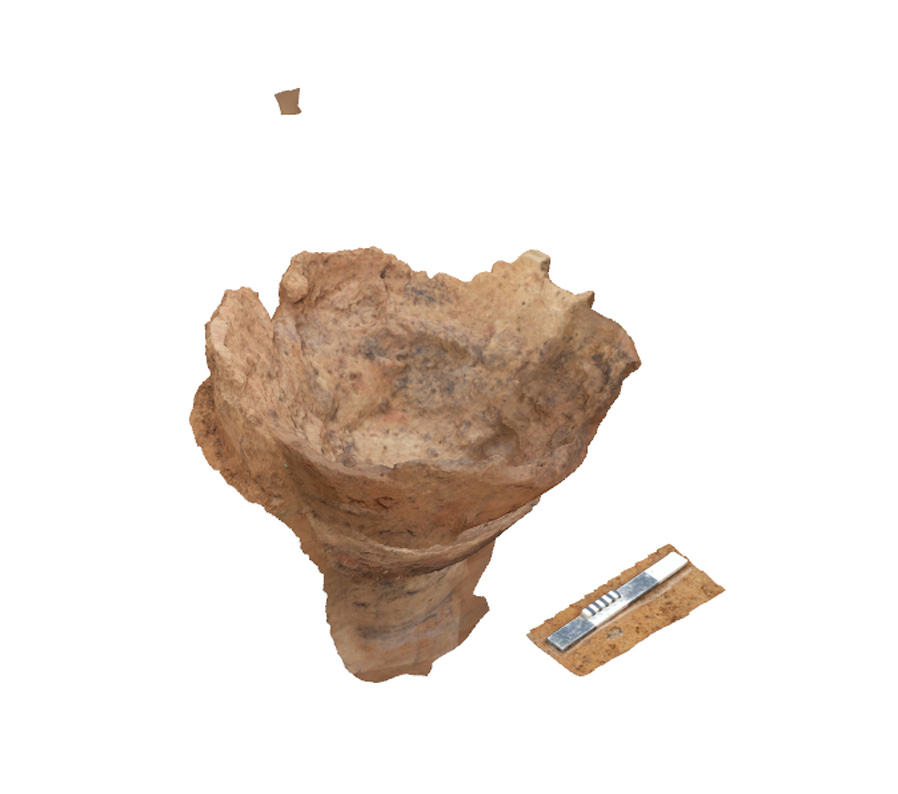
While feature 5 was disturbed in the upper area by the pipe trench of the old pipeline, feature 4 lay in situ in the field. Based on investigations with the aid of experimental archaeology in the Düppel museum village, feature 4 is certainly and feature 5 very probably a tar pit pile.
Robert-Alexander AnsorgImage Source M. Heßling, Foto ©LfA 2015.
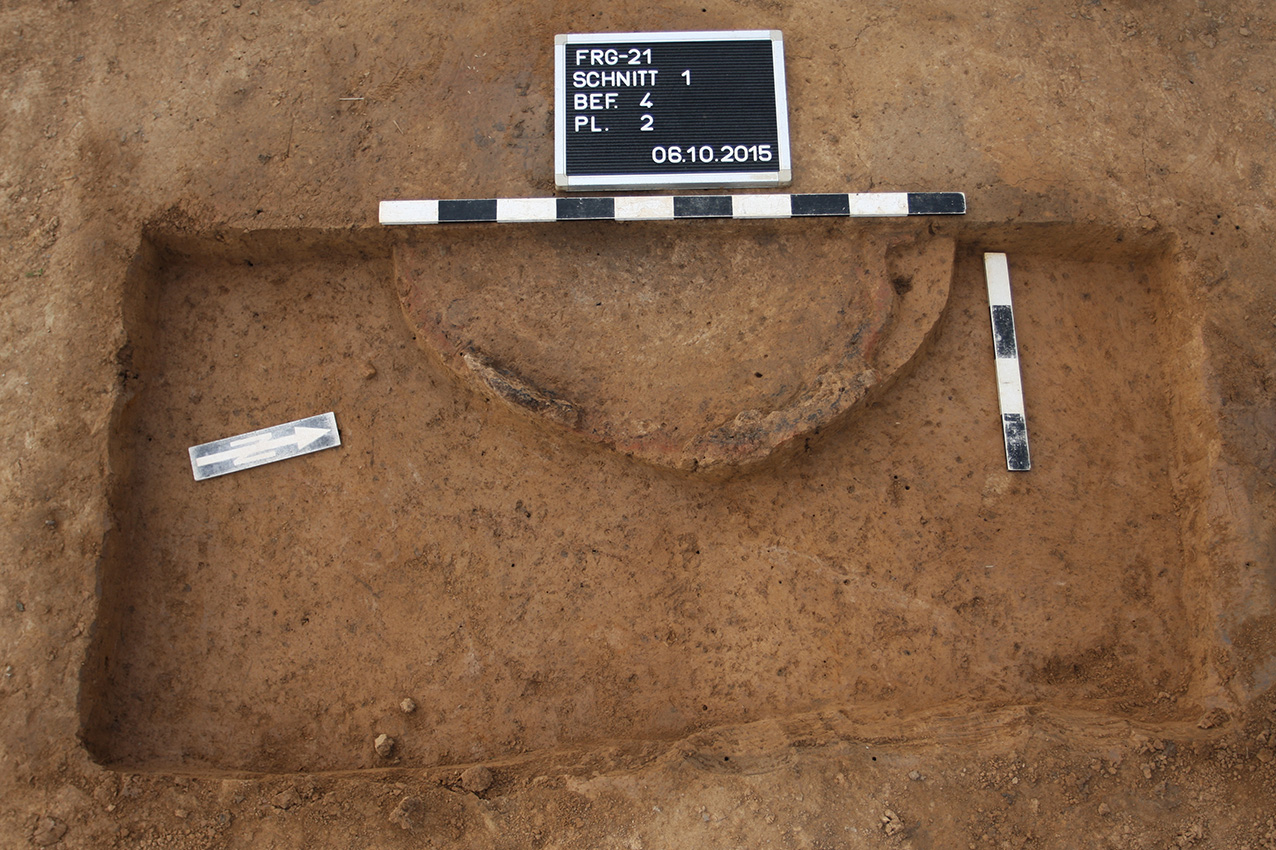
Exposure of the findings
The attempt to record both features using the usual method, i.e. a profile cut, was abandoned. This was because a change in the excavation method to negative excavation promised better results for the upper, funnel-shaped part. The walls of the tar pit piles with the charred remains of tar extraction deserved special consideration. This classification is supported by the absence of the top pot residues that are common in the so-called double-pot process (a similar technical process for extracting tar). The extraction of tar from wood is a cultural technique that was already mastered by the Neanderthals and is probably even older, based on the remains of finds. Tar, often synonymously referred to as pitch, was most commonly used as an adhesive in the past.
Robert-Alexander AnsorgImage Source M. Heßling, Foto ©LfA 2015.
Tar extraction
To obtain tar using the pyrolysis process, a collecting vessel is placed under a funnel-shaped depression, the resinous wood is piled into it and then everything is covered except for a narrow ring. Typical for the construction of temporary or stationary technical combustion plants such as piles is the hillside location. By utilizing the slope wind, it creates a fan effect during firing, which was also used in the larger slope piles, such as those for charcoal production. In tar pit boilers, after the wood is ignited at the narrow, exposed edge, a thermo-chemical transformation of the source material is set in motion at high temperatures in the absence of oxygen - pyrolysis.
Robert-Alexander AnsorgImage Source M. Heßling, Foto ©LfA 2015.
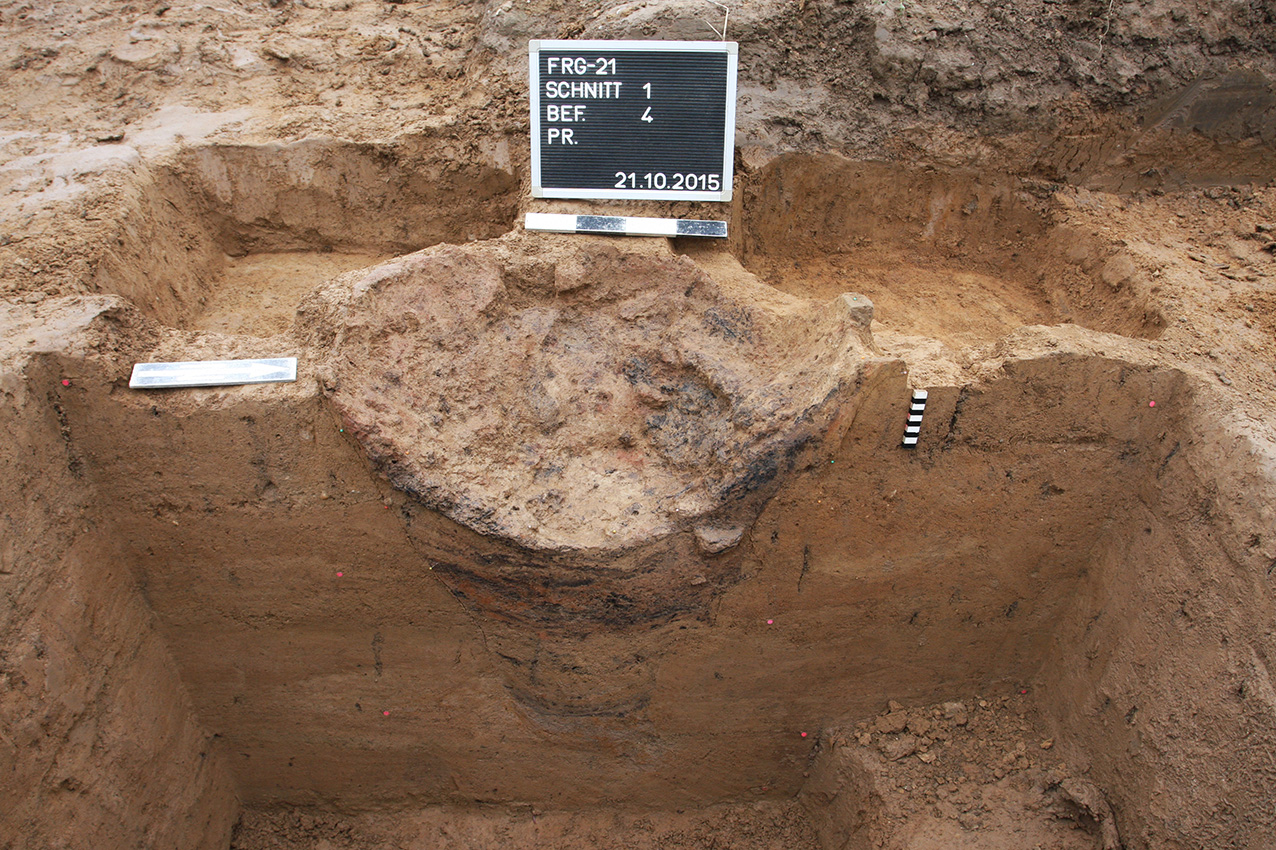
The pile wall
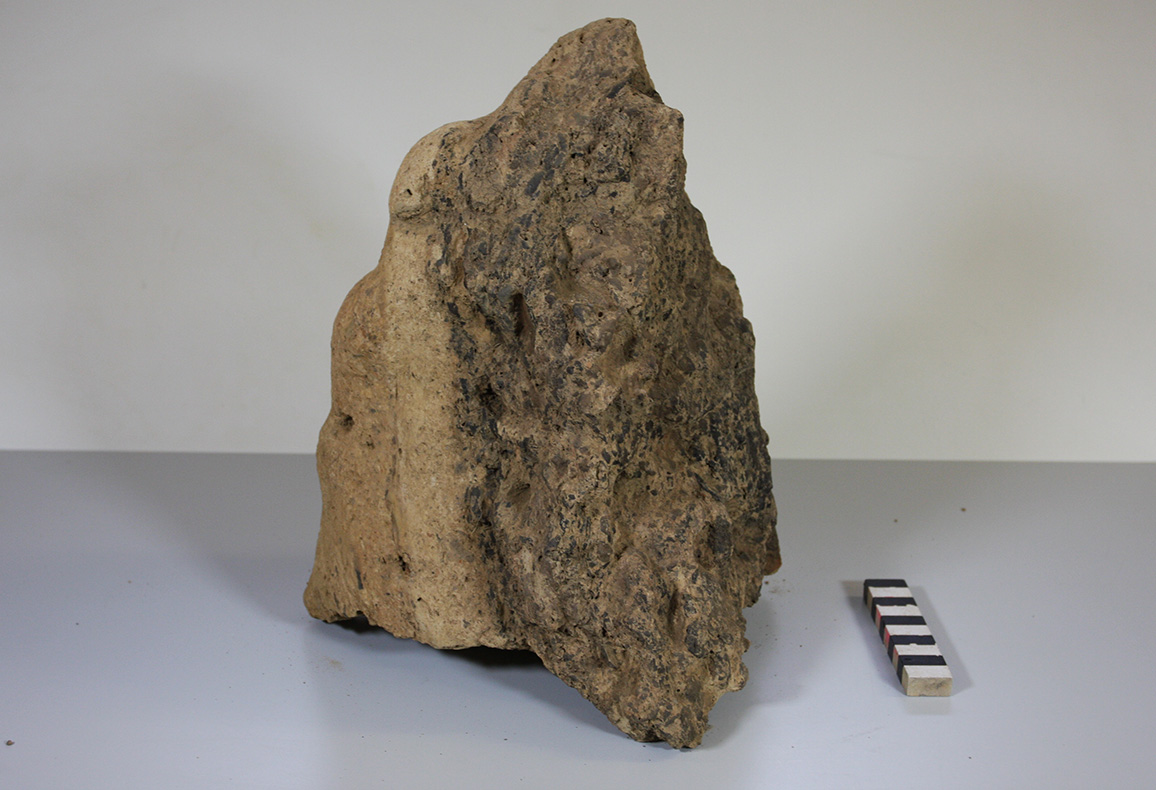
A dark red brick rim with a diameter of 90 cm indicated tar pit pile 4. The reaction chamber and collecting pit extended to a depth of 86 cm. The fragment of the pile wall clearly shows the inner area with the black organic remains and the outer area, which is lighter in color than the existing sediment, and which was charred by the heat.
Robert-Alexander AnsorgImage Source M. Heßling, Foto ©LfA 2015.
Dating
The dating of the tar pit piles to the Late Migration Period or the Early Middle Ages by a C14 investigation (cal 1 σ (68.5%): 541-599 AD, cal 2 σ (95.4%): 436-635 AD) does not answer the question of the cultural affiliation of the two features. Frohburg, Streitwald and Wolftitz - the latter today both incorporated into Frohburg - are closest to the site. However, Frohburg, for example, is not mentioned for the first time in a medieval document until 1198. The Sorbian or Slavic settlement often mentioned in the literature has not yet been proven archaeologically.
Robert-Alexander AnsorgImage Source H. Kutzsche, Foto ©LfA 2015.
Literature
Orchando et al., A Neanderthal's specialised burning structure compatible with tar obtention, www.researchgate.net, 2024: https://www.researchgate.net/publication/385768863_A_Neanderthal's_specialised_burning_structure_compatible_with_tar_obtention, (zuletzt aufgerufen am 28.11.2024).
Codex diplomaticus Saxoniae. Zweiter Hauptteil: Die Urkunden der Städte und geistlichen Institutionen in Sachsen, Band 19: Urkundenbuch des Klosters Altzelle, Bd. 1 (1162-1249), bearb. v. Tom Graber, Hannover 2006, Nr. 17, vgl. Online-Ressource: https://codex.isgv.de/codex.php?band=cds2_19&f=&a=b&s=029, (zuletzt aufgerufen am: 28.11.2024).
Note on monument protection
Archaeological monuments are protected by the Saxon Monument Protection Act. A permit under monument law is required for ground interventions or construction measures.
Permalink
https://archaeo-sn.de/en/ort/tar-pit-pile-in-frohburg/
Citation
Robert-Alexander Ansorg, Tar pit pile in Frohburg. In: Landesamt für Archäologie Sachsen, Website archaeo | SN (01.12.2024). https://archaeo-sn.de/en/ort/tar-pit-pile-in-frohburg/ (Stand: 29.09.2026)
