

Trapezoidal grave Plotitz
| Place: | Plotitz (Stauchitz, Meissen) |
|---|---|
| Type: | Trapezoidal grave enclosure |
| Dating: | Baalberg culture | around 3500 BC. |
Description
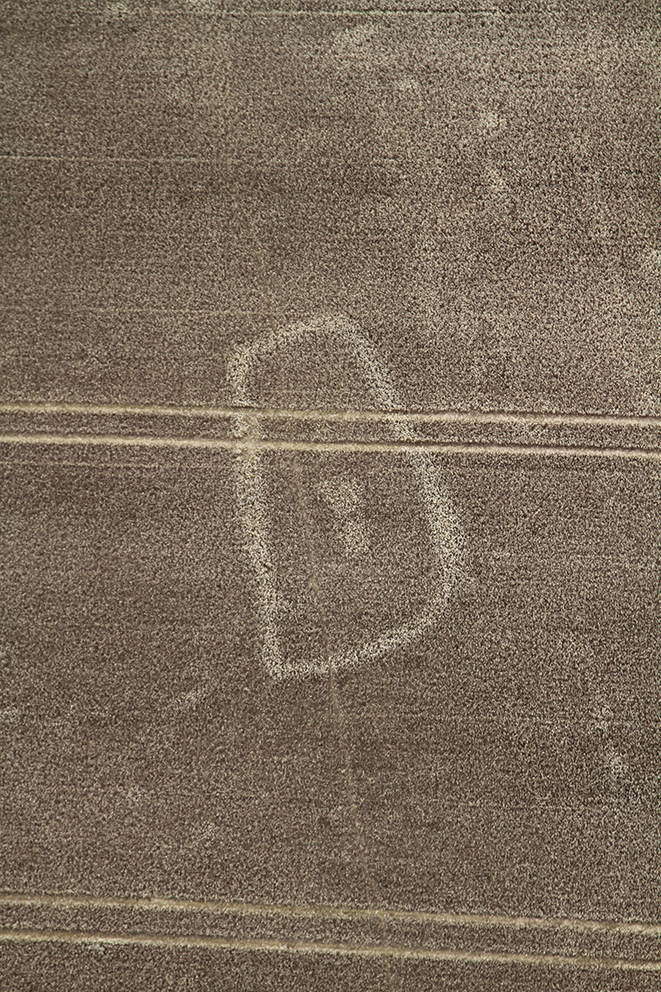
From mid to late July, especially in dry years, trapezoidal outlines become visible in the field next to the road east of Plotitz. This is a burial building from the Baalberg culture from the Middle Neolithic period around 3500 BC. Chr. The trapezoidal tomb was covered with a packing of earth and stones and its sides were secured by a palisade. Inside there were one or more burial chambers. The trapezoidal grave at Plotitz is only 800 m away from the contemporaneous ditch work at Mehltheuer. Numerous trapezoidal tombs, similar to the Plotitz complex, can be found around the ditch, often on hilltops and forming an alignment. It can be assumed that the people buried in the trapeze grave had a personal connection to the ditch work.
Ronald Heynowski/Annemarie ReckThe aerial view
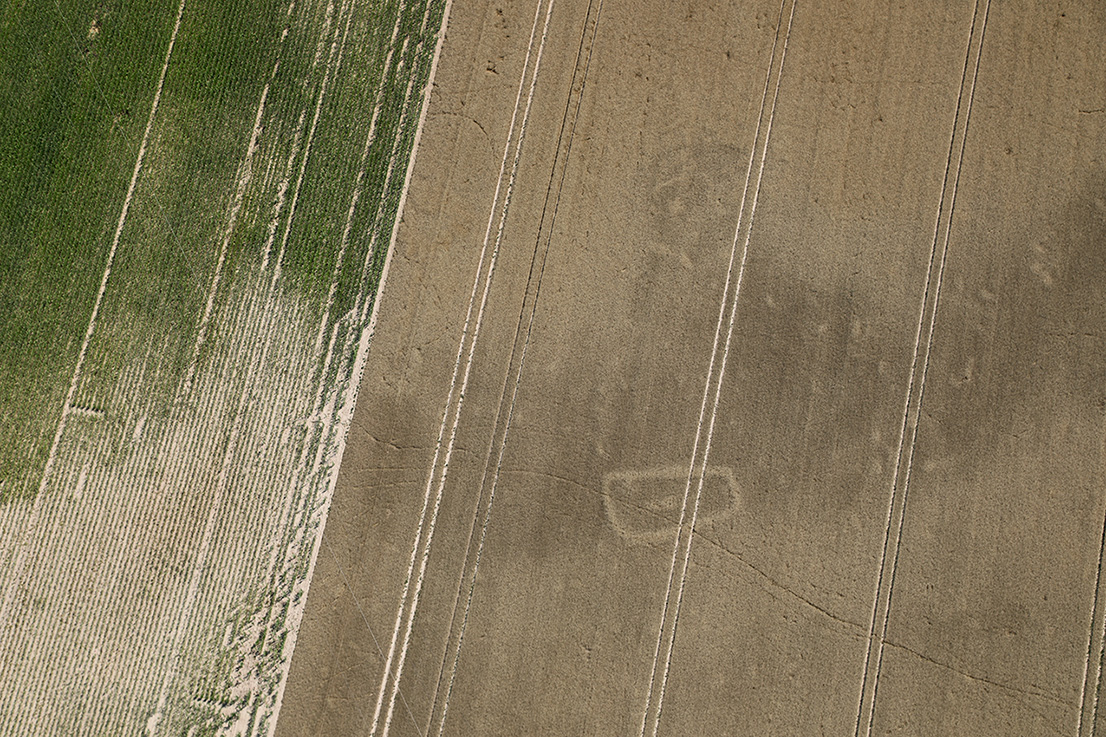
The archaeological structures in the subsoil are particularly visible in ripe wheat. In the last few days before harvest, the ears turn dark brown due to the heat. However, the stalks rooted in archaeological features are usually supplied with moisture for longer and therefore reach full maturity somewhat later than the surrounding grain. The outlines of the structures hidden underground stand out in the field in a contrasting light yellow color as a vegetation feature. They can be recorded and documented with the help of aerial archaeology.
Ronald Heynowski/Annemarie ReckImage Source R. Heynowski, Foto ©LfA 2011.
The dimensions
The grave complex at Plotitz is aligned southwest-northeast. It has a total length of 21 m and a width of up to 11 m in the east. The north-eastern corner of the trapezoid is slightly rounded. The burial pit in the center of the structure measures 5.5 m long and 2.5 m wide, although it could also be two roughly square pits close together. The size and position correspond to what is known from other excavated structures. According to this, there are one or more inhumations inside the burial chamber, which may have been accompanied by ceramic vessels or stone tools.
Ronald Heynowski/Annemarie ReckImage Source S. Bilz, Foto ©LfA 2024.
Reference to a trench?
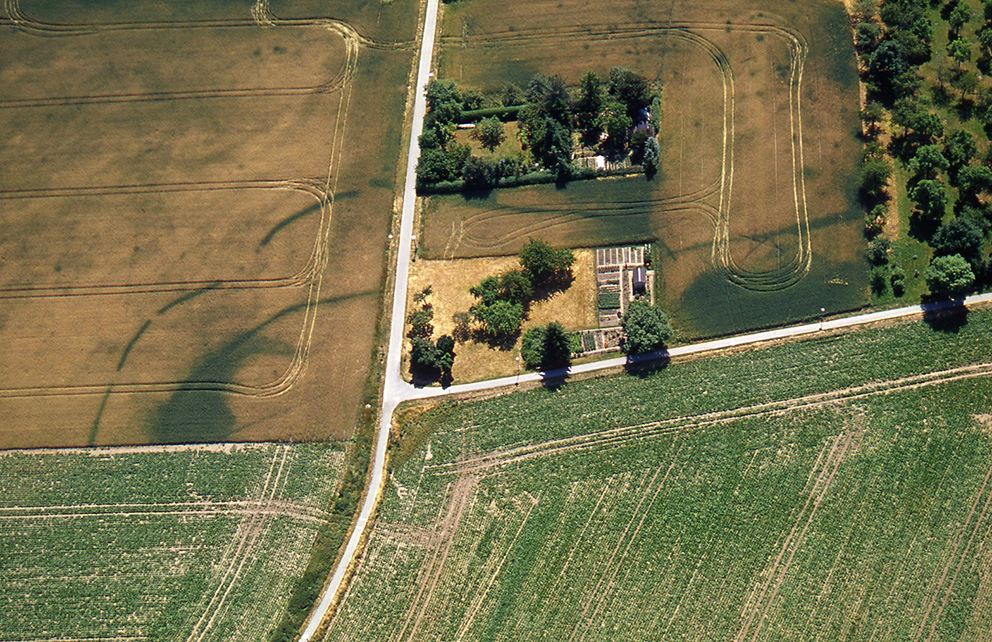
The burial site at Plotitz is probably connected to the Mehltheuer ditch complex, which is located just 800 m to the south-east and may have been the former habitat of the deceased. Their elaborate and highly visible burial suggests that they were held in high esteem by the bereaved. It is possible that the people buried in this way were prominent figures in their society. Of course, it is also possible that there is a connection to the as yet undated ditch complex located around 1500 m to the north of Plotitz (photo).
Ronald Heynowski/Annemarie ReckImage Source R. Heynowski, Foto ©LfA 2005.
Literature
Ronald Heynowski, Die letzte Reife. In: Regina Smolnik/Ronny Zienert (Hrsg.), Höhenflüge. Luftbilder und Archäologie in Sachsen (Dresden 2024) 50–51.
Ronald Heynowski/Carsten Mischka/Thomas Mühlenbruch/Michael Strobel, Weg – Grenze – Zufall? Luftbildprospektion und geomagnetische Untersuchung von trapezförmigen mittelneolithischen Anlagen bei Roitzsch (RZH-50). In: R. Smolnik (Hrsg.), Ausgrabungen in Sachsen 7. Arbeits- und Forschungsberichte zur sächsischen Bodendenkmalpflege Beiheft 34 (Dresden 2020) 81–91.
Note on monument protection
Archaeological monuments are protected by the Saxon Monument Protection Act. A permit under monument law is required for ground interventions or construction measures.
Permalink
https://archaeo-sn.de/en/ort/trapezoidal-grave-plotitz/
Citation
Ronald Heynowski/Annemarie Reck, Trapezoidal grave Plotitz. In: Landesamt für Archäologie Sachsen, Website archaeo | SN (23.08.2024). https://archaeo-sn.de/en/ort/trapezoidal-grave-plotitz/ (Stand: 29.09.2026)
